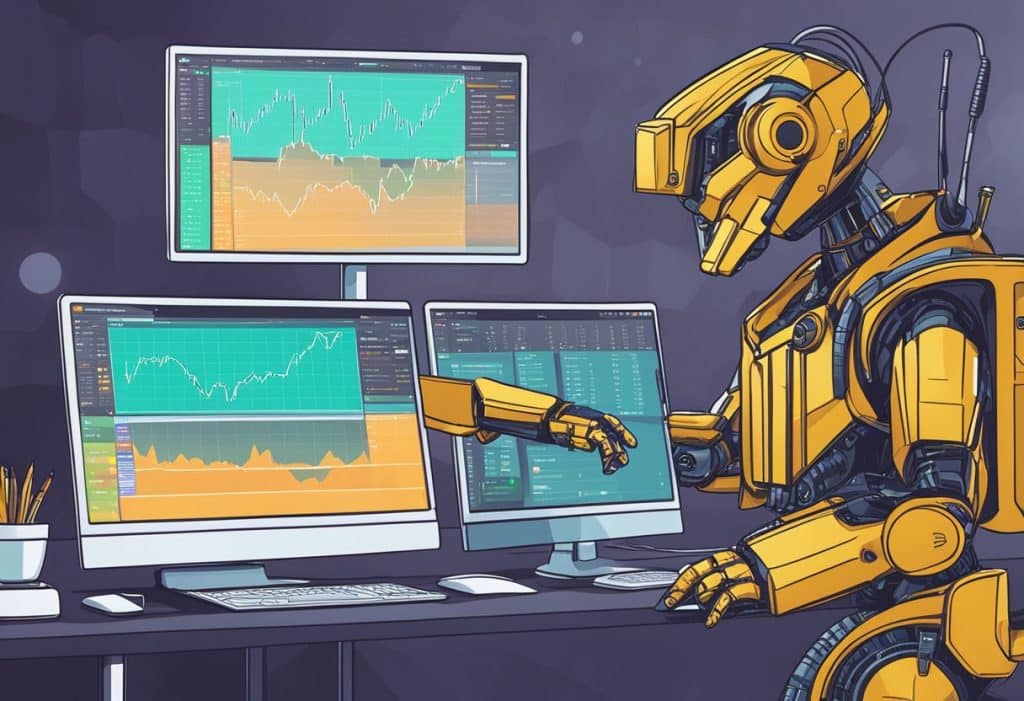
Crypto trading bots are software programs that automatically buy and sell cryptocurrencies based on predefined rules, market signals, or trading strategies. They connect to cryptocurrency exchanges through APIs and can monitor markets, place orders, and manage trades without requiring users to execute every transaction manually.
The best crypto trading bot depends on your trading goals, experience, preferred exchange, budget, and risk tolerance. Some platforms focus on beginner-friendly automation, while others offer advanced strategy customization, technical indicators, backtesting, and multi-exchange management. Exchange-based services such as Pionex also provide built-in bots, allowing users to automate trades within the same platform.
However, crypto trading bots do not guarantee profits. Automation can improve execution speed and consistency, but a poorly configured strategy can lose money just as quickly as a manual trade. Trading fees, market volatility, slippage, and unexpected price movements can also affect results.
Before choosing a platform, compare its supported exchanges, bot types, security controls, pricing, and testing tools. The following guide explains the main options and what to consider before using automated cryptocurrency trading.
Best Crypto Trading Bots and Platforms to Consider
Several platforms offer automated cryptocurrency trading, but they differ in how their bots work, which exchanges they support, and how much control users have over their strategies.
The following services are useful starting points for comparison. They are not ranked by profitability because there is no independently verified performance data here that would justify a claim that one consistently earns more than another.
1. Cryptohopper
Cryptohopper is a cloud-based crypto trading platform that offers automated and semi-automated trading tools. It is designed for users who want to build strategies, use trading signals, or manage automated trades through connected cryptocurrency exchanges.
Its features include a Strategy Designer, backtesting, paper trading, trading signals, and different bot types. These tools allow users to experiment with trading rules and evaluate strategies before committing funds to live trades.
Best suited for: Traders who want strategy customization, testing tools, and a platform that supports different levels of automation.
What to check before using it:
- Whether your preferred exchange and trading pairs are supported
- Which features are included in each subscription plan
- Whether paper trading and backtesting meet your requirements
- Whether the strategy’s trading frequency is appropriate for your budget
Cryptohopper offers multiple subscription tiers, so compare the current Cryptohopper pricing plans before signing up. Exchange support and available trading features can also vary. Its documentation explains that its supported trading types should be checked carefully, particularly if you are looking for futures or margin automation.
2. 3Commas
3Commas provides automated trading tools for managing cryptocurrency strategies and connected exchange accounts. Its platform has included DCA bots, grid bots, signal-based automation, and trade-management tools.
An important consideration for readers comparing older reviews is that 3Commas v1 was deactivated on September 11, 2026. The company introduced a new v2 platform, with changes to its interface, bot setup, and feature organization. Users should therefore consult the current documentation rather than rely on tutorials written for the older version.
Best suited for: Traders who want to explore structured automation, signal-based strategies, and multi-account or multi-exchange trade management.
What to check before using it:
- The current v2 bot types and supported exchanges
- Subscription limits and active trading account limits
- How existing strategies must be recreated
- Current API connection and security requirements
Read the 3Commas v2 platform guide and its feature migration guide before relying on older setup instructions.
3. Pionex
Pionex combines cryptocurrency exchange services with built-in trading bots. Instead of connecting a separate third-party bot to an exchange, users can access automation tools within the Pionex platform.
Its bot selection includes grid and DCA-style tools, among other automated trading options. A grid bot places buy and sell orders at selected price levels, while a DCA bot follows a purchasing or averaging schedule based on its configured rules.
Best suited for: Beginners and other users who prefer built-in automation rather than managing a separate bot subscription and exchange connection.
What to check before using it:
- Whether the bot supports the market you want to trade
- Minimum investment and order requirements
- Trading fees on every executed order
- Additional costs such as spreads, funding, and withdrawals
- Availability of the service in your country
Pionex states that its built-in bots do not require a separate subscription or activation fee. However, trades placed by those bots still incur applicable trading fees. A free bot therefore does not mean that trading is free or risk-free. Check the Pionex bot fee guide for details.
Quick Comparison of Crypto Trading Bot Platforms
| Platform | Main appeal | Useful features to investigate | Important consideration |
|---|---|---|---|
| Cryptohopper | Strategy customization | Backtesting, paper trading, signals | Subscription and exchange limitations |
| 3Commas | Structured automation | DCA, grid, signal bots, trade management | Check current v2 features |
| Pionex | Built-in exchange bots | Grid and DCA automation | Trading fees still apply |
This comparison describes general platform positioning, not verified investment performance. Features, pricing, regional access, and supported exchanges can change. Always check each provider’s official documentation before opening an account.

How Do Automated Crypto Trading Bots Work?
Crypto trading bots use instructions to decide when to enter, manage, or exit trades. They can follow technical indicators, price thresholds, trading signals, or other conditions selected by the user.
Most exchange-connected bots use an application programming interface, or API, to communicate with a cryptocurrency exchange. The API allows the software to retrieve market information and submit trading orders according to the permissions granted by the account owner.
A typical automated trading process follows these steps:
- Market monitoring: The bot receives market data such as cryptocurrency prices, trading volume, and price movements.
- Signal evaluation: It checks whether market conditions match the selected strategy.
- Order execution: If the required conditions are met, the bot sends an order to the connected exchange.
- Trade management: It follows configured rules for additional orders, stop-losses, take-profit levels, or other actions.
- Performance monitoring: The user reviews trade history, fees, open positions, and overall results.
Automation does not mean that a bot understands the market in the same way a human analyst might. It follows its programming, data inputs, and strategy conditions. If those conditions are unsuitable for the current market, the bot may continue making unprofitable decisions.
Essential Features to Look for in a Crypto Trading Bot
Choosing a crypto trading bot requires more than comparing the number of available strategies. Security, testing capabilities, exchange compatibility, and cost transparency are equally important.
Security and API Permissions
Security should be one of the first things to evaluate. A bot may need access to your exchange account to place orders, but that does not mean it should have permission to withdraw funds.
When creating API keys, follow these precautions:
- Disable withdrawal and transfer permissions unless a specific, independently verified function genuinely requires them.
- Enable two-factor authentication on your exchange and bot accounts.
- Use IP restrictions or allowlisting when supported.
- Never share API secrets, passwords, or recovery codes.
- Delete unused API keys and revoke access when you stop using a service.
- Monitor exchange account activity and open orders regularly.
Some platforms, including 3Commas, explain their API connection and security arrangements in their official documentation. However, a provider’s security statements should not replace your own checks of exchange permissions and account activity.
Backtesting Capabilities
Backtesting allows traders to evaluate a strategy using historical market data. It can help reveal how a set of trading rules might have behaved during earlier market conditions.
For example, a user could test whether a moving-average strategy would have generated profitable trades during a particular historical period.
However, a successful backtest does not guarantee future results. Historical data may not accurately reflect current market conditions, and results can be affected by trading fees, slippage, liquidity, and assumptions used in the simulation.
Look for platforms that clearly explain their backtesting data, settings, and limitations.
Paper Trading and Demo Testing
Paper trading simulates trading without placing actual orders using real funds. It gives users an opportunity to understand how a bot operates and whether its strategy behaves as expected.
It is particularly useful for beginners who are learning how to configure entry points, exit rules, and trading parameters.
Keep in mind that simulated results may differ from live trading because actual orders can experience slippage, partial fills, liquidity limitations, and exchange fees.
Strategy Customization
A useful trading bot should allow users to configure strategies according to their objectives and risk tolerance.
Depending on the platform, customization may include:
- Entry and exit conditions
- Trading pairs
- Order sizes
- Maximum open positions
- Stop-loss and take-profit levels
- Grid intervals
- DCA purchase intervals
- Technical indicator settings
Avoid using complicated settings simply because they are available. A strategy should be understandable before it is allowed to trade real funds.
Exchange Compatibility
Check whether the bot supports your preferred cryptocurrency exchange, account type, and trading pairs.
Some platforms support spot trading but not futures or margin trading. Others may support different features depending on the exchange connection or subscription plan.
Common exchanges users may want to investigate include Coinbase, Binance, Kraken, and KuCoin. However, availability varies by country, platform, and product. Confirm the current supported-exchange list directly with the bot provider.
Common Crypto Trading Bot Strategies
Different automated strategies are designed for different market conditions. Understanding how they work helps users select a bot that matches their trading approach.
Grid Trading
Grid trading places multiple buy and sell orders at predefined price intervals within a selected range.
For example, a trader may configure a grid bot to place buy orders below a reference price and sell orders above it. The bot attempts to benefit from repeated price movements within the chosen range.
Grid trading is often associated with sideways or fluctuating markets. However, a strong price breakout can move the asset outside the grid range, leaving the bot with an unfavorable position or inactive orders.
Dollar-Cost Averaging (DCA)
Dollar-cost averaging involves dividing a planned investment into smaller purchases made at scheduled intervals or under specific conditions.
A DCA bot automates those purchases based on its settings. Some bots also use additional orders when prices move against an initial position.
DCA can help structure purchases, but it does not eliminate market risk. Repeatedly buying an asset that continues to decline can increase exposure and create larger losses.
Arbitrage Trading
Arbitrage attempts to benefit from price differences for the same cryptocurrency across different markets or exchanges.
An arbitrage bot monitors prices and may attempt to buy an asset where it is cheaper and sell it where it is more expensive.
However, price differences are not automatically profitable. Trading fees, withdrawal costs, network delays, liquidity, slippage, and execution timing can eliminate the potential margin. Funds may also need to be available on multiple exchanges before an opportunity appears.
Scalping
Scalping involves making frequent trades to capture relatively small price movements.
Automated scalping bots can evaluate market conditions and submit orders quickly, but frequent trading can generate substantial fees. A small price movement is not necessarily enough to cover transaction costs.
This approach requires careful attention to liquidity, spreads, order execution, and the number of trades made.
Trend Following
Trend-following bots use predefined rules to identify upward or downward price movements and enter trades when certain conditions are met.
They may use moving averages, momentum indicators, or other technical signals to identify potential trends.
The main challenge is that markets can move sideways or reverse suddenly. A strategy that works during a strong trend may generate repeated false signals in a range-bound market.

How Do AI Crypto Trading Bots Differ from Traditional Bots?
AI crypto trading bots may use machine learning, statistical models, or other data-processing techniques to analyze market information and generate trading signals.
Traditional rule-based bots generally follow predefined conditions. For example, a bot might buy when one moving average crosses above another and sell when a specified exit condition occurs.
An AI-assisted system may use more complex data inputs or models to identify patterns. Depending on the provider, it may also help users generate strategies or interpret market information.
However, the use of artificial intelligence does not automatically make a trading bot more accurate or profitable.
Before choosing an AI crypto trading bot, ask:
- What data does the system analyze?
- Can the provider explain how its signals are generated?
- Are historical results independently verified?
- Can users test strategies before live trading?
- Does the system explain its limitations?
- Can users monitor and stop automated activity?
Be cautious of platforms that use terms such as AI-powered, machine learning, or advanced algorithms without explaining how their technology works. Claims of guaranteed returns or consistent high monthly profits are serious warning signs.
Understanding Crypto Trading Bot Fees and Costs
The cost of using a crypto trading bot depends on the platform, subscription plan, exchange, and trading strategy.
Some services charge monthly or annual subscription fees. Others provide built-in bots without a separate subscription but still charge normal exchange trading fees.
Before selecting a service, consider these costs:
| Cost | What it means |
|---|---|
| Subscription fee | Payment for access to a third-party bot or advanced features |
| Trading fee | Charge applied when an exchange order is executed |
| Spread | Difference between the available buy and sell prices |
| Slippage | Difference between the expected execution price and actual fill price |
| Funding fee | Periodic payment associated with certain perpetual futures positions |
| Withdrawal fee | Charge for transferring assets out of an exchange |
| Network fee | Blockchain transaction cost when moving assets between wallets or platforms |
Example: Why Trading Fees Matter
Suppose a bot executes a buy order worth $1,000 and later sells the position for $1,020.
The apparent trading gain is $20 before costs.
If the applicable trading fee is 0.10% on each executed order:
- Buy fee: $1.00
- Sell fee: $1.02
- Total trading fees: $2.02
- Remaining gain: $17.98
This simplified example excludes spreads, slippage, subscription costs, and other possible charges. Actual results depend on the exchange’s fee schedule and the executed order values.
The important point is that a strategy must generate enough value to cover its total costs. A bot that makes many small trades can lose its apparent advantage through repeated fees.
How to Connect a Crypto Trading Bot Safely
Connecting a trading bot to an exchange usually involves generating API keys and entering the required credentials into the bot platform.
The exact process depends on the exchange and provider, but the general steps are:
- Choose a platform: Research the provider, supported exchanges, security practices, and pricing.
- Create an account: Register through the provider’s official website and enable two-factor authentication.
- Check exchange compatibility: Confirm that the exchange and trading pairs you need are supported.
- Generate API keys: Create API credentials through the exchange’s official account settings.
- Set permissions carefully: Enable only the permissions required for the bot. Disable withdrawals and transfers.
- Connect the account: Enter the API credentials using the provider’s official connection process.
- Configure the strategy: Set the trading pair, order size, entry conditions, and risk controls.
- Test the setup: Use paper trading or a demo environment before activating real-money automation.
- Monitor activity: Review executed orders, open positions, fees, and account permissions regularly.
Never send API credentials to someone through private messages or unofficial support channels. If you suspect that an API key has been exposed, revoke it through your exchange account immediately.
Advantages and Limitations of Automated Crypto Trading
Automated trading can help users follow a trading plan, but it also introduces risks that should be understood before activation.
Advantages
24/7 market monitoring: Cryptocurrency markets operate around the clock. Bots can monitor supported markets even when users are unavailable.
Consistent execution: A bot can follow configured rules without making spontaneous decisions based on fear or excitement.
Faster order placement: Automated systems can submit orders when their specified conditions are met.
Multiple strategy management: Some platforms allow users to operate several bots or trading pairs from one interface.
Reduced manual workload: Automation can reduce the need to monitor charts and place every order manually.
Limitations
No guaranteed profit: A bot can execute an unprofitable strategy consistently.
Technical failures: Internet interruptions, API problems, software bugs, and exchange outages can affect automated trading.
Market volatility: Sudden price movements can trigger unexpected orders or increase losses.
Strategy limitations: A bot may perform poorly when market conditions change.
Additional costs: Trading fees, spreads, slippage, subscriptions, and funding payments can reduce returns.
Security exposure: Connecting an exchange account to an external service creates additional credentials and permissions that must be managed carefully.
Automation is a tool for executing a strategy, not a replacement for understanding the risks of cryptocurrency trading.
How to Choose the Right Crypto Trading Bot
The most suitable platform is the one that meets your requirements without introducing unnecessary costs or complexity.
Use this checklist before choosing:
- Experience level: Is the interface understandable for your current knowledge?
- Trading strategy: Does the platform support grid, DCA, arbitrage, trend following, or the approach you intend to use?
- Exchange support: Can it connect to your preferred exchange and trading pairs?
- Security: Can you disable withdrawal permissions and enable additional account protections?
- Testing tools: Does it provide backtesting, paper trading, or a demo environment?
- Pricing: Are subscription fees and trading-related costs clearly disclosed?
- Risk controls: Can you configure order limits, stop-losses, and maximum exposure?
- Customer support: Is there official documentation and a reliable support channel?
- Regional availability: Is the platform and its intended trading service available where you live?
Avoid selecting a bot based only on promotional screenshots, social media testimonials, or claims about unusually high returns.
Frequently Asked Questions About Crypto Trading Bots
What are the best crypto trading bots?
Cryptohopper, 3Commas, and Pionex are examples of platforms offering cryptocurrency trading automation. Their features and pricing differ, so the right choice depends on exchange compatibility, trading strategy, security, and budget. None should be considered the best based on unverified profit claims.
Are crypto trading bots profitable?
Crypto trading bots can execute profitable strategies, but they can also lose money. Results depend on market conditions, strategy quality, execution costs, and risk management. No legitimate bot can guarantee a specific return.
Are there free crypto trading bots?
Yes. Some platforms provide built-in bots without a separate subscription or activation fee. Pionex, for example, states that its built-in bots do not require a separate bot subscription. However, executed trades still incur applicable fees, and other costs may apply.
Are crypto trading bots good for beginners?
They can help beginners learn structured trading and automation, but users should understand the strategy before activating it. Beginners should prioritize simple interfaces, demo or paper trading, transparent fees, and clear risk controls.
Can crypto bots trade Bitcoin and Ethereum?
Many trading platforms support major cryptocurrencies such as Bitcoin (BTC) and Ethereum (ETH). However, supported trading pairs depend on the bot provider and connected exchange. Always check the current compatibility list.
What is the difference between a grid bot and a DCA bot?
A grid bot places buy and sell orders at predefined price intervals to trade price fluctuations within a selected range. A DCA bot automates purchases according to a schedule or specified market conditions. Both strategies can lose money under unfavorable market conditions.
Are AI crypto trading bots better than traditional bots?
Not necessarily. AI-based systems may analyze more data or help generate trading signals, but their performance depends on their models, data, and strategy design. AI does not eliminate uncertainty or guarantee better trading results.
Can a crypto trading bot work while my computer is turned off?
Cloud-based trading bots can usually continue operating while your personal computer is off, provided the service, exchange connection, and bot remain active. Locally hosted bots may require the computer or server running continuously.
Do crypto trading bots need access to my funds?
A third-party bot generally connects to an exchange through API credentials and uses the permissions granted to it. Users should avoid granting withdrawal permissions. Some exchange-based bots operate directly within the exchange account instead.
Is crypto arbitrage profitable?
Arbitrage can potentially benefit from price differences between markets, but those differences may disappear quickly. Trading fees, spreads, liquidity, transfer delays, and execution risks can eliminate the expected profit.
Can I automate crypto trading using TradingView?
Yes. TradingView alerts can send webhook notifications to compatible external applications, which may use those alerts to trigger trading actions. The receiving application must be configured correctly, and users should protect webhook endpoints and avoid including passwords or sensitive credentials in alert messages.
Final Thoughts: Are Crypto Trading Bots Worth Using?
Crypto trading bots can make cryptocurrency trading more structured by automating market monitoring, order placement, and strategy execution. Platforms such as Cryptohopper, 3Commas, and Pionex offer different approaches to automation, from customizable third-party tools to built-in exchange bots.
However, the best choice is not necessarily the platform with the most features or the strongest marketing claims. It is the one that supports your preferred exchange and strategy, provides appropriate security controls, offers transparent pricing, and allows you to test your setup before risking real funds.
Start by researching the provider, understanding the strategy, and testing it with simulated trades. If you decide to use real funds, begin cautiously and monitor the bot’s activity.
Risk Disclaimer: Cryptocurrency trading involves substantial financial risk, including the possibility of losing your entire investment. Automated trading does not guarantee profits or protect against market losses. This article is for informational and educational purposes only and should not be considered financial or investment advice. Always conduct independent research and never trade money you cannot afford to lose.