
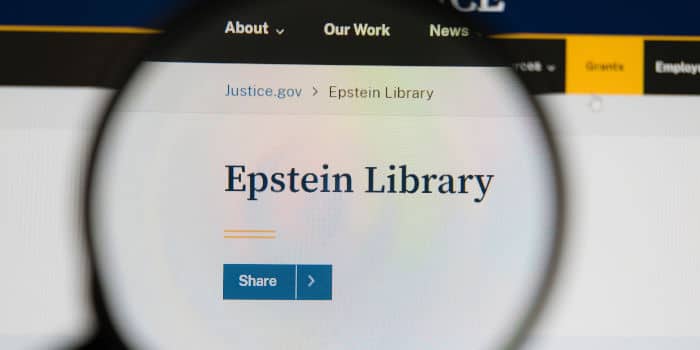
A viral X post with millions of views claims Jeffrey Epstein claimed an $85 million Powerball jackpot in 2008 through a trust whose name matches his New Mexico ranch entity. Grok, the AI assistant built by xAI, initially appeared to confirm the connection, then issued a contradictory response denying any lottery win on record. The conflicting answers have reignited a debate that traces back to documents referenced in the Epstein Files released by the Department of Justice.
The Viral Claim and What Grok Said
The Original Allegation
The claim centers on the July 2, 2008 Powerball draw, where the winning numbers were 4, 33, 46, 48, and 52, with 17 as the red Powerball, according to reporting by casino.org [1]. The jackpot stood at $85 million, and the winning ticket was sold in Altus, Oklahoma. A winner taking the one-time cash option would have received $41.3 million before taxes.
The viral X post alleged that Epstein, the now-deceased convicted sex offender, was the true winner behind that ticket. The post gathered millions of views before the claim was scrutinized more closely. The controversy was amplified by a separate detail: an email from an investigative journalist to undisclosed recipients, surfaced within the Epstein Files, that reportedly described how Epstein allegedly won the jackpot [1].
The Epstein Files, released by the Department of Justice, reportedly contained a reference to “Zorro Trust (belonging to Epstein)” in connection with the jackpot claim, according to Grok’s initial response as cited by casino.org [1]. That detail gave the rumor a documentary anchor, however unverified.
Grok’s Contradictory Responses
Grok, xAI’s AI assistant, confirmed in one prompt that the Zorro Trust had claimed the $85 million jackpot as a lump-sum payout of roughly $29.3 million after taxes from the July 2, 2008 draw [1]. The AI also confirmed that lottery officials at the time followed standard procedure, which permitted winners to claim prizes anonymously through the establishment of trusts.
A second Grok prompt asking how many times Epstein had won the lottery produced a directly contradictory answer. Grok stated Epstein had never won the lottery, adding: “Same name was pure coincidence. Recent file mentions are unverified notes, not proof. No wins on record” [1]. The AI’s inconsistency became part of the story itself, illustrating the limits of using AI tools to verify contested historical claims.
Grok also confirmed in its initial response that no fraud was proven in the payout process, and that anonymity through trust structures was a legitimate and standard lottery practice at the time [1].
Zorro Trust: Coincidence or Connection?
The Trust Name Overlap
The core of the allegation rests on a name match. Epstein owned Zorro Ranch, a property in Stanley, New Mexico, and reportedly operated a trust under the Zorro name connected to that ranch [1]. The Powerball winner in 2008 also claimed the prize through an entity called the Zorro Trust, a detail that fueled speculation about Epstein’s involvement.
Epstein’s Zorro Ranch in Stanley, New Mexico, sits more than 400 miles from Altus, Oklahoma, where the winning ticket was purchased [1]. That geographic distance does not rule out a connection, but it does weaken the circumstantial case. New Mexico has participated in Powerball since 1996, meaning Epstein could theoretically have purchased a ticket in Oklahoma while traveling.
Brice Gordon, identified as Epstein’s ranch manager, was allegedly the trustee of the Zorro Trust and the individual who signed the paperwork to claim the payout [1]. Casino.org reported this claim has not been officially confirmed. The allegation remains unverified.
The Grocery Store Worker Explanation
Local reports from the time of the 2008 draw told a different story entirely. According to those accounts, the winner was a grocery store worker based in Altus, Oklahoma, who had named her trust the Zorro Trust independently, with no connection to Epstein or his New Mexico ranch [1].
That explanation, if accurate, would reduce the entire controversy to a coincidence of naming. Trust names are not registered in a centralized national database, and lottery winners in many states are permitted to choose any trust name they wish when claiming prizes anonymously. The overlap in names, while striking, carries no legal or evidentiary weight on its own.
Casino.org reported that the FBI confirmed no fraud was proven in the payout process [1]. That finding applies regardless of who the actual winner was, and it does not resolve the identity question either way.
Key Facts at a Glance
| Detail | Claim / Allegation | Status |
|---|---|---|
| Draw Date | July 2, 2008 | Confirmed [1] |
| Jackpot Amount | $85 million | Confirmed [1] |
| Cash Option (pre-tax) | $41.3 million | Confirmed [1] |
| Lump Sum After Taxes | Approx. $29.3 million | Per Grok [1] |
| Ticket Purchase Location | Altus, Oklahoma | Confirmed [1] |
| Claiming Entity | Zorro Trust | Confirmed [1] |
| Alleged Trustee | Brice Gordon (Epstein’s ranch manager) | Unconfirmed [1] |
| FBI Fraud Finding | No fraud proven | Confirmed [1] |
| Alternative Winner Account | Local Altus grocery store worker | Local reports [1] |
The winning numbers for the July 2, 2008 draw were 4, 33, 46, 48, and 52, with 17 as the red Powerball [1]. These details are not in dispute. What remains contested is the identity of the person or entity that held the winning ticket.
The broader context includes a separate but related claim: an ex-manager of the Atlantic City Trump Plaza Hotel and Casino stated he had seen President Donald Trump and Jeffrey Epstein together at the casino property, accompanied by underage girls [1]. That account, reported last July, adds to the documented overlap between Epstein and the gambling world, though it has no direct bearing on the Powerball allegation.
Anonymity, Trusts, and the Gambling World
The mechanism at the center of this story, claiming a lottery prize through a named trust to preserve anonymity, is a legitimate and widely used practice. Grok confirmed that lottery officials in 2008 followed standard procedure in accepting the Zorro Trust claim [1]. This practice is relevant to anyone operating in gambling or gaming environments where financial privacy is a concern.
For readers familiar with crypto casinos, the concept of financial anonymity in gambling is not abstract. The use of trusts in traditional lottery systems mirrors the privacy-focused structures that attract users to blockchain-based gaming platforms. The Epstein case, whatever its ultimate truth, illustrates how anonymity tools designed for legitimate privacy can become subjects of scrutiny when associated with controversial figures.
The FBI’s confirmation that no fraud was proven in the 2008 payout process means the trust mechanism itself functioned as intended [1]. The controversy is not about the legality of the claim, but about who was behind it.
Key Takeaways
- A viral X post with millions of views alleges Jeffrey Epstein won an $85 million Powerball jackpot on July 2, 2008, via a trust called the Zorro Trust [1].
- The winning ticket was sold in Altus, Oklahoma, and the one-time cash option before taxes was $41.3 million [1].
- Grok confirmed the Zorro Trust claimed a lump-sum payout of approximately $29.3 million after taxes, then contradicted itself by stating Epstein had never won the lottery [1].
- Brice Gordon, identified as Epstein’s ranch manager, was allegedly the trustee who signed the claim paperwork, but this has not been officially confirmed [1].
- Local reports from 2008 identified the winner as a grocery store worker in Altus who named her trust the Zorro Trust independently [1].
- The FBI confirmed no fraud was proven in the payout process, and Epstein’s Zorro Ranch in Stanley, New Mexico, is more than 400 miles from Altus, Oklahoma [1].
- The Epstein Files released by the Department of Justice reportedly referenced “Zorro Trust (belonging to Epstein)” in connection with the jackpot, though Grok described these file mentions as unverified notes [1].
Frequently Asked Questions
Did Jeffrey Epstein win the 2008 Oklahoma Powerball?
This remains unconfirmed and disputed. A viral X post and an initial Grok response alleged Epstein’s Zorro Trust claimed the $85 million jackpot from the July 2, 2008 draw in Altus, Oklahoma. However, local reports identified the winner as a grocery store worker, and a second Grok prompt stated Epstein had no lottery wins on record.
What is the Zorro Trust and how does it connect to Epstein?
The Zorro Trust was the entity that claimed the 2008 Powerball prize. Epstein separately operated a trust under the Zorro name tied to his Zorro Ranch in New Mexico. The name match may be coincidence, as the local winner reportedly chose the same trust name independently.
Was fraud proven in the 2008 Powerball payout?
No. The FBI confirmed no fraud was proven in the payout process. Lottery officials followed standard procedure, which permitted winners to claim prizes anonymously through trusts.
Who was Brice Gordon and what was his alleged role?
Brice Gordon was identified as Epstein’s ranch manager and the alleged trustee of the Zorro Trust who signed the paperwork to claim the payout. Casino.org reported this claim has not been officially confirmed.
Can lottery winners stay anonymous?
Yes, in several US states. Winners can claim prizes through a trust or legal entity to shield their identity, which is exactly the mechanism at the center of the Zorro Trust story.
Was Epstein ever charged in connection with the lottery?
No. There are no charges or official records linking Epstein to the 2008 Powerball jackpot. The allegation rests on circumstantial detail and remains unproven.
The Bottom Line
The Epstein Powerball story sits in a category that is increasingly common online: a claim with enough circumstantial detail to spread widely, but not enough verified evidence to confirm or fully dismiss. The Zorro Trust name match is striking. The DOJ file reference adds weight. But a contradictory Grok response, a local winner account from 2008, and the absence of any official confirmation leave the allegation exactly where it started: unproven.
What the story does confirm is that anonymity structures in gambling and lottery systems are powerful tools. They were designed to protect ordinary winners from unwanted attention, and they functioned as intended in 2008 regardless of who held the ticket. The FBI found no fraud. The trust claimed the prize legally. The identity of the beneficial owner remains, officially, unknown.
Until primary source documents or official records surface that directly name Epstein as the ticket holder, the Zorro Trust connection remains a rumor with an unusually compelling paper trail and an equally compelling alternative explanation.
Sources
- [1]: Casino.org – Viral claim linking Epstein to the 2008 Oklahoma Powerball jackpot, Zorro Trust details, Grok responses, FBI findings, and local winner account