

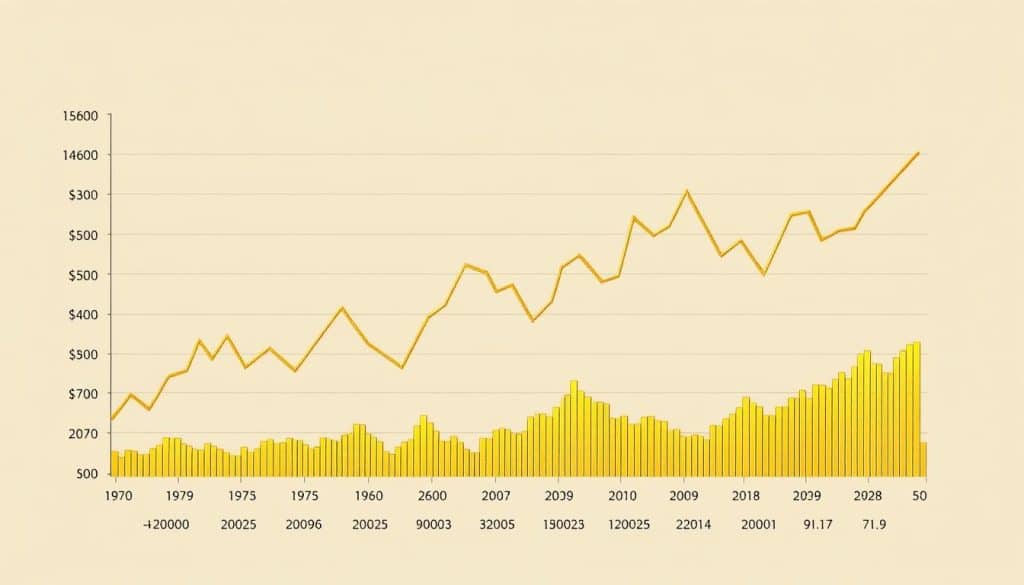
Economic uncertainty has sparked new interest in precious metals investment. Many investors now choose physical assets when markets become unstable. Gold offers a hedge against inflation in turbulent times.
Gold bar prices depend on several factors. Spot prices change daily based on global economic conditions. Additional costs include premium charges, dealer markups, and storage fees.
Savvy investors perform thorough gold market analysis before buying. Bullion costs differ greatly between dealers and product types. The final price depends on size, purity, and brand reputation.
Other precious metals markets show similar patterns. For example, recent silver price movements reflect these trends. Understanding market forces helps investors make smart choices.
Key Takeaways
- Economic uncertainty drives increased demand for physical precious metals
- Spot prices form the foundation but additional premiums apply to final costs
- Dealer markups, storage fees, and insurance affect total investment expenses
- Product size, purity level, and brand reputation influence pricing significantly
- Market analysis helps investors time purchases for optimal value
- Comparing multiple dealers ensures competitive pricing on bullion purchases
Current Gold Bar Market Prices Hit New Highs
Gold bar prices have soared to record levels in 2024. Economic uncertainty and inflation fears are driving this surge. The precious metals market is experiencing its biggest rally in years.
Institutional and individual buyers are pushing demand to new heights. This has created a complex pricing environment. Understanding spot prices and dealer premiums is crucial for investors.
The market reflects broader economic trends pushing gold into safe-haven status. The gold rally’s impact on bitcoin shows how precious metals affect alternative investments.
Today’s Spot Price and Premium Analysis
The spot gold price is the base for all gold bar pricing. It’s currently above $2,000 per ounce. The final cost includes dealer premiums, usually 3% to 8% above spot price.
Premium analysis reveals key factors affecting final costs:
- Bar size and weight specifications
- Dealer inventory levels and demand
- Authentication and certification requirements
- Market volatility and supply chain factors
Premiums have risen as dealers face higher costs and supply issues. Smaller bars typically have higher percentage premiums due to manufacturing costs.
Regional Price Variations Across US Markets
Regional pricing differences create opportunities for investors who research multiple markets. New York and Los Angeles often have competitive pricing due to dealer concentration.
Key regional pricing factors include:
- Local dealer competition levels
- State and local tax implications
- Transportation and insurance costs
- Regional economic conditions
Rural markets may have higher premiums due to limited dealer networks. Price differences can exceed $50 per ounce between markets. Knowing these variations helps investors make smarter buying decisions.
Breaking Down Gold Bar Costs by Size and Weight
Gold bar sizes offer unique benefits based on your investment goals and budget. The precious metals market uses tiered pricing. Larger purchases often reduce per-ounce costs.
Premium costs vary across bar weights. Smaller bars have higher premiums due to manufacturing expenses. Larger bars benefit from economies of scale, appealing to serious investors seeking better alternatives to traditional investments.
1 oz Gold Bars: $2,000-$2,100 Range
One-ounce gold bars are the starting point for most investors. Current pricing ranges from $2,000 to $2,100 per bar. This includes premiums of 3-5% above spot price.
The higher premium covers production costs per ounce. Dealers must factor in packaging, authentication, and handling expenses. Despite higher costs, 1 oz bars remain popular for their liquidity.
10 oz Bars: Bulk Pricing Advantages
Ten-ounce bars offer significant bulk discounts for larger investments. Premiums typically drop to 2-3% above spot price. This represents substantial savings compared to smaller denominations.
These mid-sized bars balance cost efficiency with manageable investment amounts. The weight pricing advantage becomes clear when comparing total premiums across different sizes.
1 kg Investment Bars: Institutional Pricing
Kilogram bars have the lowest premiums, often just 1-2% above spot price. These institutional rates reflect large-scale production efficiency. They also account for reduced handling costs per ounce.
Professional investors and institutions prefer these larger bars for cost effectiveness. The high upfront investment limits accessibility. However, it delivers maximum value for serious precious metals portfolios.
| Bar Size | Current Price Range | Premium Above Spot | Best For |
|---|---|---|---|
| 1 oz | $2,000-$2,100 | 3-5% | New investors |
| 10 oz | $20,400-$21,000 | 2-3% | Serious collectors |
| 1 kg | $65,500-$67,500 | 1-2% | Institutional buyers |
Market Forces Driving Gold Bar Price Increases
Gold bar prices are soaring due to intertwined economic factors. Investors worldwide seek refuge in tangible assets amid policy changes and global instability. This unprecedented demand for precious metals shows no signs of slowing down.
Economic conditions have created ideal circumstances for gold appreciation. Rising inflation rates, currency devaluation concerns, and geopolitical tensions push investors toward safe-haven assets. These drivers suggest continued upward pressure on gold bar prices.
Federal Reserve Policy Impact on Precious Metals
Federal Reserve decisions directly influence gold bar demand through interest rate adjustments. Low interest rates make gold more attractive as it doesn’t compete with high-yielding bonds. Recent quantitative easing has weakened the dollar, increasing gold’s appeal to international buyers.
The dollar’s strength and gold prices have an inverse relationship. Every Federal Reserve policy announcement triggers immediate market reactions in precious metals trading Investors watch Fed communications closely for future monetary policy direction signals.
“The Federal Reserve’s accommodative monetary policy has created an environment where gold serves as a critical portfolio diversifier against currency debasement risks.”
Global Economic Uncertainty and Inflation Hedge Demand
Economic uncertainty has intensified demand for gold as an inflation hedge. Supply chain issues, energy price swings, and pandemic impacts have created ongoing inflationary pressures. Gold typically performs well during times of rising consumer prices.
Institutional investors are putting more money into precious metals. Central banks worldwide have increased gold reserves as economic uncertainty persists. This institutional demand supports higher gold bar prices across all weight categories.
| Economic Indicator | Current Level | Impact on Gold | Trend Direction |
|---|---|---|---|
| Inflation Rate | 3.2% | Positive | Rising |
| Real Interest Rates | -0.8% | Positive | Negative |
| Dollar Index | 103.5 | Negative | Volatile |
| Geopolitical Risk | Elevated | Positive | Increasing |
Gold Bar Purchase Locations and Hidden Fees Revealed
Gold bars can be bought through various channels, each with unique costs and services. Knowing these differences helps investors make smart choices to protect their money and investments.
Many buyers only look at advertised prices. Hidden fees can add 3-8% to your final purchase price. This can make seemingly good deals much more expensive.
Authorized Dealers vs Online Marketplaces
Authorized dealers offer face-to-face transactions with instant product checks. They usually charge 4-6% above spot price but guarantee authenticity and provide customer support.
Local coin shops let you inspect items before buying. Their stock may be limited, and prices often reflect higher costs.
Online marketplaces have competitive pricing and a wide selection. Big platforms like APMEX and JM Bullion charge 2-4% above spot price.
These digital platforms also offer learning resources and investment options to grow your portfolio.
Shipping, Insurance, and Authentication Costs
Shipping costs $15-40 for standard delivery, with faster options at $50-100. Many dealers offer free shipping on orders over $199-500.
Insurance fees usually add 0.5-1% of order value. This provides crucial protection during shipping. Some dealers include insurance, while others charge extra.
Authentication costs vary between purchase channels. Authorized dealers include verification in their service. Private sellers may require separate testing, costing $25-75 per bar.
Storage adds ongoing expenses. Home storage needs secure safes. Professional vault services charge yearly fees of 0.5-1.5% of stored value.
2024-2025 Gold Bar Price Predictions from Industry Experts
Industry analysts have shared their latest price predictions for gold bars through 2025. These forecasts reflect complex market dynamics. Major investment firms are tracking economic indicators to guide investors on precious metals.
Analyst Forecasts and Technical Analysis
Gold price targets are widely attributed to Goldman Sachs, JPMorgan and Citigroup in secondary coverage, but the specific figures that circulate are not traceable to published research from those banks, so none is reproduced here. Bank commodity forecasts are also revised frequently, which is why a single quoted number is rarely meaningful on its own.
Analysts use multiple data points for their projections. This approach is similar to how experts analyze cryptocurrency market trends.
Economic Indicators Signaling Future Trends
Key economic indicators are shaping future trends in gold pricing. The Federal Reserve’s decisions remain the main catalyst. Interest rate cuts could significantly boost gold demand.
Geopolitical tensions and currency debasement fears also play a role. Many analysts expect these conditions to continue through 2025. This outlook supports higher gold prices.
Essential Price Tracking Tools for Gold Bar Investors
Gold bar investors use tech platforms to track markets and time investments better. These tools offer real-time data for smart choices in volatile markets. They provide analysis features once limited to big traders.
Professional Market Data Services
Top market data platforms give investors high-quality info. APMEX Live Pricing and JM Bullion’s tracker update spot prices often. They show charts, indicators, and premiums for various bar sizes.
Many services work with best crypto chart app features for full portfolio tracking. They offer custom dashboards to view multiple metals at once.
Smartphone Applications and Alert Systems
Mobile apps put market tracking in investors’ hands. Gold Live and Precious Metals Live send alerts for price changes. Users can set price alerts for different bar weights and dealers.
Advanced apps compare dealers, guide authentication, and calculate secure storage. Most offer free basic services and paid options with better analysis.
Complete Gold Bar Buying Guide for First-Time Investors
New gold investors need a guide to navigate the precious metals market. This approach protects your investment and ensures informed decisions. Understanding proper procedures helps you avoid costly pitfalls.
The gold bar market offers opportunities but also presents risks. Unprepared buyers may lose thousands of dollars annually. Proper knowledge can help prevent these losses.
Research and Dealer Verification Process
Dealer verification is crucial for safe gold bar investing. Check Better Business Bureau ratings and read customer reviews. Look for dealers with proper licensing and displayed credentials.
Verify dealer memberships with professional organizations like the Professional Numismatists Guild. These affiliations indicate adherence to industry standards. Compare pricing across multiple dealers to identify fair market rates.
Reputable dealers offer transparent pricing with clearly stated premiums. Similar to cryptocurrency investment strategies, thorough dealer research prevents costly mistakes.
Authentication and Purity Testing Methods
Proper authentication methods protect against counterfeit gold bars. Always request assay certificates from recognized testing facilities. These verify purity and weight specifications.
Professional dealers provide detailed documentation including serial numbers and refiner information. Avoid dealers who can’t provide proper certification. Be wary of those reluctant to discuss authentication procedures.
Consider purchasing only from LBMA-approved refiners. These refiners meet international standards and provide reliable authentication documentation.
Secure Payment and Storage Solutions
Secure storage options include home safes and professional vault services. Bank safety deposit boxes suit smaller collections. Private vaults offer enhanced security for larger investments.
Payment methods impact transaction security. Wire transfers and certified checks are safer than cash. Avoid dealers who only accept cash or cryptocurrency payments.
| Storage Option | Security Level | Annual Cost | Insurance Coverage |
|---|---|---|---|
| Home Safe | Moderate | $0-200 | Homeowner’s Policy |
| Bank Safety Deposit | High | $50-300 | Separate Required |
| Private Vault | Maximum | $300-1000 | Included |
| Dealer Storage | High | $200-600 | Dealer Provided |
Insurance protects your investment against theft, damage, or loss. Standard homeowner’s policies often limit precious metals coverage. Separate precious metals insurance is essential for larger holdings.
Making Smart Gold Bar Investment Choices in Today’s Market
Gold bar prices now range from $2,000 to $2,100 for one-ounce bars. This shows strong market fundamentals. Premiums vary between 3% to 8% above spot prices.
Larger bars offer better value per ounce. Smaller denominations provide more flexibility for future sales. Authentication, storage, and insurance can add 2% to 5% to yearly ownership costs.
The market outlook is positive based on Federal Reserve policies. Analysts project continued strength through 2025. Short-term volatility is still possible.
Price tracking tools help investors time purchases effectively. Compare dealer premiums before buying. Verify authentication procedures and establish secure storage.
Consider starting with smaller positions to learn market dynamics. Professional advice can guide portfolio allocation decisions. Most advisors suggest 5% to 10% in precious metals for diversification.