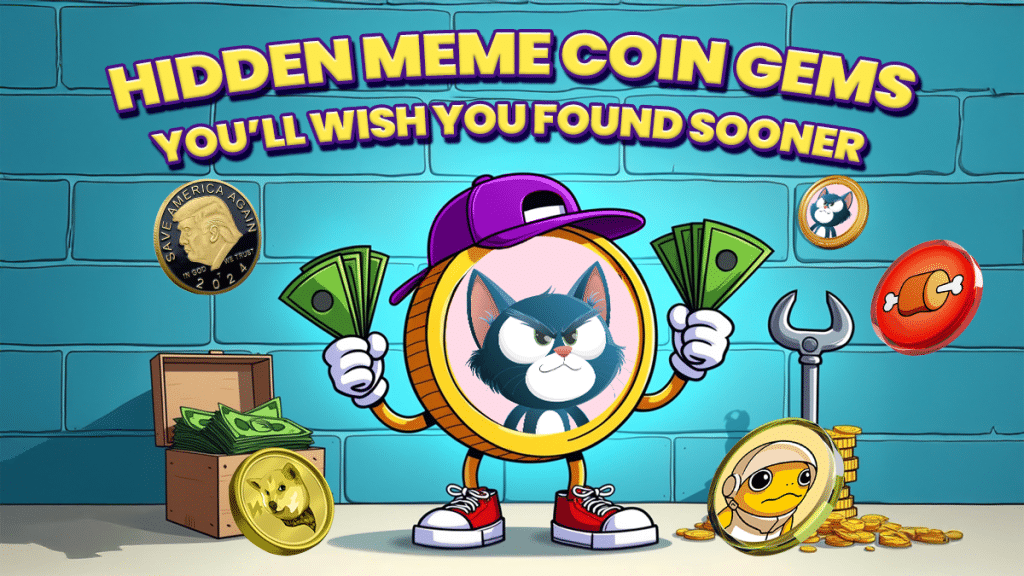
The meme coins worth researching in 2026 include Dogecoin (DOGE), Shiba Inu (SHIB), Pepe (PEPE), Bonk (BONK), dogwifhat (WIF), Pudgy Penguins (PENGU), and Troller Cat (TCAT). They represent different levels of market maturity, ecosystem development, and investment risk. Inclusion on this list does not mean that any coin is undervalued or likely to generate a profit.
Before buying a meme coin, compare its market capitalization, trading volume, liquidity, token distribution, development activity, and official project documentation. Established cryptocurrencies generally offer more trading history to evaluate, while new tokens and presales may have limited price discovery and greater uncertainty.
Quick checklist before investing:
- Check the current market capitalization, circulating supply, and trading volume using reputable market-data platforms.
- Verify the token contract, official website, exchange listings, and available liquidity.
- Review the tokenomics, vesting arrangements, security documentation, and actual project activity.
- Treat advertised staking yields and projected listing prices as unverified until independently substantiated.
- Invest only what you can afford to lose, and avoid decisions based on countdown timers or social media hype.
Important: Meme coins are speculative crypto assets. Community popularity, a large advertised APY, or a successful presale does not guarantee future demand, liquidity, or price appreciation.
How We Evaluate Meme Coins
There is no universally best meme coin for every investor. A useful comparison should distinguish established tokens with observable trading histories from early-stage projects whose future liquidity, adoption, and development remain uncertain.
The following criteria provide a practical starting point.
| Evaluation factor | What to examine | Why it matters |
|---|---|---|
| Market capitalization | Circulating supply multiplied by market price | Helps estimate the market’s current valuation of a token |
| Trading volume | Reported volume across credible trading venues | Indicates trading activity, but may include unreliable or inflated figures |
| Liquidity | Order-book depth, trading-pair liquidity, and price impact | Helps determine whether a position can be bought or sold efficiently |
| Tokenomics | Maximum supply, circulating supply, allocations, unlocks, and burns | Reveals potential dilution and concentration risks |
| Community | Genuine engagement across social platforms | Helps assess awareness without assuming popularity guarantees demand |
| Development | Public releases, documentation, and working products | Provides evidence of execution beyond marketing |
| Security | Contract permissions, independent audit reports, and wallet controls | Helps identify technical and operational risks |
| Valuation | Current market cap and fully diluted valuation (FDV) | Helps put token prices and supply into context |
CoinGecko’s market data FAQ and methodology explain several of these market metrics.
The coins below are research candidates, not a verified ranking by current performance. Market prices, capitalization, and trading volumes change continuously, so readers should check current data before making a decision.

7 Meme Coins to Research in 2026
1. Troller Cat (TCAT): An Early-Stage Meme Coin Presale
Troller Cat ($TCAT) is a meme coin project that promotes a combination of community participation, staking, and play-to-earn gaming. Unlike established tokens with longer public trading histories, TCAT is presented primarily as a presale-stage opportunity, making verification of its tokenomics, launch arrangements, and future liquidity particularly important.
According to its official website and project FAQ, Troller Cat is an Ethereum-based ERC-20 token with a proposed ecosystem that includes a Game Center, staking rewards, and an advertising-revenue-funded buyback-and-burn mechanism.
What does Troller Cat offer?
The project’s published materials describe several features:
- Presale: The token is distributed through a multi-stage presale. The current stage, token price, amount sold, and remaining allocation should be checked directly before publication or purchase.
- Staking: The project advertises a 69% annual percentage yield (APY). This is a project-promoted rate, not a guaranteed investment return. Readers should verify the reward source, token emissions, lockup conditions, and withdrawal terms.
- Play-to-earn gaming: The proposed Game Center is intended to incorporate token rewards into gameplay. Its live functionality and actual user activity should be verified separately from roadmap promises.
- Buyback and burn: Project materials describe using advertising revenue to buy back and burn tokens. The effect on supply depends on whether revenue is generated, buybacks occur, and tokens are verifiably removed from circulation.
- Referral rewards: The project describes a referral system that unlocks after a qualifying purchase. Check the current rules, eligibility conditions, and reward terms before participating.
The project’s tokenomics page publishes a maximum supply of 372 billion TCAT, with allocations for the presale, staking rewards, gaming, liquidity, the team, and referrals. These are project-published figures and should be checked against the latest documentation and on-chain information.
What should potential TCAT buyers verify?
Before purchasing, review the following:
- Contract identity: Match the contract address on the official website with a reputable blockchain explorer. Never rely solely on a social media post or search advertisement.
- Independent audits: Read the actual audit reports, including their scope, findings, and unresolved issues. An audit does not guarantee that a project is safe or profitable.
- KYC claims: Determine which organization performed the verification, what it checked, and what the verification does not establish.
- Presale terms: Confirm the current token price, allocation, sale end conditions, claim process, refund policy, and any restrictions.
- Liquidity arrangements: Check whether liquidity has actually been provided and locked, for what amount and duration, and under whose control.
- Reward sustainability: Examine how staking rewards are funded and whether the advertised APY depends on continued token issuance.
The project’s terms and conditions state that cryptocurrency purchases are risky, do not provide equity ownership or a right to profits, and are not guaranteed to appreciate. They should be read before participating.
Is Troller Cat one of the best meme coins to invest in now?
TCAT may interest readers researching speculative presales, but the available project descriptions are not enough to establish that it is one of the best investments in the market. A defensible assessment requires independently checked contract information, current presale data, security findings, evidence of working products, and a realistic assessment of post-launch liquidity.
Potential attraction: An ecosystem combining gaming, token incentives, and community participation.
Main risks: Presale uncertainty, unproven demand, token concentration, reward dilution, limited liquidity, and the possibility that promised features or listings do not materialize.
Official project links:
- Website: https://www.trollercat.com/
- Presale: https://www.trollercat.io/buy-now/
- Telegram: https://t.me/trollercat
- X: https://x.com/trollercat_
- Reddit: https://www.reddit.com/r/TrollerCat/
These links provide access to project materials and community channels. They should not be interpreted as independent endorsements.
2. Dogecoin (DOGE): An Established Meme Cryptocurrency
Dogecoin is one of the best-known meme-origin cryptocurrencies. It began as an internet-culture project and developed into a widely recognized digital currency with a long public trading history.
Its established brand, recognizable community, and availability across numerous trading venues make DOGE a useful benchmark when comparing newer meme coins.
Why research Dogecoin?
- It has a longer trading history than most new meme tokens.
- Its market activity can be evaluated using historical prices, trading volume, and market capitalization.
- Its stated purpose includes peer-to-peer digital currency use.
- Its public ecosystem and community are documented through its official website.
What are the risks?
DOGE remains volatile and can experience substantial price declines. Its popularity does not establish that its current valuation is attractive, and its supply dynamics differ from those of tokens that use programmed burns.
Best suited for research: Readers who want to compare an established meme cryptocurrency with smaller, newer projects.
3. Shiba Inu (SHIB): A Meme Coin With a Broader Ecosystem
Shiba Inu developed from a meme-inspired cryptocurrency into a broader project with additional ecosystem initiatives. Depending on the component being evaluated, its offerings may include decentralized finance applications, community tools, and other token-related functionality.
Why research Shiba Inu?
- It has an established public history and a substantial online community.
- Its ecosystem offers more to investigate than the meme narrative alone.
- Its circulating supply, token distribution, and market liquidity can be compared with other established tokens.
What are the risks?
A large supply or a low unit price does not automatically mean a token is cheap. Token burns also do not guarantee that demand will increase enough to support the price.
Before investing, review the project’s official documentation, verify the relevant token contracts, and distinguish functioning products from announcements or planned developments.
Best suited for research: Readers interested in comparing a meme-origin token with a wider crypto ecosystem.
4. Pepe (PEPE): A Meme Coin Driven by Internet Culture
Pepe is a meme cryptocurrency associated with internet meme culture. Its investment narrative is closely connected to community attention, market sentiment, and speculative trading.
Why research Pepe?
- It provides a comparison point for tokens whose appeal is primarily cultural and community-driven.
- Its trading history can help readers examine how quickly sentiment-driven assets move during market rallies and downturns.
- Its market capitalization and trading liquidity can be assessed using public market-data services.
What are the risks?
Viral attention can disappear quickly. Sharp price movements, concentrated holdings, liquidity changes, and speculative trading can create substantial losses for buyers who enter during periods of heightened enthusiasm.
Do not confuse strong social media engagement with durable demand or an established economic use case.
Best suited for research: Readers studying highly speculative meme tokens and sentiment-driven price movements.
5. Bonk (BONK): A Solana Ecosystem Meme Coin
Bonk is a meme cryptocurrency associated with the Solana ecosystem. Its market narrative is linked to the broader Solana community and activity surrounding applications and tokens on the network.
Why research Bonk?
- It offers a way to investigate the relationship between meme tokens and blockchain ecosystem activity.
- Readers can examine its trading venues, liquidity, token distribution, and historical price behavior.
- It can be compared with other Solana-associated meme coins to understand how community attention and network activity differ.
What are the risks?
A token’s association with a popular blockchain does not make it a low-risk investment. BONK remains exposed to meme coin volatility, broader crypto market conditions, liquidity changes, and token-specific risks.
Check current token documentation and market data rather than assuming ecosystem popularity will translate into future price gains.
Best suited for research: Readers interested in meme coins associated with Solana.
6. dogwifhat (WIF): A Highly Speculative Solana Meme Coin
dogwifhat, commonly identified by the ticker WIF, is a Solana-based meme cryptocurrency whose appeal is rooted in internet culture and community attention.
Its simple meme identity makes it a useful example of how online narratives can become major drivers of speculative interest in crypto markets.
Why research dogwifhat?
- Its price history can be used to study sentiment-driven volatility.
- Its market activity can be compared with other Solana-based meme tokens.
- It provides a contrast with projects that promote gaming, staking, or broader ecosystem products.
What are the risks?
WIF’s market value can change rapidly as attention shifts. Readers should assess liquidity, holder concentration, trading activity, and the effect that large orders could have on price.
A low nominal token price is not a reliable valuation measure. Market capitalization, circulating supply, and fully diluted valuation provide more useful context.
Best suited for research: Readers exploring meme coins whose market narratives depend heavily on community participation and speculative demand.
7. Pudgy Penguins (PENGU): A Token Connected to an NFT Brand
Pudgy Penguins is a recognizable digital collectible brand, and PENGU is the associated cryptocurrency token. The broader brand and its NFT ecosystem provide a different context from meme coins built mainly around short-lived online jokes.
However, PENGU is a token associated with a brand, not simply another name for the Pudgy Penguins NFT collection. The NFT assets and the cryptocurrency token have distinct ownership, market, and risk characteristics.
Why research PENGU?
- It provides a case study of how a digital collectible brand can expand into a token-based ecosystem.
- Readers can investigate the relationship between brand engagement, community activity, and token demand.
- Its tokenomics and trading history can be compared with those of other meme-oriented assets.
What are the risks?
Brand recognition does not guarantee token appreciation. NFT market conditions, changes in community interest, token supply, and the actual economic role of PENGU can affect its valuation.
Verify current token documentation, circulating supply, and the relationship between the token and any associated products before making an investment decision.
Best suited for research: Readers interested in the overlap between meme culture, digital collectibles, and cryptocurrency.
How to Compare Meme Coins Before Investing
The most useful comparison goes beyond choosing the most recognizable name. Investors should evaluate each candidate against the same measurable criteria.
1. Compare market capitalization, not just token price
Market capitalization is generally calculated by multiplying the current token price by the circulating supply.
For example, a token priced at $0.00001 can still have a substantial market capitalization if billions or trillions of tokens are circulating.
A token with a lower unit price is not necessarily cheaper than a token priced at $1. Compare market capitalization and fully diluted valuation alongside supply and demand.
2. Examine trading volume and liquidity
Trading volume measures the value or quantity of assets traded over a specified period. Liquidity describes how easily an asset can be bought or sold without substantially affecting its price.
These measures are related but not interchangeable. A token can report considerable trading volume while having shallow liquidity or unreliable trading activity.
Review the specific trading pairs, order-book depth where available, liquidity-pool reserves for decentralized exchanges, and likely price impact for your intended trade size.
3. Read the tokenomics
Tokenomics describes how a token is issued, distributed, used, and potentially removed from circulation.
Check:
- Total supply, circulating supply, and maximum supply.
- Team, treasury, presale, and community allocations.
- Token unlock schedules and vesting arrangements.
- Staking emissions and the source of rewards.
- Burn mechanisms and evidence of actual burns.
- Concentration of tokens among large wallets.
A deflationary mechanism may reduce supply, but it does not automatically increase a token’s market price. Demand, liquidity, and market conditions remain important.
4. Verify actual utility and development
A project may advertise gaming, staking, NFTs, decentralized finance, or other features. The relevant question is whether those features are live, usable, and documented.
Look for working products, recent development releases, transparent documentation, and evidence of real user activity. Treat future roadmap milestones as plans rather than completed achievements.
5. Assess security and ownership risks
Review the available smart contract audit reports and understand their limitations. Check for privileged contract functions, upgrade permissions, minting capabilities, and other controls that could affect holders.
For decentralized exchanges, assess the liquidity pool and who controls its assets. For centralized exchanges, review the trading venue’s reliability and withdrawal arrangements.
No audit, KYC process, exchange listing, or security badge eliminates every risk.
Are Meme Coin Presales Worth the Risk?
A meme coin presale allows participants to acquire tokens before or during a project’s initial distribution process, often before broad exchange trading begins.
Presales can offer access to an early-stage project, but they also create risks that are different from those of established, actively traded cryptocurrencies.
What makes a presale different?
- Limited price discovery: A presale price is set under the project’s sale terms and does not necessarily reflect the price at which the token will trade later.
- Uncertain liquidity: A planned exchange listing does not guarantee that sufficient liquidity will be available.
- Project execution risk: Features, partnerships, and milestones may be delayed, changed, or abandoned.
- Supply and allocation risk: Future token unlocks and reward emissions can create selling pressure.
- Transaction risk: Crypto purchases may be irreversible, and wallet mistakes or fraudulent contracts can lead to permanent losses.
How should you evaluate advertised ROI?
Consider a hypothetical example in which a token is sold for $0.00000864 and a future listing price of $0.0005309 is advertised.
The implied price multiple would be:
$0.0005309 ÷ $0.00000864 ≈ 61.45
That is approximately 61.45 times the purchase price before fees, taxes, slippage, and other costs. It is a mathematical comparison between two prices, not evidence that the token will achieve that listing price or that an investor will realize that return.
The realized outcome could be substantially lower, including a total loss. A future listing price is only meaningful if it can be substantiated and if buyers can actually sell at that price in a liquid market.
The same principle applies to advertised staking APYs. A high nominal yield may be offset by token-price declines, inflation from newly issued rewards, lockup conditions, or insufficient liquidity.
For TCAT specifically, verify the current presale stage and price on the project’s official channels. Do not rely on older stage numbers, countdowns, or projections copied into third-party articles.

How to Research a Meme Coin Safely
Use this checklist before purchasing any meme coin, particularly a new token or presale.
- Find the official website. Confirm that its domain matches the project’s verified communications. Beware of imitation websites and sponsored search results that lead to fraudulent pages.
- Verify the contract address. Match it against official documentation and a reputable blockchain explorer. Similar token names do not establish that two contracts are the same asset.
- Check market data. Compare prices, circulating supply, market capitalization, and volume across reputable providers.
- Inspect liquidity. Determine whether meaningful liquidity exists and whether your intended transaction could move the price substantially.
- Read the audit report. Check the auditor, scope, date, findings, and remediation status. Do not treat an audit as a guarantee.
- Review the distribution. Examine large holders, unlocks, team allocations, and reward emissions.
- Test the product claims. Confirm whether advertised applications are functional and whether usage can be independently observed.
- Read the terms. Understand purchase finality, claim conditions, lockups, and any limitations before transferring funds.
- Protect your wallet. Never disclose your seed phrase or private keys, and never sign transactions you do not understand.
- Set a risk limit. Decide in advance how much you can afford to lose without affecting essential expenses or financial obligations.
For broader regulatory context, consult the SEC staff statement on meme coins. Its discussion is specific to the US regulatory context and should not be interpreted as a universal legal classification for every token or jurisdiction.
Frequently Asked Questions
Which meme coins should I research in 2026?
Dogecoin, Shiba Inu, Pepe, Bonk, dogwifhat, and Pudgy Penguins are useful established or ecosystem-linked candidates to compare. Troller Cat is a separate early-stage presale candidate that requires additional verification. None should be treated as a guaranteed winner, and a current ranking requires up-to-date market data.
What is the best meme coin to invest in now?
There is no universally best meme coin. The right research candidate depends on your risk tolerance, investment horizon, liquidity needs, and understanding of the project. Compare valuation, supply, trading activity, development, and security rather than relying on popularity alone.
Is Troller Cat (TCAT) a safe investment?
No presale can be considered safe simply because its website advertises an audit, KYC verification, staking rewards, or locked liquidity. These claims need to be verified, and even verified security measures cannot eliminate market, liquidity, or project failure risks. TCAT buyers should also read the official presale terms and understand that purchases may be irreversible.
Can meme coins deliver 100x returns?
A 100x return is mathematically possible for a token whose price increases by a factor of 100, but it is highly speculative and should not be treated as a realistic expected outcome without strong evidence. Large advertised upside does not account for liquidity constraints, token dilution, fees, or the possibility of a total loss.
Does a low token price mean a meme coin is undervalued?
No. Unit price alone says little about valuation. Circulating supply, total supply, market capitalization, fully diluted valuation, liquidity, and demand are essential context.
What does a 69% APY mean for a meme coin?
An advertised 69% annual percentage yield is a stated annualized reward rate under particular assumptions. It does not necessarily mean that an investor will earn 69% in spendable value. Token-price declines, reward emissions, lockups, and withdrawal restrictions can reduce or eliminate the economic benefit.
How do I identify a legitimate meme coin?
No single test proves legitimacy. Verify the contract, examine independent security reports, review the token distribution, assess liquidity, and confirm whether the project delivers its advertised functionality. Be wary of guaranteed returns, artificial urgency, anonymous or unverifiable claims, and pressure to recruit new buyers.
Where can I find reliable meme coin market data?
CoinGecko and CoinMarketCap provide market data and explanations of their methodologies. Cross-check the figures against relevant exchanges and blockchain explorers, especially for small tokens with limited trading activity. Market data can be incomplete or unreliable, so no single metric should determine an investment decision.