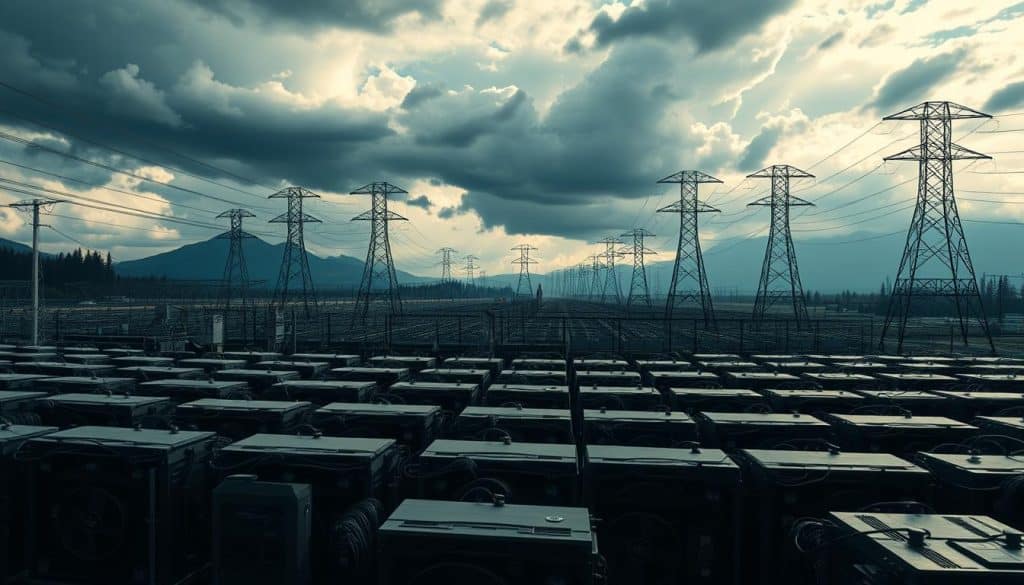
British Columbia has banned new cryptocurrency mining connections to address its power grid crisis. The province recognizes the strain crypto mining puts on electrical infrastructure. This action aims to protect critical energy resources for essential needs.
The ban is a strategic response to power generation and distribution challenges. Crypto mining demands have pushed the grid to its limits. This has created unprecedented pressure on BC’s energy ecosystem.
Energy regulators are prioritizing stable power for homes and vital businesses. They’re choosing these sectors over cryptocurrency mining operations. This move marks a turning point in managing tech growth against infrastructure limits.
Key Takeaways
- British Columbia halts new crypto mining grid connections
- Power grid capacity has reached critical stress levels
- Prioritizing essential energy consumption over cryptocurrency operations
- Regulatory intervention addresses potential infrastructure collapse
- Environmental and economic considerations driving policy decisions
Understanding the Current Energy Crisis in British Columbia
British Columbia’s power infrastructure faces unprecedented stress. Multiple factors threaten the stability of the electrical grid. The province’s energy landscape is complex and full of critical challenges.
Environmental and infrastructural issues fuel the BC energy crisis. Prolonged drought has severely impacted hydroelectric power generation. Water levels in reservoirs have plummeted, reducing consistent power production.
Impact of Drought on Power Generation
Drought has strained British Columbia’s power grid capacity. Hydroelectric facilities operate at reduced efficiency due to critically low water levels. Energy providers now explore alternative generation methods and implement strict conservation measures.
- Hydroelectric power output decreased by 22% in the past year
- Reservoir water levels at historic low points
- Increased reliance on supplementary power generation techniques
Regional Power Grid Capacity Issues
The regional power infrastructure struggles to meet growing electricity demands. Crypto mining operations have added significant pressure to the constrained electrical network. This exacerbates existing capacity challenges.
Current Energy Consumption Statistics
Recent data shows mounting pressures on British Columbia’s electrical system. Residential and industrial sectors continue to expand rapidly. This growth pushes the power grid to its operational limits.
Comprehensive strategic planning is now necessary for future energy sustainability. The current situation demands innovative solutions and careful resource management.
| Sector | Annual Energy Consumption | Percentage Increase |
|---|---|---|
| Residential | 14,500 GWh | 3.2% |
| Industrial | 22,300 GWh | 5.7% |
| Crypto Mining | 1,800 GWh | 12.5% |
British Columbia Locks Out New Crypto Miners: Policy Overview
British Columbia has launched a new policy targeting cryptocurrency operations. The government’s action suspends grid connections for new crypto mining facilities. This addresses critical energy management challenges in the province.
The policy’s key aspects include:
- Immediate halt of new grid connections for crypto mining operations
- Comprehensive review of existing cryptocurrency mining infrastructure
- Strategic energy conservation measures
BC Utilities Commission is enforcing strict regulations on crypto mining. Recent research suggests these policies can impact regional energy dynamics. This is especially true in areas with limited power generation capacity.
Our primary goal is to protect critical infrastructure and ensure sustainable energy management for all residents., BC Energy Spokesperson
The grid connection suspension aims to manage escalating energy demands. British Columbia wants to preserve electrical grid stability. It also prioritizes residential and industrial energy needs over crypto mining.
Cryptocurrency mining operations typically require substantial electrical resources. The new policy addresses potential strain on the provincial power grid. It creates a balanced framework for innovation and energy conservation.
Environmental Concerns Driving the Decision
Crypto mining poses a significant environmental challenge. It raises questions about sustainability and ecological impact. The effects go beyond simple energy consumption, affecting complex ecological systems and resource use.
Cryptocurrency operations have a multi-faceted environmental footprint. Researchers have identified several key areas of concern.
- Massive electricity consumption by mining facilities
- Substantial water usage in cooling infrastructure
- Significant carbon footprint from energy-intensive processes
Water Usage in Crypto Mining Operations
Water usage in crypto mining is a serious environmental issue. Large-scale operations need extensive cooling systems that use millions of gallons yearly. A single Bitcoin facility can use as much water as small towns.
Carbon Footprint Assessment
Cryptocurrency mining’s carbon footprint is a growing problem. Most operations use electricity from fossil fuels, causing high greenhouse gas emissions. Bitcoin mining alone produces about 64 megatons of CO2 annually.
Impact on Local Ecosystems
Crypto mining can disrupt local ecosystems in multiple ways. Energy-intensive processes strain regional power grids, potentially affecting community resources. Water extraction for cooling can harm wildlife habitats and reduce agricultural water.
“Environmental sustainability must be a primary consideration in emerging digital technologies” – Climate Research Institute
Economic Implications for the Mining Industry
British Columbia’s new policy is reshaping crypto mining economics. The decision to restrict new miners from the power grid poses a major challenge. This could trigger significant economic shifts in the local mining industry.
Key economic impacts of this policy include:
- Potential loss of estimated $50-75 million in potential crypto mining investments
- Reduction in projected job creation within the BC mining industry impact zone
- Potential migration of crypto mining operations to more permissive jurisdictions
The effects go beyond immediate mining operations. Local tech infrastructure and supporting industries might face unexpected contractions. Smaller mining companies could struggle to survive.
Larger operations may relocate to regions with more favorable energy policies. This could lead to a significant shift in the industry’s geography.
“This policy fundamentally restructures our approach to crypto mining economics,” says Dr. Rachel Thompson, energy policy expert at the University of British Columbia.
Analysts predict a 30-40% drop in cryptocurrency-related economic activity in BC. This change may spark innovative approaches to sustainable digital currency mining. It could also speed up the development of green energy solutions.
Crypto entrepreneurs must now rethink their investment strategies. They’ll need to consider new locations and technologies. These should align with strict environmental and energy consumption guidelines.
Data Center Power Consumption Analysis
Digital infrastructure’s energy demands are skyrocketing. Data centers strain power grids, especially in British Columbia. Analyzing power usage helps policymakers make smart choices about tech infrastructure.
Data centers are massive electricity consumers. Their energy needs go beyond traditional industrial models. Crypto mining operations add even more pressure to regional electrical grids.
Current Energy Usage Patterns
- Average data center consumes 10-50 megawatts of electricity annually
- Cryptocurrency mining facilities demand 80-120% more power compared to standard data centers
- Energy consumption continues to grow exponentially with technological advancement
Future Projections and Demands
| Year | Estimated Energy Consumption | Growth Percentage |
|---|---|---|
| 2023 | 200 TWh | 12% |
| 2025 | 280 TWh | 18% |
| 2027 | 360 TWh | 22% |
“The exponential growth of data center energy consumption requires immediate strategic interventions.” – Energy Research Institute
Comparison with Traditional Industries
Data centers and crypto mining use more energy than traditional manufacturing. A steel plant might use 50-100 megawatts of power. In contrast, a large crypto mining facility can need 150-250 megawatts.
This high energy demand creates big challenges for regional power grids. It calls for careful planning and innovative solutions.
Alternative Energy Solutions for Crypto Mining
Crypto mining operations are exploring sustainable practices to address energy consumption challenges. Renewable energy crypto mining offers a promising path to transform the industry’s environmental impact. Innovative strategies can help miners reduce their carbon footprint while maintaining efficiency.
Key alternative energy solutions for sustainable mining practices include:
- Solar power installations at mining facilities
- Wind energy integration for data center operations
- Geothermal power utilization in remote mining locations
- Hydroelectric energy partnerships
Successful implementation of renewable energy crypto mining requires strategic planning. Operators must evaluate local energy infrastructure and assess renewable resource availability. They should also design energy-efficient hardware configurations.
Advanced cooling systems and high-efficiency computing equipment can significantly reduce overall power consumption. Mining operators can dramatically decrease their environmental impact while potentially cutting operational costs.
Green energy solutions are not just environmentally responsible, they represent the future of crypto mining infrastructure.
Several global companies have shown the viability of sustainable mining practices. These practices leverage renewable energy sources to decrease environmental impact and costs.
- Conduct comprehensive energy audits
- Invest in renewable energy infrastructure
- Upgrade to energy-efficient mining hardware
- Develop hybrid energy generation strategies
The shift toward renewable energy in crypto mining is crucial. It addresses environmental concerns and creates more sustainable technological ecosystems.
Impact on Local Communities and Businesses
British Columbia’s cryptocurrency mining ban has disrupted local economies. Communities that relied on crypto mining now face economic stability challenges. The ban’s impact reaches beyond job losses, reshaping regional economic systems.
Entire local economic ecosystems are being transformed. This change affects businesses, workers, and community dynamics. The future of these areas is now uncertain.
Job Market Transformations
Crypto mining’s halt has shaken local job markets. Skilled workers in tech and engineering now face job insecurity. These professionals were key to cryptocurrency mining infrastructure.
The ban affects both direct and indirect employment. Many workers may need to retrain for new roles. This shift creates challenges for the local workforce.
- Estimated job losses: 200-350 direct technical positions
- Indirect employment impact: Additional 100-150 support roles
- Potential skill retraining requirements for displaced workers
Economic Ripple Effects
Local businesses supporting mining operations face major revenue drops. Small enterprises offering specialized services struggle to stay afloat. The ban’s effects ripple through the entire local economy.
“The mining ban has fundamentally altered our local economic landscape, forcing businesses to rapidly adapt or face potential closure.” – Local Economic Development Officer
Community Response
Reactions to the ban are mixed in affected communities. Environmental advocates support it, while economic stakeholders worry about job losses. Discussions now focus on balancing economic needs with environmental preservation.
The community debates the long-term sustainability of regional energy resources. This conversation shapes the area’s future economic and environmental policies.
Regulatory Framework and Compliance Measures
BC’s crypto mining scene has changed due to new regulations on energy use. The government has created rules to manage mining compliance across the digital currency world.
These regulations aim to balance innovation with sustainable energy use. They set clear guidelines for power usage and environmental protection.
Key elements of the new regulatory approach include:
- Mandatory energy efficiency assessments for crypto mining operations
- Strict power consumption limits for new mining facilities
- Required environmental impact statements
- Periodic compliance audits
“Our regulations aim to balance technological innovation with sustainable energy management,” stated a provincial energy official.
Existing miners must now show progress in reducing their carbon footprint. They face strict rules on power use and environmental impact.
New compliance measures target cryptocurrency mining companies. These rules set clear standards for energy use and ecological preservation.
| Regulatory Aspect | Compliance Requirement | Enforcement Mechanism |
|---|---|---|
| Energy Consumption | Maximum 5 MW per facility | Quarterly reporting |
| Renewable Energy | Minimum 50% green energy source | Annual certification |
| Environmental Impact | Comprehensive ecological assessment | Third-party verification |
Crypto mining businesses now face a complex regulatory landscape. They must focus on sustainable practices and responsible energy use in BC.
Future of Crypto Mining in British Columbia
BC’s crypto mining faces a turning point. New rules challenge the industry. Miners must find eco-friendly ways to work.
The industry needs fresh ideas for sustainable mining. Crypto operators should focus on green tech and energy savings.
Potential Policy Adaptation Strategies
- Implement strict renewable energy requirements for mining operations
- Develop energy-efficient blockchain verification processes
- Create incentive programs for green cryptocurrency mining
- Establish carbon-neutral mining certification standards
Industry Transformation Approach
Smart changes will rely on new green mining tech. Better cooling systems and clean energy can make mining kinder to nature.
Low-carbon computing can also help crypto operations become more eco-friendly.
Sustainable Mining Solutions
- Hydroelectric power integration
- Advanced semiconductor cooling technologies
- AI-driven energy optimization algorithms
- Modular renewable energy microgrids
BC can lead the world in green crypto mining. It can mix new tech with care for nature.
This balance could shape the future of mining in the province.
“The future of crypto mining lies not in unrestricted growth, but in intelligent, sustainable development.” – Clean Energy Research Institute
Comparison with Other Jurisdictions’ Approaches
Global crypto mining regulations differ greatly across regions. British Columbia has taken a strict stance on new operations. Other places have unique ways to manage the industry’s energy challenges. International policy comparison shows a complex network of regulatory strategies.
Several key regions have unique approaches to cryptocurrency mining rules. These include Iceland, Kazakhstan, China, and Texas.
- Iceland has leveraged its abundant geothermal energy to become a crypto mining hub
- Kazakhstan initially welcomed miners but later introduced strict power consumption controls
- China implemented a complete ban on crypto mining in 2021
- Texas has created crypto-friendly energy policies to attract mining operations
The global response to crypto mining varies greatly. Some countries see it as an economic chance. Others view it as an environmental risk.
Local energy setup, renewable resources, and economic goals shape each country’s approach. Regulatory frameworks are changing fast. Countries are weighing economic benefits against environmental worries and grid stability.
The policy comparison reveals no one-size-fits-all solution. Each place creates its own plan to tackle cryptocurrency mining challenges.
The future of crypto mining will likely depend on innovative energy solutions and adaptive regulatory approaches.
Technological Innovations and Solutions
Crypto mining is shifting towards sustainable and energy-efficient technologies. New blockchain solutions are tackling environmental issues linked to traditional mining practices. These innovations aim to reduce energy use and environmental impact.
Cutting-edge mining innovations are changing how the industry uses energy. Several key tech developments show great potential. These include low-energy consensus mechanisms and advanced cooling systems.
- Low-energy consensus mechanisms like Proof of Stake (PoS)
- Advanced cooling systems for mining hardware
- Renewable energy-powered mining operations
- Quantum-resistant blockchain architectures
Energy-efficient blockchain tech is particularly exciting. New protocols aim to slash computational power needs. Some platforms use algorithms that use up to 99% less energy than traditional methods.
“The future of cryptocurrency lies in sustainable, green technology solutions that minimize environmental impact.” – Tech Innovation Research Institute
New tools help miners adopt greener practices. These include energy tracking software and more efficient mining hardware. Smart grid integration and AI-powered systems also boost sustainability.
- Energy consumption tracking software
- Modular mining hardware with improved efficiency
- Smart grid integration platforms
- AI-powered optimization systems
Ongoing research in crypto mining points to a greener future. The industry is evolving rapidly. We can expect more groundbreaking solutions that balance tech progress with environmental care.
Conclusion
British Columbia faces a crucial decision about crypto mining’s future. The province is balancing tech innovation with environmental protection. BC’s restriction on new crypto mining shows its commitment to sustainable energy and ecosystem preservation.
Sustainable blockchain faces big challenges. Crypto miners must now use energy-efficient tech and renewable power. Emerging cloud mining technologies offer ways to reduce environmental impact while supporting blockchain growth.
BC’s approach could guide other regions with similar concerns. Successful blockchain integration needs teamwork between industry, policymakers, and environmental experts. The future of crypto mining in BC relies on balancing tech and ecology.
Green energy and low grid impact may become the new crypto mining norm. As environmental awareness grows, BC could lead in creating innovative digital asset solutions.