The best non-custodial wallet for most people holding serious amounts of crypto in 2026 is one that removes the single point of failure: no lone seed phrase, a second check on every transaction and a written plan for what happens to the funds if you can no longer act.
On that test, Bron leads for families and larger holdings, Ledger and Trezor remain the strongest hardware options, and Zengo is the best seedless app for one person. We compared eight self-custody wallets on security, recovery, shared control, inheritance, coin coverage and how easily they move money in and out of a bank.
Key takeaways
- A non-custodial wallet means you, not an exchange, control the keys. It also means nobody can reverse a mistake for you, so recovery design matters more than the app’s looks.
- Seed phrase wallets (MetaMask, Trust Wallet, most hardware) are only as safe as one piece of paper. Lose it and the funds are gone; leak it and so are the funds.
- MPC wallets (Bron, Zengo) split the key so there is no seed phrase at all, and recovery runs through biometrics, guardians or time delays instead.
- Only two wallets here have a built-in inheritance feature: Bron and Zengo. Everyone else leaves heirs with a phrase, a device and a hope.
Best non-custodial crypto wallets compared: our top choices
| Wallet | Type | Seed phrase | Shared control | Built-in inheritance | Best for |
|---|---|---|---|---|---|
| Bron | MPC app (mobile, desktop, web) | No | Yes, Owner, Member and Viewer roles | Yes | Families and larger holdings |
| Ledger | Hardware | Yes | Ledger Enterprise Multisig only | No | Coin coverage |
| Zengo | MPC app (mobile) | No | Business version only | Yes (Pro) | One person who wants no seed phrase |
| Trezor | Hardware | Yes, or multi-share backup | Third-party multisig only | No | Open-source hardware |
| Safe | Smart contract multisig | Per signer | Yes, M-of-N signers | Do-it-yourself | Ethereum treasuries |
| Tangem | NFC card hardware | Optional | No | No | Simple cold storage |
| Trust Wallet | Mobile app | Yes | View-only | No | Many coins and staking |
| MetaMask | Browser and mobile app | Yes | No | No | Ethereum DeFi and dApps |
Custodial vs non-custodial wallets: the tradeoff
A custodial wallet is an account at an exchange or app that holds your private keys for you, so it can reset your password but can also freeze or lose your crypto assets. A non-custodial crypto wallet holds your private keys on your side, so only you can access your funds, and nobody can restore your wallet if you lose your seed phrase or every recovery factor. Choosing between custodial and non-custodial wallets is a choice about who you trust with the blockchain keys, not about which app looks better.
Non-custodial wallets come in two broad kinds. A software wallet runs on a phone or browser and is convenient for web3 apps and daily crypto transactions. A crypto hardware wallet keeps private keys offline on a separate device, so the keys never touch an internet-connected computer. Many people use both: a hardware device or MPC wallet to store your crypto long term, and a software wallet for smaller, active crypto spending.
How we picked these wallets
We looked at each wallet the way someone holding six figures or more would, not a first-time buyer. Five questions decided the order:
- Security: does every transaction need a second, independent check (a device button, biometrics or a co-signer)?
- Recovery: is there one credential whose loss is fatal, and what happens if the company behind the wallet shuts down?
- Shared control: can a spouse or adviser co-approve, and can a bookkeeper see balances without being able to move them?
- Inheritance: can heirs get access without being handed live credentials in advance?
- Coverage and money movement: which major chains are supported, and can large amounts reach a bank account?
Our research drew on a detailed scored comparison and support-desk tests published by Bron, one of the wallets listed, which we checked against each vendor’s own website and help centre in November 2026. Where a vendor’s site did not confirm a claim, we left it out.
1. Bron: best for families and larger holdings
Bron is a non-custodial MPC wallet with no seed phrase, built around shared control and a native inheritance process. It is the only wallet here that combines roles, approvals and inheritance inside the same personal app.

- No seed phrase: keys are split with multi-party computation, and Bron says it “does not take possession, custody, or control” of user assets.
- Biometric signing: every transaction needs biometric confirmation, so an unlocked or compromised phone alone cannot sign.
- Recovery: if you lose access, it can be restored with a FaceScan or codes from two guardians, and two-factor authentication shortens some delays, with security delays (48 hours to 30 days depending on the account and what you can present) that the real owner can cancel by simply signing in.
- Shared control: Owner, Member and Viewer roles, with joint approval rules that a viewer can see but not move funds.
- Inheritance: you appoint one or more beneficiaries; they cannot see your balances while you are active, time-lock safeguards block early claims, and they pay nothing to recover access.
- Privacy: PIN-hidden accounts, and a forced PIN reset only starts a 24-hour countdown.
- Fiat: bank transfers in and out through Noah, a regulated provider that opens an account in your own name, with payouts in 120+ local currencies.
- Coverage: 26 networks, including Bitcoin, Ethereum, Solana, Tron, XRP and the main Ethereum layer 2s.
Who it’s for: families, couples and anyone who wants a co-approver, a bookkeeper’s read-only view and a plan for heirs without writing a seed phrase down anywhere. Personal tiers have no subscription; membership is set by the balance you hold in the wallet.
Drawback: you depend on Bron’s software for day-to-day signing. Bron has open-sourced its MPC library so that keys can be reconstructed if the company stops operating, but that path is newer and less tested than a plain recovery phrase. There is no debit card and no perpetual futures trading.
2. Ledger: best for coin coverage
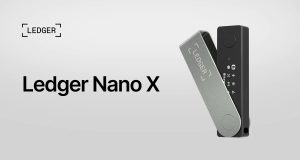
Ledger is the best-known hardware wallet, and it still has the widest coin coverage of anything here. Private keys are generated and kept on a secure element chip, and Ledger states that they never leave the device.
- Every Ledger device is built around a Secure Element chip.
- The cheapest model, the Nano S Plus, sells from about $69 on Ledger’s US store.
- Optional Ledger Recover, a paid monthly or yearly subscription that needs a passport or national ID card.
- Multi-signer approvals live in a separate product, Ledger Enterprise Multisig, rather than the consumer app.

Who it’s for: one person holding a wide spread of coins who is comfortable keeping a recovery phrase safe.
Drawback: no inheritance feature and no second user in the consumer app. Recovery after losing the device and the phrase depends on the paid Recover service.
3. Zengo: best seedless app for one person
Zengo is a mobile MPC wallet with no seed phrase, and it is the strongest single-user option for people who would rather never write one down.
- No seed phrase; recovery uses your email, a 3D face scan and a recovery file kept in your own cloud storage.
- Zengo Pro adds Theft Guard, a biometric check on larger withdrawals, and Legacy Transfer, a timer-based inheritance feature.
- 24/7 customer support, with priority support on Pro.
- A separate Zengo business app adds roles and approval thresholds for organisations.
Who it’s for: individuals who want seedless recovery and an inheritance option on their phone.
Drawback: the strongest protections need the paid Pro tier, staking is limited, and shared control sits in a different app from the personal wallet.
4. Trezor: best open-source hardware
Trezor makes hardware wallets with open-source firmware, so the code that protects your keys can be inspected by anyone.
- 100% open-source code and design, according to Trezor.
- Multi-share Backup splits recovery into several shares, so no single sheet can restore your wallet, and the keys stay completely offline on the device.
- The Trezor Safe 3 is the cheapest current model at $59; the Safe 5 is $129.

Who it’s for: holders who value auditability and want a split backup instead of one phrase.
Drawback: single-user, no inheritance feature, and multisig only through third-party services.
5. Safe: best for Ethereum treasuries
Safe (formerly Gnosis Safe) is a smart contract wallet that only moves funds when a set number of signers approve, such as two of three.
- M-of-N approvals enforced on-chain, so losing one signer’s key does not lose the funds.
- Safe reports $60B+ in assets and support for 40+ networks.
- Recovery and spending rules can be configured with modules.
Who it’s for: DAOs, funds and families holding mostly Ethereum-based assets.
Drawback: check that your coins live on a network Safe supports before you commit. Inheritance is a do-it-yourself setup rather than a feature, and balances and signers are public on-chain.
6. Tangem: best for simple cold storage
Tangem stores keys on NFC cards that you tap against your phone, which makes it the simplest hardware wallet to carry and use.
- Sold as a 2-card set ($54.90) or 3-card set ($69.90), so a backup card replaces a written phrase.
- A seed phrase is optional, for advanced users who want one.
Who it’s for: people who want hardware security without a screen-and-buttons device.
Drawback: if you skip the seed phrase and lose every card, the funds cannot be restored. Handing a backup card to an heir means handing over a live key.
7. Trust Wallet: best for many coins and staking
Trust Wallet is a free mobile wallet with one of the deepest coin lists and a wide in-app staking menu.
- Self-custody, protected by a secret recovery phrase.
- Supports 100+ blockchains in one app, on iOS, Android and as a browser extension.
- Buy, swap and stake inside the app; staking rewards are variable.
Who it’s for: active users with smaller balances spread across many chains.
Drawback: the phrase is a single fatal credential, signing happens on the same phone that stores the key, and there are no roles or inheritance.
8. MetaMask: best for Ethereum DeFi
MetaMask is the default wallet for Ethereum apps, available as a browser extension and a mobile app.
- Self-custody with a Secret Recovery Phrase.
- Works with almost every Ethereum and layer 2 web3 application, with a familiar user experience.
- Newer wallets can be created with a Google or Apple account instead of a written phrase.
Who it’s for: DeFi users who connect to many apps. Pair it with a hardware wallet for anything you cannot afford to lose.
Drawback: MetaMask cannot recover your wallet if you lose access, and there is no second user and no inheritance feature.
How to choose a non-custodial wallet
- You hold a large amount with a partner or family: pick a wallet with real roles and inheritance, such as Bron, or a Safe if your assets are all on Ethereum.
- You hold it alone and never want a seed phrase: Zengo or Bron.
- You want keys on a device you can hold: Ledger for coverage, Trezor for open-source code, Tangem for simplicity.
- You are a beginner or use DeFi daily with smaller sums: MetaMask or Trust Wallet, ideally with a hardware wallet behind them.
For the basics of custodial versus self-custody storage, see our guide to the types of crypto wallets, and our best cold wallets comparison for hardware options. Our crypto wallet security checklist covers the habits that matter whichever wallet you choose.
FAQ
What is a non-custodial wallet?
A non-custodial wallet is a crypto wallet where you control the private keys, so no exchange or company can freeze or move your funds. The trade-off is that nobody can recover them for you unless the wallet has its own recovery design.
Is a self-custody wallet safer than an exchange?
A self-custody wallet removes the risk of an exchange failing or freezing withdrawals, but it moves the risk to you. A wallet without a single fatal credential, such as an MPC wallet or a multisig, reduces that risk.
Which non-custodial wallet has no seed phrase?
Bron and Zengo both use MPC and have no seed phrase. Tangem can also be used without one, but then losing every card means losing the funds.
How do I pass my crypto to my heirs?
Use a wallet with a built-in inheritance feature, such as Bron or Zengo Pro, so heirs can claim access after a delay without holding your credentials in advance. With seed phrase wallets, heirs need the phrase itself, which is a security risk while you are alive.