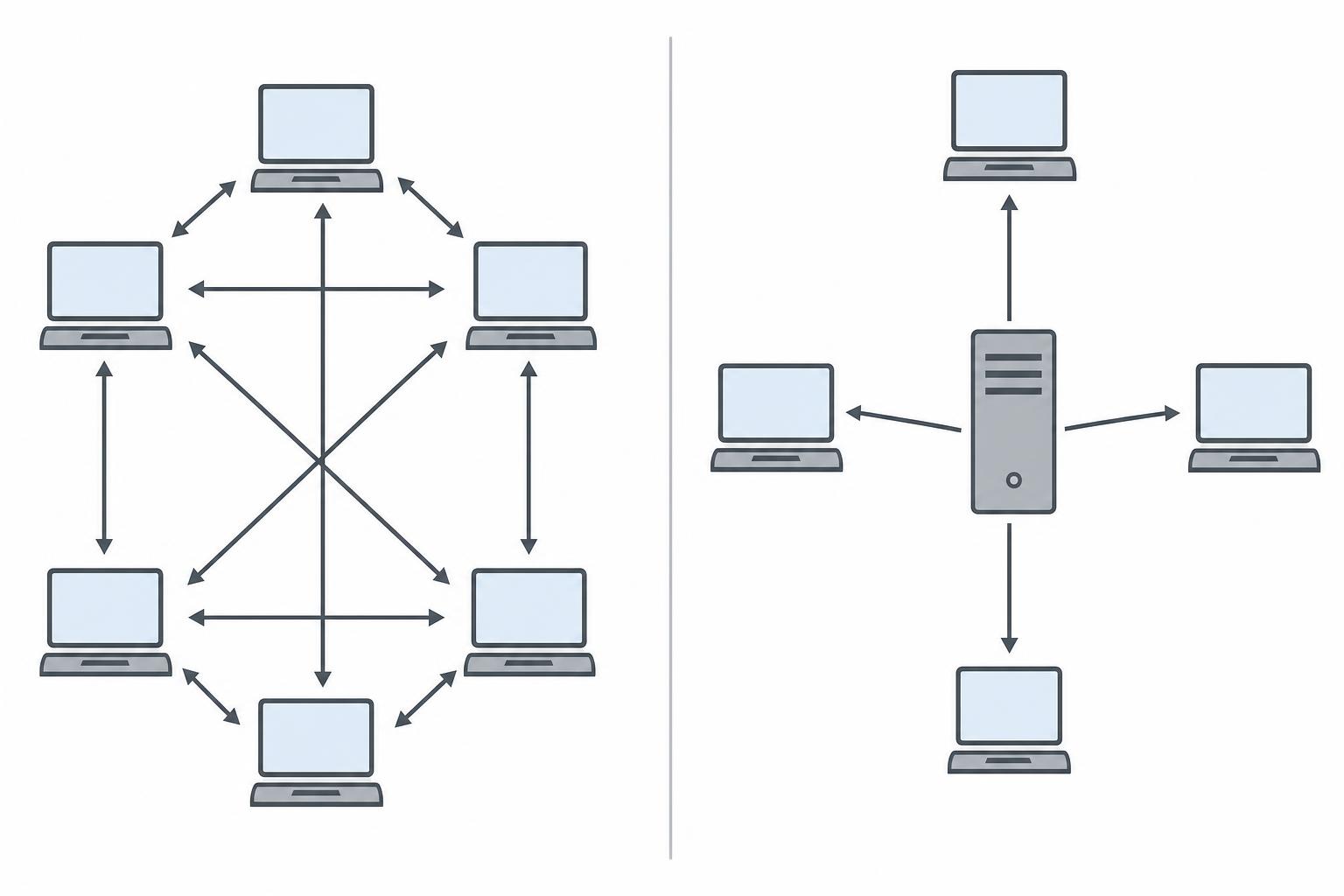


Rutor is a Russian-language BitTorrent tracker and torrent index used to discover peer-to-peer releases in categories such as movies, television, music, games, and software. It is not a streaming service, and it should not be treated as one: a torrent tracker helps users find releases and connect with the peers distributing them, while the files themselves travel across a peer-to-peer network rather than from a central server.
Anyone researching Rutor needs to keep separate ideas apart. BitTorrent technology is not inherently illegal, but the U.S. Copyright Office states that downloading or uploading copyrighted works through peer-to-peer networks without authorization can constitute copyright infringement. The legal status of any individual file depends on its copyright and on whether its distribution has been authorized, not on the protocol used to move it.
What Is Rutor?
Rutor is a torrent tracker and index within the Russian-language BitTorrent ecosystem. Its tracker information describes searchable releases and categories, and its own technical-status page identifies rutor.info as the current canonical domain, with rutor.is also in use. Unlike a licensed streaming platform, Rutor does not control the distribution environment: content discovery happens through torrent listings, file transfer happens between participating peers, and the copyright status of each release depends on that individual release rather than on a provider licence.
How Rutor Works
Rutor is built around the BitTorrent model, in which files are distributed between many participating computers instead of being delivered from a single conventional download server. The basic architecture involves several components working together:
- Torrent listing — describes a particular release.
- Torrent metadata — identifies the files and the information a BitTorrent client needs.
- Tracker or peer-discovery mechanism — helps clients find each other.
- Peers — the users participating in distribution.
- BitTorrent client — the software used to join the transfer.
The technology itself has legitimate applications. Peer-to-peer distribution is used to share software, open-source projects, public-domain material, and other files whose distribution is authorized.
What Can You Find on Rutor?
Rutor has historically been associated with a broad range of torrent categories: movies, television programs, music, games, software, and other digital files. The availability of a title is not evidence that its distribution is authorized. For copyrighted entertainment and commercial software, verify the copyright and licensing status before obtaining or sharing a file.
Is Rutor Safe?
Rutor should not automatically be treated as safe simply because a torrent listing is available. There are separate security questions to answer: whether the website or domain itself is trustworthy, and whether the particular file being distributed is safe. Those are not the same thing, and a positive answer to the first does not settle the second.
Torrent ecosystems can expose users to malicious or modified files, fake downloads, malware disguised as software or media, dangerous advertisements and redirects, untrusted uploaders, and files containing unexpected executables — alongside copyright and legal exposure. The U.S. Copyright Office warns about risks such as viruses, unexpected material, and spyware associated with unauthorized file sources. Treat any Rutor-related domain with caution: torrent sites are frequently cloned or impersonated, and neither a page nor a file can be assumed safe from its availability alone.
Is Rutor Legal?
Rutor’s legality cannot be settled by pointing at BitTorrent. The legal position depends on the material being distributed, the rights attached to it, and the laws that apply to the user. The U.S. Copyright Office explains that downloading or uploading copyright-protected works through peer-to-peer networks without the copyright owner’s authority may constitute infringement. WIPO similarly explains that copyrighted works do not become free to use simply because they have been published on the internet.
Copyright rules in the Philippines
The Philippine Electronic Commerce Act, as reproduced by WIPO Lex, includes unauthorized copying, reproduction, dissemination, distribution, uploading, downloading, communication, and making protected material available to the public among conduct that can be penalized when it infringes intellectual-property rights. Because copyright laws differ between countries, check the rules in your own jurisdiction rather than assuming torrenting is automatically legal or illegal everywhere.
The Rutor Domain Situation
The domain landscape is among the most important things to understand before searching for Rutor. Rutor’s technical-status page identifies rutor.info and rutor.is as newer domains and warns that rutor.org is a false site. Searching for an old site name can surface clones, impersonation sites, redirects, fake search pages, malicious advertisements, and unrelated domains trading on a familiar name. An old article or forum post mentioning a Rutor domain should not be assumed current; verify domain information through a trustworthy, current source.
What to Check Before Opening a Torrent File
Even when a torrent contains lawfully distributed content, basic security precautions still matter:
- Verify the source. Confirm the file comes from the legitimate publisher, developer, artist, or another authorized distributor.
- Check the file type. Be especially cautious with unexpected executables — a video file should not require an unrelated installer merely to play.
- Keep your operating system updated. Security updates address vulnerabilities that malware may otherwise exploit.
- Use reputable security software. Keep antivirus and endpoint protection enabled and current.
- Avoid entering sensitive information. Never give passwords, payment details, or personal information to unfamiliar torrent-related websites.
- Verify copyright authorization. Before obtaining copyrighted material, determine whether the distributor has permission to make it available.
Can Rutor Be Used for Legal Torrents?
BitTorrent can be used for lawful distribution; the deciding factor is authorization, not the protocol. Potentially lawful peer-to-peer content includes open-source software, Linux distributions, public-domain works, content released under suitable Creative Commons licenses, files distributed by their copyright owners, and other content explicitly authorized for peer-to-peer distribution. For copyrighted movies, television, commercial software, games, and music, use an authorized source unless you have a specific legal right to the file.
Rutor the Tracker vs. Rutor the Tablet
The name Rutor refers to different things depending on context. This page covers the torrent tracker. Separately, medicines are sold under the name Rutor in some markets: listings describe a Rutor tablet containing bromelain, trypsin, and rutoside, while Rutor D is a different formulation that additionally contains diclofenac. These products are completely unrelated to the torrent tracker, so medical questions about anything labeled Rutor should be answered using the exact product name, ingredients, manufacturer, and country.
Frequently Asked Questions
Is Rutor a streaming service?
No. Rutor is associated with torrent and peer-to-peer distribution rather than operating like a conventional licensed streaming platform.
What happened to rutor.org?
Rutor’s technical-status page identifies rutor.org as a false site and lists rutor.info and rutor.is as newer domains. Older references to rutor.org should be treated carefully, because search engines, forums, and old articles can display historical domains long after a site’s domain structure has changed.
Can BitTorrent be used legally?
Yes. BitTorrent can distribute content lawfully when the distributor has the necessary rights or authorization — open-source software, public-domain material, and officially distributed files are examples.
Should I download copyrighted movies or software from Rutor?
Before obtaining copyrighted material, verify that you have permission or another applicable legal right to access it. The U.S. Copyright Office specifically warns about infringement risks associated with unauthorized peer-to-peer transfers.
Final Takeaway
Rutor is a torrent tracker in the Russian-language BitTorrent ecosystem, not a streaming service. The considerations that matter most are domain authenticity, file security, copyright authorization, and local law. Rutor’s own technical information warns that rutor.org is a false site and points to rutor.info and rutor.is as newer domains. More broadly, WIPO and the U.S. Copyright Office both emphasize that internet availability does not remove copyright protection, and that unauthorized peer-to-peer distribution can create infringement risks. Availability in a torrent index never equals authorization or safety.