
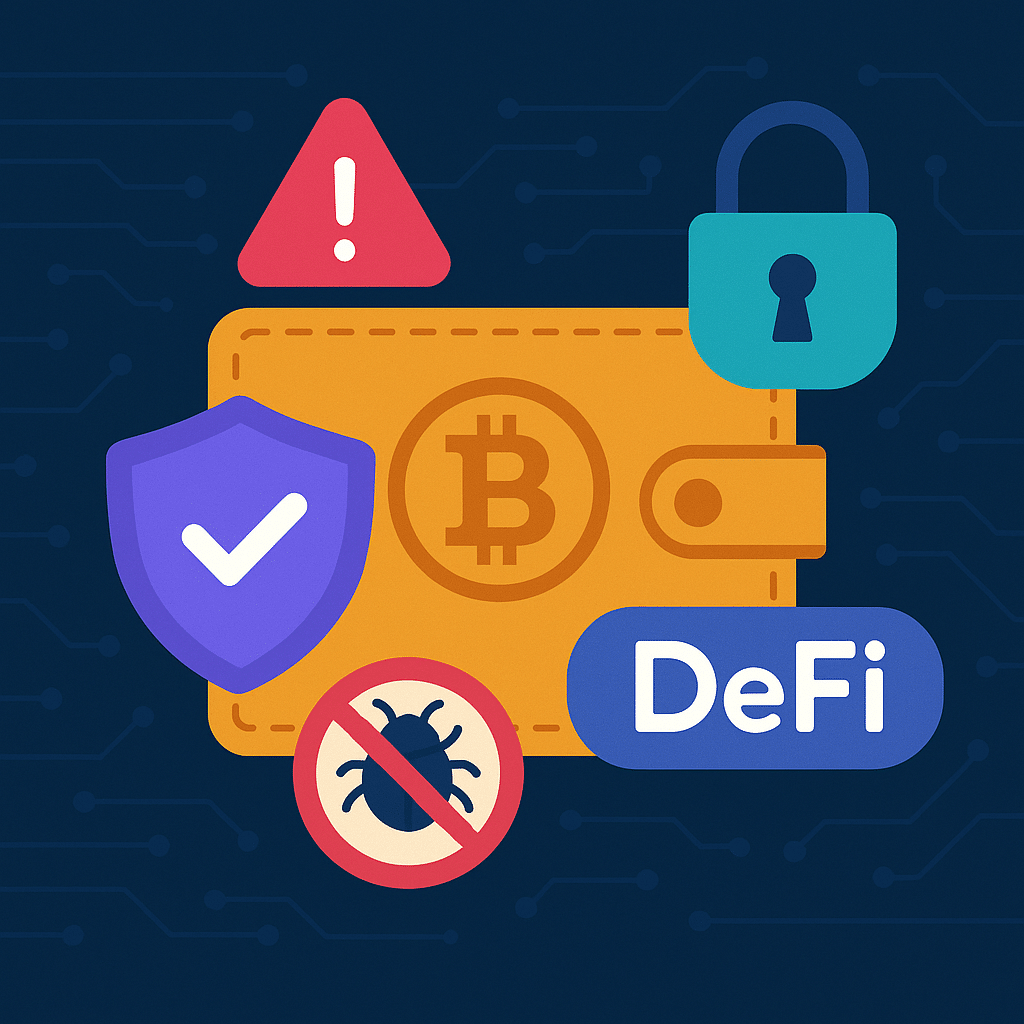
As more people explore decentralized finance (DeFi), the use of DeFi wallets has grown rapidly. While DeFi opens up a world of possibilities for financial freedom and earning potential, it also introduces new risks and challenges that users must understand. In this guide, we’ll break down what a DeFi wallet is, how scams are taking advantage of this growing space, and most importantly, how you can protect yourself in 2025.
What is a DeFi Wallet?
A DeFi wallet is a type of non-custodial crypto wallet that gives you full control over your funds without relying on centralized institutions like banks or traditional crypto exchanges. These wallets allow users to interact with decentralized apps (dApps), access DeFi protocols, swap tokens, and earn interest, all while retaining ownership of their private keys.
Popular DeFi wallets include:
- Crypto.com DeFi Wallet – Known for its ease of use and DeFi yield-earning features.
- Uniswap Wallet – Developed by the creators of the Uniswap decentralized exchange (DEX).
- MetaMask – A browser-based wallet widely used for Ethereum-based DeFi apps.
Types of DeFi Wallets
There are generally two types of DeFi wallets:
- Software Wallets (e.g., mobile apps or browser extensions)
- Hardware Wallets (e.g., Ledger, Trezor)
While software wallets are more convenient, hardware wallets are considered safer for long-term storage since they keep your private keys offline.
How DeFi Wallets Work
DeFi wallets connect users directly to smart contracts on a blockchain. They don’t require any signup, email, or identity verification. Instead, you’re given a seed phrase, usually 12 or 24 words, that you must store securely. This seed phrase is the only way to recover your wallet if you lose access.
You can use DeFi wallets to:
- Store and send cryptocurrencies like ETH, USDC, or DAI
- Interact with DeFi apps like Aave, Compound, or Uniswap
- Stake tokens or provide liquidity
- Swap tokens instantly without middlemen
Advantages of Using DeFi Wallets
Full Control of Your Funds
With a DeFi wallet, you own your private keys, which means only you can access and control your crypto. There’s no third party like a bank or exchange in between.
No Middlemen
DeFi wallets let you interact directly with decentralized applications (dApps) like Uniswap or Aave, without needing to go through a centralized exchange.
Greater Privacy
Most DeFi wallets do not require KYC (Know Your Customer or identity checks. You can use them anonymously, as long as you have your wallet address and seed phrase.
Global Access
You can access your DeFi wallet from anywhere in the world, as long as you have internet. This is great for people in areas with limited banking access.
Fast Transactions
DeFi wallets let you send, receive, and swap crypto in minutes or even seconds, depending on network traffic and fees.
Supports Multiple Assets
Many DeFi wallets like MetaMask, Trust Wallet, and Coinbase Wallet support multiple blockchains and tokens, so you can manage your whole portfolio in one place.
Earn Passive Income
You can use DeFi wallets to stake crypto or provide liquidity to earn rewards, often directly from your wallet interface.
Open-Source and Transparent
Most DeFi wallets are open-source, meaning their code is public and can be reviewed by anyone. This adds a layer of trust and transparency.
Integration with Web3 and NFTs
DeFi wallets are designed to connect with Web3 apps, games, and NFT platforms, giving you access to the growing decentralized ecosystem.
The Rise of DeFi Wallet Scams
As DeFi grows, so does the number of scams. Here are some common types of DeFi wallet scams:
1. Phishing Attacks
Scammers create fake websites that look like popular wallet apps. If you enter your seed phrase or private key, your wallet gets drained instantly.
2. Fake Apps
There are numerous fake wallets on app stores pretending to be Crypto.com DeFi Wallet or Uniswap Wallet. Always double-check the developer and reviews before downloading.
3. Rug Pulls via Wallet Connect
Some scam DeFi projects ask users to connect their wallets and unknowingly give permission to drain tokens.
4. Seed Phrase Theft
This happens through social engineering, fake support agents, or malicious pop-ups that trick users into giving away their seed phrase.
5. Airdrop Scams
Scammers send fake tokens to your wallet and prompt you to interact with malicious contracts.
How to Spot a DeFi Scam
| Warning Sign | What It Means |
|---|---|
| Seed phrase request | Legit wallets NEVER ask for your seed phrase |
| Urgency and fear | Scammers pressure you to act fast |
| Fake websites | Look closely at URLs and check SSL certificates |
| Too-good-to-be-true returns | Extremely high APYs are a major red flag |
| No social proof or reviews | New, unknown apps may be scams |
DeFi Wallet Scam Statistics (2024-2025)
Here’s an eye-opening overview of DeFi wallet scam and hack statistics from 2024–2025, highlighting how compromised wallets have impacted the crypto space.
| Category | Estimated Loss (USD) | Insights |
|---|---|---|
| Total Crypto Losses (2025 YTD) | ~$2.29 billion | Nearly $2.5 B lost to hacks and scams; wallet compromises responsible for ~$1.71 B (Investopedia) |
| DeFi Platform Exploits (2024) | $3.8 billion | Major losses from code flaws, oracle manipulation, and cross-chain bridges |
| Flash Loan Attacks (2024) | $1.2 billion | A significant recurring DeFi hack method |
| Rug Pulls (2024) | $2.9 billion | One of the top causes of DeFi losses, across 300+ scam projects |
| Cross-Chain Bridge Thefts | $1.1 billion in locked funds | Major exploits enabling fund draining via bridge vulnerabilities |
| Top 100 DeFi Hacks (2014–2024) | $10.77 billion total | Only 20% of protocols audited; multi-sig and cold wallet usage low (19%/2.4%) |
| DeFi Hack Volume (2024) | Dropped ~40% YoY (to $474 M) | DeFi losses declined, while centralized (CeFi) losses jumped to ~$694 M |
| Key Centralized Breaches (2024) | $305 M (DMM BTC), $235 M (WazirX) | Resulted from private key compromise and multi-sig vulnerabilities |
Chainalysis publishes annual crypto-crime totals, but the DeFi-scam loss total, phishing share and fake-airdrop growth rate previously listed here are not figures it reports, so they have been removed. Where a number matters, check the Chainalysis Crypto Crime Report directly rather than a secondary summary of it.
Popular DeFi Wallet Apps And Their Features
Here’s a simple comparison table of popular DeFi wallet apps and their key features:
| Wallet App | Non-Custodial | Multi-Chain Support | Hardware Wallet Support | In-App Swaps | Browser Extension | Mobile App | Built-In dApp Browser |
|---|---|---|---|---|---|---|---|
| MetaMask | ✅ | ✅ (Ethereum, BSC, etc.) | ✅ (Ledger, Trezor) | ✅ | ✅ | ✅ | ✅ |
| Trust Wallet | ✅ | ✅ (50+ blockchains) | ❌ | ✅ | ❌ | ✅ | ✅ |
| Coinbase Wallet | ✅ | ✅ | ✅ | ✅ | ✅ | ✅ | ✅ |
| Phantom | ✅ | ❌ (Solana only) | ✅ | ✅ | ✅ | ✅ | ✅ |
| Exodus | ✅ | ✅ | ✅ | ✅ | ✅ | ✅ | ❌ |
| Keplr | ✅ | ❌ (Cosmos ecosystem) | ✅ | ✅ | ✅ | ✅ | ✅ |
| Crypto.com DeFi | ✅ | ✅ | ❌ | ✅ | ❌ | ✅ | ✅ |
| Zengo | ❌ (MPC model) | ✅ | ❌ | ✅ | ❌ | ✅ | ❌ |
Choosing a Secure DeFi Wallet App
When it comes to managing your crypto, picking the right DeFi wallet app is one of the most important decisions you can make. A secure wallet keeps your assets safe and gives you full control, but not all wallet apps are built the same. Some focus on ease of use, while others prioritize advanced security.
That’s why it’s important to know what to look for before downloading any wallet. Whether you’re just starting out or already deep into DeFi, choosing a trusted, secure wallet app can help protect you from scams, hacks, and loss.
How to Protect Your Funds in DeFi
To stay safe while using DeFi wallets like MetaMask or Trust Wallet:
- Use only trusted dApps – Bookmark official sites and avoid random links.
- Check smart contract permissions – Don’t approve access to all your tokens unless you trust the dApp.
- Revoke unused token approvals – Use tools like Revoke.cash to remove risky permissions.
- Use a hardware wallet – For large amounts, add an extra layer of protection.
- Download from official sources – Keep apps updated and avoid fake wallet downloads.
Tips to Stay Safe with DeFi Wallets
- Use trusted wallets like Crypto.com DeFi Wallet, MetaMask, or Uniswap Wallet.
- Always double-check URLs before entering sensitive information.
- Never share your seed phrase with anyone, even with “support agents.”
- Use a hardware wallet for large holdings.
- Disconnect your wallet from dApps when not in use.
- Monitor permissions using tools like Revoke.cash.
- Keep backups of your seed phrase in multiple secure places.
Best Practices When Using Crypto.com DeFi Wallet or Uniswap Wallet
- Enable 2FA and biometric authentication.
- Set up custom transaction limits to reduce risk.
- Turn on push notifications for all wallet activity.
- Regularly check for app updates and read changelogs.
More Resources:
Want more wallet safety tips? Read our full Crypto Wallet Security Guide here →
Looking for the best wallets by country? Check out our 2025 Country-Specific Wallet Guide →
Want to compare wallets like MetaMask, Trust Wallet, and Coinbase? View our in-depth wallet comparison →
Final Tips for Staying Safe in DeFi
Decentralized finance gives you full control, but with that freedom comes full responsibility. Here are final tips to help you stay safe while using DeFi wallets like MetaMask, Trust Wallet, or Coinbase Wallet.
1. Use a Hardware Wallet for Extra Protection
- Combine your DeFi wallet (like MetaMask) with a hardware wallet (like Ledger or Trezor).
- This adds a physical layer of approval to every transaction, especially important for large amounts.
2. Never Share Your Recovery Phrase
- No real support team will ever ask for your seed phrase.
- Don’t enter it on websites, forms, or send it through chat, even if the site looks legit.
3. Avoid Random Links, Airdrops, and “Free” Tokens
- If a token suddenly appears in your wallet, don’t touch it, it could be bait for a scam.
- Only interact with verified dApps (bookmark them) and stay away from hype tokens on social media.
4. Review and Revoke Token Approvals Regularly
- Use tools like Etherscan Token Approval Checker or Revoke.cash
- This helps prevent malicious contracts from draining your funds later.
5. Stay Informed, Stay Skeptical
- If something sounds too good to be true, it is.
- Follow trusted sources like DeFi security newsletters, official project pages, or community-reviewed forums.
- Hardware wallet = best defense
- Recovery phrase = keep offline, private, and secure
- Double-check every link and transaction
- Education is your best investment in DeFi
Frequently Asked Questions
Q: Is a DeFi wallet safe for beginners?
A: DeFi wallets can be safe if you follow basic security tips, but they’re more suited for intermediate users.
Q: What happens if I lose my seed phrase?
A: You will lose access to your funds permanently. There is no recovery without the seed phrase.
Q: Can I use DeFi wallets on mobile?
A: Yes, wallets like Crypto.com DeFi Wallet and MetaMask have mobile versions.
Q: Do DeFi wallets charge fees?
A: The wallet itself may not charge fees, but you’ll pay blockchain network fees (gas fees) when transacting.
Q: Is DeFi Wallet Safe?
A: A DeFi wallet is as safe as how you use it. If you’re cautious and follow best practices, it can be a very secure way to store and manage your crypto.
Q: What Happens if I Lose my DeFi Wallet Private Key?
A: If you lose your DeFi wallet private key, you lose access to your crypto, permanently.
Q: Are My DeFi Wallet Transactions Private?
A: Not completely, and here’s why. When you use a DeFi wallet (like MetaMask, Trust Wallet, or Coinbase Wallet), your transactions aren’t private in the way many people think. Even though you’re not sharing your name, your wallet address is public, and so are all transactions linked to it.
Conclusion
DeFi wallets are powerful tools that unlock the full potential of decentralized finance, but with great power comes great responsibility. As scams become more sophisticated in 2025, staying informed and practicing strong wallet security is crucial. Always use trusted wallets, protect your seed phrase, and be wary of offers that seem too good to be true.
Disclaimer
This article is for educational purposes only and should not be considered financial advice. Cryptocurrency investments involve risk. Always do your own research or consult a professional before making any investment decisions.