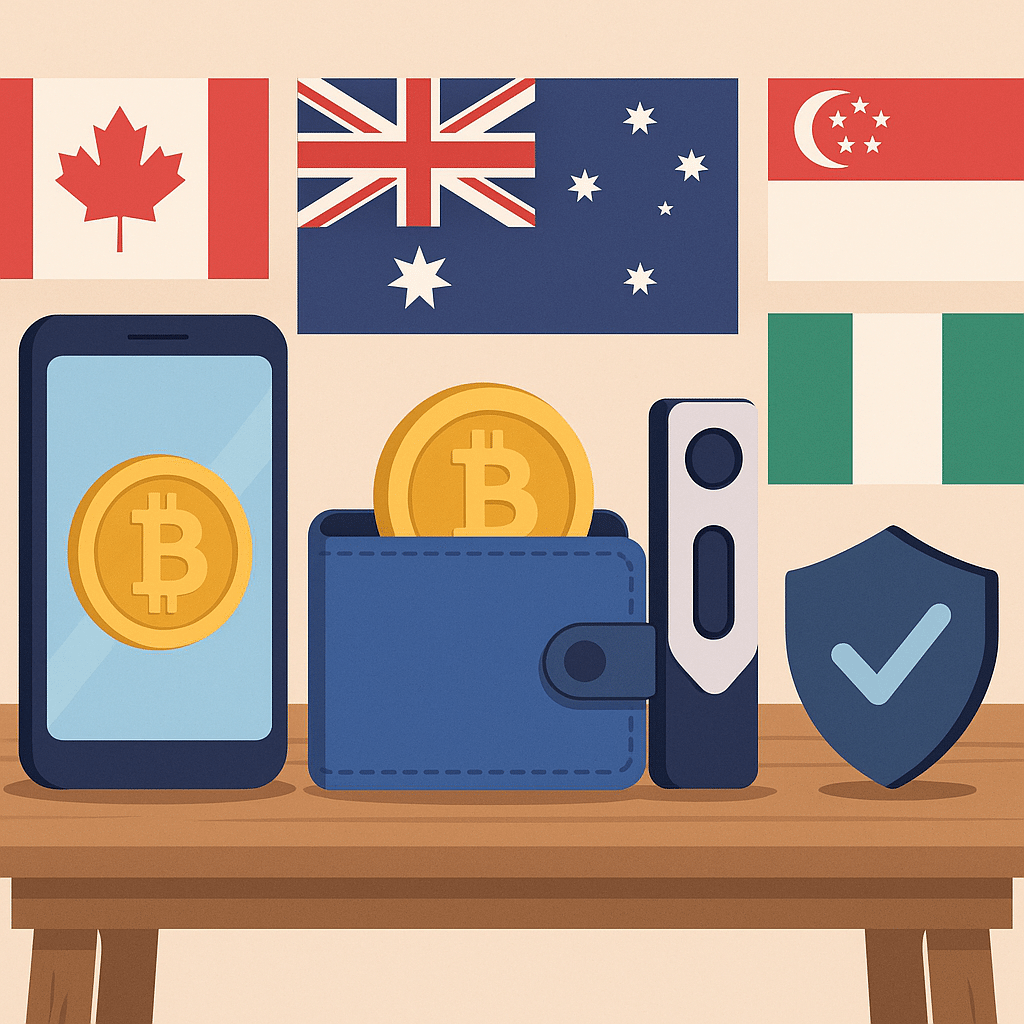
Choosing the best cryptocurrency wallet depends on more than popularity. Your location, supported cryptocurrencies, security requirements, local regulations, and preferred features all influence which wallet is suitable.
For 2026, Ledger and Trezor are strong options for hardware-based crypto storage, Trust Wallet and Exodus are worth considering for multi-chain mobile access, and MetaMask is a leading option for Ethereum-compatible networks and decentralized applications. However, availability and supported services should always be verified for your country.
For example, cryptocurrency users in Canada need to consider registered trading platforms when choosing exchange-linked services. Users in Singapore must consider the Monetary Authority of Singapore’s digital payment token framework, while residents of Dubai should understand the local virtual asset licensing requirements.
This guide compares cryptocurrency wallets across major global markets, including Canada, the United Kingdom, Australia, Nigeria, Singapore, Dubai, the United States, Europe, Japan, South Korea, Brazil, Argentina, India, and the Philippines.
It also explains how crypto wallets work, the difference between custodial and non-custodial storage, and how to select a secure wallet based on your location.
What Is a Cryptocurrency Wallet?
A cryptocurrency wallet is a digital application or physical device that allows users to access, manage, send, and receive cryptocurrencies such as Bitcoin, Ethereum, and other blockchain-based assets.
A crypto wallet does not physically store cryptocurrency. Instead, it manages the cryptographic keys that allow users to control assets recorded on a blockchain.
There are several types of cryptocurrency wallets:
- Mobile wallets: Smartphone applications for managing cryptocurrency.
- Desktop wallets: Software installed on computers.
- Browser wallets: Browser extensions or web-based interfaces used to access blockchain applications.
- Hardware wallets: Physical devices designed to keep private keys isolated from internet-connected devices.
- Custodial wallets: Services where a third party controls the private keys on behalf of the user.
- Non-custodial wallets: Wallets where users maintain control of their private keys or equivalent recovery credentials.
Popular examples include Ledger, Trezor, Trust Wallet, MetaMask, and Exodus.
The best choice depends on how you intend to use your cryptocurrency and how much control you want over your digital assets.
How Does a Crypto Wallet Work?
A cryptocurrency wallet works by managing public and private cryptographic keys that allow users to interact with blockchain networks.
Understanding these keys is essential before choosing a wallet.
1. Public keys and wallet addresses
A public key is used in the cryptographic system to establish ownership and verify transactions. A wallet address is generally derived from public-key information and can be shared to receive cryptocurrency.
Users can share their receiving addresses, but they should always verify the correct blockchain network before accepting a transfer.
2. Private keys and transaction authorization
A private key allows its holder to authorize cryptocurrency transactions.
When a user sends cryptocurrency, the wallet uses the appropriate private-key material to digitally sign the transaction. The blockchain network then verifies and processes it.
Anyone who gains unauthorized access to a private key or recovery credentials may be able to take control of the associated assets.
3. Sending and receiving cryptocurrency
To receive cryptocurrency, users share their compatible wallet address.
To send cryptocurrency, they enter the recipient’s address, select the correct network, review the amount and transaction fee, and authorize the transaction.
Blockchain transactions are generally irreversible once confirmed, so checking the address and network is essential.
4. Wallet backups and recovery phrases
Many self-custody wallets use a recovery phrase, also called a seed phrase, to restore access.
This phrase should be stored securely offline and never shared with another person.
A wallet provider cannot necessarily recover assets if the user loses their recovery credentials.
Why Does Your Country Matter When Choosing a Crypto Wallet?
Your country matters because cryptocurrency wallet services, exchange integrations, payment methods, and regulatory requirements differ across jurisdictions.
A wallet application may be downloadable worldwide while some of its features remain unavailable in specific locations.
For example, an application might allow users to receive cryptocurrency but restrict buying, selling, staking, or fiat withdrawals depending on local rules.
Consider these important factors before choosing a wallet:
- Regulatory environment: Determine whether the provider’s relevant services are permitted in your country.
- Supported payment methods: Check whether local bank transfers, cards, or payment providers are available.
- Supported cryptocurrencies: Verify that the wallet supports the specific coins and blockchain networks you use.
- Local currency compatibility: Check whether you can conveniently convert between local currency and cryptocurrency.
- Security and custody: Determine whether you control the private keys.
- Customer support: Look for accessible support and documentation.
- Language support: Consider whether the application and security instructions are available in your preferred language.
- Transaction costs: Compare network fees, service fees, and exchange spreads.
It is also important to understand that a self-custody wallet and a cryptocurrency exchange are different products. A wallet may work internationally even when a particular exchange integration does not.
Best Crypto Wallets by Country in 2026
The following recommendations focus on established wallet providers and practical use cases. They are not rankings based on independently verified country-specific adoption percentages.
Availability refers to the wallet’s general product suitability, not a guarantee that every feature, exchange integration, or service is accessible in every jurisdiction.
Best Crypto Wallets in Canada
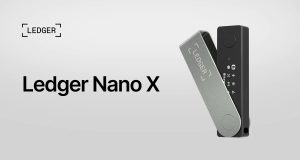
Ledger Nano X Hardware Crypto Wallet
Top recommendation: Ledger Nano X
Hardware storage
Suitable for Canadians who prioritize self-custody and offline private-key protection.
Canadian cryptocurrency users can consider Ledger for hardware storage, Trust Wallet for mobile multi-chain access, and MetaMask for decentralized applications.
Other options include:
- Trezor: Hardware wallet alternative for offline storage.
- Exodus: Desktop and mobile cryptocurrency management.
- Trust Wallet: Mobile-focused multi-chain self-custody.
- MetaMask: Ethereum-compatible networks and DeFi applications.
Why these wallets are worth considering in Canada:
Canadian users should pay attention to supported assets, security, fiat conversion options, and the regulatory status of any exchange-linked service.
The Canadian Securities Administrators maintain a list of crypto-asset trading platforms authorized to do business with Canadians. This is particularly important when using a custodial exchange account rather than a standalone self-custody wallet. Canadian Securities Administrators+1
A hardware wallet can provide greater control over private keys, but users still need a compatible platform if they want to purchase or sell cryptocurrency using Canadian dollars.
Best Crypto Wallets in the United Kingdom
Trezor Safe 5 – The Crypto Merchant
Top recommendation: Trezor
Self-custody
Suitable for users who prioritize hardware-based key storage.
UK users can consider several wallet types depending on their cryptocurrency activities.
Other options include:
- Ledger: Hardware storage with multiple cryptocurrency integrations.
- MetaMask: DeFi and Web3 applications.
- Exodus: Desktop and mobile wallet management.
- Trust Wallet: Mobile multi-chain access.
Why these wallets are worth considering in the UK:
UK users should distinguish between a self-custody wallet and a regulated financial or cryptoasset service.
Revolut provides crypto-related services within its financial application, but it should not automatically be treated as equivalent to a traditional non-custodial wallet where the user independently controls private keys.
The Financial Conduct Authority published its PS26/18 cryptoasset perimeter guidance in September 2026. New regulated cryptoasset activities under the UK’s 2026 framework are scheduled to enter the regulatory perimeter from October 25, 2027. FCA
Before using a provider, verify its current regulatory status and the specific service it offers.
Best Crypto Wallets in Australia
Buy the Ledger Nano S Plus Crypto Hardware Wallet – Matte Black ( LNSP-ENFR ) online – PBTech.com/au
Top recommendation: Ledger Nano S Plus
Hardware storage
A practical option for users who want hardware-based self-custody.
Australian cryptocurrency users have access to several wallet options.
Other choices include:
- Trust Wallet: Mobile multi-chain cryptocurrency management.
- MetaMask: Ethereum and decentralized application access.
- Exodus: Desktop and mobile wallet functionality.
- Trezor: Hardware storage alternative.
Why these wallets are worth considering in Australia:
Australian users may prioritize AUD payment compatibility, local exchange integrations, supported assets, and tax-record management.
Swyftx is another platform Australians may encounter. However, it is primarily a cryptocurrency exchange service, not a direct replacement for a standalone non-custodial hardware wallet.
Users should check the current Australian regulatory requirements and provider information before depositing funds or relying on an exchange’s custody services.
Best Crypto Wallets in Nigeria
Trust Wallet unveils new brand identity in update to improve Web3 accessibility
Top recommendation: Trust Wallet
Mobile multi-chain
Suitable for users who want mobile access to multiple blockchain networks.
Nigeria has an active cryptocurrency community, and mobile wallets can provide convenient access to blockchain-based assets.
Other options include:
- Luno: A platform with cryptocurrency services and wallet functionality, subject to regional availability.
- MetaMask: Suitable for Ethereum-compatible applications.
- Exodus: Multi-platform cryptocurrency management.
- Ledger: Hardware storage for users holding larger amounts.
Why these wallets are worth considering in Nigeria:
Mobile accessibility, network fees, stablecoin compatibility, and reliable transaction confirmation are important considerations.
Nigeria’s virtual asset regulatory environment has also continued to evolve. In July 2026, the Nigerian government announced an Executive Order on Virtual Assets Coordination to improve coordination between relevant agencies. The SEC also continues to publish updates concerning virtual asset service providers and its regulatory incubation program. The State House, Abuja+1
Users should distinguish between a non-custodial wallet and an exchange or P2P service. Using a wallet does not automatically make a third-party trading service legitimate or compliant.
Best Crypto Wallets in Singapore
Top recommendation: Crypto.com DeFi Wallet
DeFi access
Worth considering for users interested in decentralized applications and multi-chain asset management.
Singapore users can also consider:
- MetaMask: Ethereum-compatible networks and DeFi.
- Trust Wallet: Mobile multi-chain access.
- Ledger: Hardware-based private-key protection.
- Trezor: Alternative hardware storage.
Why these wallets are worth considering in Singapore:
Singapore has a well-developed financial technology sector, but digital payment token services are subject to regulatory requirements.
The Monetary Authority of Singapore clarified its Digital Token Service Provider regulatory framework in June 2025. From June 30, 2025, providers serving only customers outside Singapore in specified digital token services must generally obtain the required license or cease those regulated activities. MAS+1
This makes it important to check whether a service provider is licensed or otherwise permitted to operate under the applicable framework.
A self-custody wallet should not be confused with an exchange or regulated token service.
Best Crypto Wallets in Dubai and the UAE
Top recommendation: Ledger Flex
Hardware storage
A hardware option for users who prioritize private-key security.
Cryptocurrency users in Dubai and other parts of the UAE can consider:
- Trust Wallet: Mobile self-custody.
- MetaMask: Web3 and decentralized applications.
- Trezor: Hardware storage.
- Ledger: Offline private-key protection.
Why these wallets are worth considering in Dubai:
The UAE has developed a regulatory framework for virtual asset activities, including custody and exchange services.
Dubai’s Virtual Assets Regulatory Authority (VARA) regulates specified virtual asset activities within its jurisdiction. Other UAE jurisdictions have their own relevant regulatory authorities and frameworks.
The UAE government explains that virtual asset activities such as exchange, transfer, and custody services may require authorization. The Capital Markets Authority also introduced 2026 rules covering custody-related activities. u.ae+2
BitOasis is another platform that UAE residents may encounter. However, users should verify the current licensing status of the specific service and distinguish exchange custody from independent wallet ownership.
Best Crypto Wallets in the United States
Making web3 more accessible and intuitive — meet the new Coinbase Wallet mobile app
Top recommendation: Coinbase Wallet
Self-custody
A self-custody wallet option for users who want independent control of their crypto assets.
Coinbase Wallet official website
Other options include:
- Ledger: Hardware storage.
- Trezor: Hardware-based self-custody.
- MetaMask: Web3 and DeFi.
- Phantom: Solana-focused cryptocurrency management with additional network support.
- Trust Wallet: Mobile multi-chain storage.
Why these wallets are worth considering in the United States:
US users should evaluate state-level requirements, the services offered by each provider, supported assets, and the difference between wallet software and exchange custody.
Coinbase Wallet is a separate self-custody product and should not be confused with a standard Coinbase exchange account.
The regulatory status of a service depends on its activities, and users should check the applicable federal and state requirements rather than assuming that every cryptocurrency service follows identical rules.
Best Crypto Wallets in Europe
Ledger Stax Crypto Hardware Wallet | Officeworks
Top recommendation: Ledger
Hardware storage
Suitable for users who want hardware-based cryptocurrency storage.
European users can also consider:
- Trezor: Hardware-based storage.
- MetaMask: Decentralized applications.
- Trust Wallet: Mobile multi-chain management.
- Exodus: Desktop and mobile access.
Why these wallets are worth considering in Europe:
The European Union has introduced the Markets in Crypto-Assets Regulation (MiCA), which establishes a common regulatory framework for specified crypto-asset activities and service providers.
However, MiCA does not mean every self-custody wallet needs authorization. Requirements generally depend on whether a company provides regulated crypto-asset services.
Users should check whether exchange integrations, custody services, and other features are available in their individual EU country. ESMA
Best Crypto Wallets in Japan
Trezor Safe 3 Australia – Trezor Australia
Top recommendation: Trezor
Hardware storage
Suitable for users seeking independent hardware-based key storage.
Other options include:
- Ledger: Hardware cryptocurrency storage.
- MetaMask: Web3 and decentralized application access.
- Trust Wallet: Multi-chain mobile wallet.
- Exodus: Desktop and mobile wallet management.
Why these wallets are worth considering in Japan:
Japan maintains a formal registration framework for crypto-asset exchange service providers.
The Financial Services Agency publishes a list of registered providers and warns users about cryptocurrency volatility, cybersecurity risks, and fraudulent services. fsa.go.jp
Users should verify exchange registration and check whether the relevant cryptocurrency is supported by the local platform.
Best Crypto Wallets in South Korea
Portfel kryptowalut i NFT Ledger Nano X, srebrno-czarny Pancernik.eu 3760027781500
Top recommendation: Ledger Nano X
Hardware storage
A suitable option for users who prioritize offline key protection.
Other options include:
- Trust Wallet: Mobile cryptocurrency management.
- MetaMask: Ethereum and Web3 applications.
- Trezor: Hardware storage.
- Exodus: Multi-platform asset management.
Why these wallets are worth considering in South Korea:
South Korea has a regulated digital asset market with identity verification and requirements affecting virtual asset service providers.
Users should pay particular attention to exchange integration, supported assets, local withdrawal requirements, and provider compliance.
A non-custodial wallet can provide independent key control, but it does not automatically provide access to local bank deposits or exchange services.
Best Crypto Wallets in Brazil and Argentina
WalletScrutiny – Trust: Crypto & Bitcoin Wallet
Top recommendation: Trust Wallet
Mobile multi-chain
Suitable for users who need access to multiple blockchain networks.
Other options include:
- Ledger: Hardware storage.
- MetaMask: DeFi and Ethereum-compatible networks.
- Exodus: Desktop and mobile management.
- Trezor: Hardware-based storage.
Why these wallets are worth considering in Latin America:
Cryptocurrency users in Brazil and Argentina may prioritize stablecoin compatibility, cross-border transfers, mobile accessibility, and local currency conversion.
However, wallet functionality and regulatory requirements differ between these countries.
Users should check local rules governing crypto service providers, tax obligations, and fiat conversion before using exchange integrations.
Best Crypto Wallets in India
Top recommendation: Exodus
Desktop and mobile
Suitable for users seeking multi-platform cryptocurrency management.
Other options include:
- Trust Wallet: Mobile multi-chain access.
- MetaMask: DeFi and Web3 applications.
- Ledger: Hardware-based private-key protection.
- Trezor: Alternative hardware storage.
Why these wallets are worth considering in India:
Indian cryptocurrency users should consider supported assets, security, exchange integrations, taxation, and local payment availability.
It is important to distinguish the technical availability of a self-custody wallet from the legal and operational status of an exchange or other virtual digital asset service.
Users should consult current Indian government guidance and applicable tax requirements before making cryptocurrency transactions.
Best Crypto Wallets in the Philippines
Top recommendation: Trust Wallet
Mobile multi-chain
A convenient option for users who want mobile self-custody and access to multiple networks.
Other options include:
- Coins.ph: A Philippine crypto and financial services platform with region-specific functionality.
- MetaMask: Ethereum-compatible networks and DeFi applications.
- Ledger: Hardware-based cryptocurrency storage.
- Trezor: Offline private-key protection.
- Exodus: Desktop and mobile wallet management.
Why these wallets are worth considering in the Philippines:
Filipino cryptocurrency users may prioritize mobile accessibility, PHP conversion options, local payment methods, stablecoin support, and access to international blockchain networks.
Coins.ph is particularly relevant as a locally established crypto and financial services platform, but it should be evaluated separately from independent non-custodial wallets.
Before choosing a service, check the latest Bangko Sentral ng Pilipinas (BSP) requirements and the regulatory status of the specific provider.
For users purchasing hardware wallets, Trezor also provides country-specific shipping information and recommends using official or authorized sellers. Its published FAQ includes shipping guidance for the Philippines. Trezor
How Do Crypto Wallets Compare by Region?
Different regions have different priorities when choosing cryptocurrency wallets. Some users prioritize offline storage, while others need mobile access, stablecoin support, or convenient connections to local exchanges.
The following comparison summarizes the main considerations.
| Country or region | Wallets to consider | Main priority |
|---|---|---|
| Canada | Ledger, Trezor, Trust Wallet | Security and exchange compatibility |
| United Kingdom | Trezor, Ledger, MetaMask | Security and regulatory clarity |
| Australia | Ledger, Trust Wallet, Exodus | AUD access and asset compatibility |
| Nigeria | Trust Wallet, MetaMask, Ledger | Mobile access and stablecoins |
| Singapore | Crypto.com DeFi Wallet, MetaMask | DeFi and regulatory compliance |
| Dubai / UAE | Ledger, Trust Wallet, Trezor | Security and local compliance |
| United States | Coinbase Wallet, Ledger, MetaMask | Self-custody and functionality |
| European Union | Ledger, Trezor, Exodus | Security and regional availability |
| Japan | Trezor, Ledger, Trust Wallet | Security and compliant exchanges |
| South Korea | Ledger, Trust Wallet, MetaMask | Security and exchange compatibility |
| Brazil / Argentina | Trust Wallet, Ledger, Exodus | Stablecoins and accessibility |
| India | Exodus, Trust Wallet, MetaMask | Mobile access and flexibility |
| Philippines | Trust Wallet, Coins.ph, Ledger | PHP access and mobile convenience |
These are practical options to research, not verified country-specific popularity rankings. Actual availability depends on provider restrictions and local requirements.
What Is the Difference Between Custodial and Non-Custodial Wallets?
The main difference is who controls the private keys.
A custodial wallet allows a third-party provider to manage the private keys, while a non-custodial wallet gives users control over their own keys or recovery credentials.
Custodial wallets
A custodial wallet is a cryptocurrency storage service where a third party manages access to the user’s digital assets.
Examples include exchange-linked wallet accounts and certain financial applications offering cryptocurrency services.
Advantages:
- Beginner-friendly account management.
- Password recovery and customer support may be available.
- Convenient integration with cryptocurrency trading.
- Less responsibility for managing private keys.
Disadvantages:
- The provider controls access to the private keys.
- Withdrawals may be restricted.
- Accounts may be frozen or suspended.
- Users depend on the provider’s security and financial stability.
Non-custodial wallets
A non-custodial wallet allows users to control their own private keys.
Examples include Trust Wallet, MetaMask, Exodus, and compatible hardware wallets.
Advantages:
- Greater control over cryptocurrency assets.
- Direct blockchain transactions.
- Access to decentralized applications.
- Less dependence on centralized wallet providers.
Disadvantages:
- Users are responsible for protecting recovery credentials.
- Losing the recovery phrase may mean permanent loss of access.
- Transactions generally cannot be reversed.
- Phishing and malicious smart contracts remain significant risks.
Which type should beginners choose?
Beginners who prioritize convenience may prefer a reputable custodial service with strong security and clear withdrawal policies.
Users who want independent control over their assets may prefer a non-custodial wallet.
Some cryptocurrency holders use both: a custodial account for buying and selling, and a personal wallet for longer-term storage.
What Is the Difference Between Hot Wallets and Cold Wallets?
Hot and cold wallets differ primarily in how their private keys are protected and accessed.
| Feature | Hot wallet | Cold wallet |
|---|---|---|
| Internet connectivity | Usually connected | Designed to keep keys offline |
| Convenience | High | Moderate |
| Security exposure | Greater online exposure | Reduced online exposure |
| Best use | Everyday transactions | Longer-term storage |
| Examples | MetaMask, Trust Wallet | Ledger, Trezor |
Hot wallets
A hot wallet is a cryptocurrency wallet that operates on an internet-connected device or system.
Popular examples include MetaMask, Trust Wallet, and Exodus.
Hot wallets are convenient for frequent transfers, decentralized applications, and everyday cryptocurrency management.
However, their internet connectivity creates additional exposure to phishing, malware, compromised devices, and malicious applications.
Cold wallets
A cold wallet is designed to keep private keys offline.
Hardware wallets such as Ledger and Trezor are common examples.
They are useful for people who want to store cryptocurrency without keeping private keys continuously exposed to an internet-connected environment.
Cold storage reduces certain online risks but does not eliminate every security threat. Users must still protect their recovery phrases, verify transactions, and purchase hardware devices from trusted sources.
Why Do Some Crypto Wallets Support More Cryptocurrencies Than Others?
Different cryptocurrency wallets support different blockchain networks, token standards, and transaction systems.
For example:
- MetaMask is commonly associated with Ethereum and Ethereum-compatible networks, while its supported network and asset capabilities have expanded.
- Phantom is particularly associated with Solana, with additional network support.
- Trust Wallet supports numerous blockchain networks and tokens.
- Bitcoin-focused wallets may prioritize Bitcoin transactions rather than broad multi-chain functionality.
- Hardware wallets may require compatible applications to manage specific cryptocurrencies.
A wallet supporting a particular cryptocurrency does not necessarily mean it supports every network on which that token exists.
For example, sending a stablecoin using an unsupported network can result in lost funds or complicated recovery procedures.
Always confirm the asset, network, and receiving address before sending cryptocurrency.
How to Choose the Right Crypto Wallet
The best cryptocurrency wallet depends on your experience, security requirements, supported assets, and intended use.
Before choosing a wallet, evaluate these seven factors.
1. Security features
Look for strong security protections, including:
- PIN or password protection.
- Biometric authentication where supported.
- Hardware-based key isolation.
- Transaction confirmation and address verification.
- Secure recovery mechanisms.
- Phishing and malicious-site warnings.
Do not assume that a wallet is secure simply because it is popular.
2. Private-key ownership
Determine whether you control the private keys.
If a third party controls your keys, your access depends partly on that provider.
If you use self-custody, you gain more independence but also become responsible for securing your wallet and recovery phrase.
3. Supported cryptocurrencies
Check whether the wallet supports the cryptocurrencies you actually own.
Common assets to check include:
- Bitcoin (BTC).
- Ethereum (ETH).
- Solana (SOL).
- XRP.
- Litecoin (LTC).
- Stablecoins such as USDT and USDC.
Also verify network compatibility and token support before transferring assets.
4. Ease of use
A good wallet should be easy to navigate and understand.
Beginners may prefer mobile applications with clear transaction instructions, while experienced users may need advanced network controls, hardware compatibility, and decentralized application integrations.
5. Backup and recovery options
Check how the wallet restores access if your phone, computer, or hardware device is lost.
Understand whether it uses a recovery phrase, cloud-assisted recovery, or another security mechanism.
Never assume that a wallet provider can restore your cryptocurrency without the required recovery information.
6. Fees and transaction costs
Wallet applications may not charge a direct fee for storing cryptocurrency, but sending and interacting with blockchain networks generally involves transaction fees.
Other costs may include:
- Network gas fees.
- Exchange trading fees.
- Cryptocurrency conversion spreads.
- Withdrawal charges.
- Third-party swap fees.
Compare these costs before using built-in trading or swapping services.
7. Reputation and customer support
Research the wallet provider’s security history, official documentation, independent audits where available, and support channels.
Check whether the company provides transparent information about its products and security practices.
How Do You Keep Your Crypto Wallet Safe?
Protecting your crypto wallet requires more than choosing a popular application. Your device security, recovery credentials, and transaction habits are equally important.
Follow these practices to reduce the risk of losing your cryptocurrency.
1. Protect your recovery phrase.
Write down your recovery phrase and store it in a secure offline location. Never share it with anyone claiming to be customer support.
2. Enable additional security.
Use strong passwords, device authentication, and two-factor authentication for custodial accounts and exchange services where available.
3. Verify wallet addresses.
Always check the complete receiving address and blockchain network before confirming a transaction.
4. Download official applications.
Use the wallet provider’s official website or verified application-store listing.
5. Keep devices updated.
Install legitimate security updates for your operating system, wallet application, and browser.
6. Be careful with decentralized applications.
Review transaction permissions and avoid signing unfamiliar smart-contract requests.
7. Consider hardware storage.
For larger long-term holdings, consider a hardware wallet from an authorized seller.
8. Test transactions when appropriate.
When sending a large amount to a new address, consider sending a small test transaction first.
9. Avoid suspicious public Wi-Fi networks.
Avoid accessing sensitive wallet services through unsecured networks, especially when using unfamiliar devices.
10. Never trust guaranteed recovery or investment offers.
Scammers frequently impersonate wallet providers and claim they can recover lost funds for an upfront payment.
How Do Cryptocurrency Regulations Affect Wallets by Country?
Cryptocurrency regulations influence how wallet providers, exchanges, custodians, and other digital asset businesses operate.
However, regulation does not affect every wallet in the same way.
A self-custody wallet that provides software for managing private keys may be treated differently from a centralized company that holds customers’ cryptocurrency or facilitates regulated transactions.
Here are some important regional differences.
United States
US cryptocurrency businesses may face federal and state-level requirements depending on their activities.
Users should examine the regulatory status of custodial providers and exchange services instead of assuming that all wallet applications have the same legal classification.
European Union
The EU’s Markets in Crypto-Assets Regulation establishes requirements for specified crypto-asset issuers and service providers.
Crypto-asset service providers must meet applicable authorization and compliance requirements. A self-custody application does not automatically fall into the same regulatory category. ESMA
United Kingdom
The Financial Conduct Authority supervises relevant financial and cryptoasset activities.
The UK’s 2026 regulatory framework is introducing additional regulated cryptoasset activities, with the new perimeter scheduled to take effect in October 2027. FCA
Australia
Australian requirements depend on the activities a cryptocurrency business performs.
Users should check relevant regulatory guidance and verify the status of custodial, exchange, and other financial services.
Singapore
The Monetary Authority of Singapore regulates relevant digital payment token services under its applicable financial services framework.
Users should verify whether a provider is appropriately licensed for the services it offers. MAS
Japan
Japan maintains a registration framework for cryptocurrency exchange service providers under its applicable legislation.
The Financial Services Agency publishes official information about registered providers. fsa.go.jp
Nigeria
Nigeria’s regulatory environment includes SEC oversight of relevant digital asset activities and a 2026 government initiative to coordinate virtual asset regulation.
Users should verify the current status of the specific provider before using its services. The State House, Abuja+1
Dubai and the UAE
Dubai’s VARA framework covers specified virtual asset activities, including exchange, transfer, and custody services.
The wider UAE has additional regulatory authorities and frameworks depending on the jurisdiction and activity. u.ae+1
Philippines
The Philippines has regulatory requirements affecting cryptocurrency service providers. Users should consult current BSP and other relevant government guidance when choosing an exchange or custodial service.
Important: Cryptocurrency regulations change. The information above is a general overview, not a legal determination of whether a particular wallet or transaction is permitted in your jurisdiction.
What Is the Future of Crypto Wallets Beyond 2026?
Cryptocurrency wallets are evolving from simple tools for storing and transferring digital assets into broader financial and Web3 applications.
Several developments are likely to influence the next generation of wallet technology.
1. Better security and recovery systems
Wallet providers are developing improved authentication, recovery mechanisms, and transaction security tools.
These improvements may help reduce the risk of users permanently losing access to their cryptocurrency.
2. Greater multi-chain compatibility
Users increasingly interact with multiple blockchain networks.
Wallets that simplify cross-chain asset management and network switching could become more useful as the blockchain ecosystem expands.
However, cross-chain bridges and transactions introduce additional security risks.
3. Stablecoin and payment integration
Stablecoins are increasingly relevant to digital payments and international transfers.
Wallets may become more closely integrated with payment applications, local currency conversion services, and merchant payment systems.
Availability will still depend on local laws and provider support.
4. Improved decentralized application access
Web3 wallets are expected to continue expanding their integration with decentralized finance, gaming, digital identity, and tokenized assets.
These developments could make wallets more versatile, but users should carefully review the permissions granted to applications.
5. More regulatory transparency
As governments introduce clearer digital asset frameworks, wallet-related businesses may face more specific requirements involving custody, consumer protection, and transaction monitoring.
This could help users evaluate service providers more effectively, although regulatory compliance does not eliminate financial or cybersecurity risks.
Overall, cryptocurrency wallets are likely to become more accessible and feature-rich. Security, transparency, and user control will remain essential when comparing providers across countries.
Frequently Asked Questions About Crypto Wallets by Country
1. Are cryptocurrency wallets available globally?
Many popular cryptocurrency wallets are available internationally, including Ledger, Trezor, Trust Wallet, MetaMask, and Exodus.
However, certain services may be restricted depending on the user’s country. Features such as cryptocurrency purchases, swaps, staking, and fiat withdrawals may have separate regional restrictions.
2. Which crypto wallet is the safest in 2026?
Hardware wallets such as Ledger and Trezor are strong options for users who want to keep private keys offline.
However, no wallet is completely risk-free. Security also depends on how users protect their recovery phrases, verify transactions, and secure their devices.
3. Should I use multiple cryptocurrency wallets?
Yes. Using multiple wallets can help separate everyday transactions from long-term cryptocurrency storage.
For example, a user may keep a small amount of cryptocurrency in a mobile wallet and store larger holdings in a hardware wallet.
4. What is the difference between a custodial and non-custodial wallet?
A custodial wallet allows a third party to control the private keys, while a non-custodial wallet gives users control of their private keys or recovery credentials.
Custodial wallets may be easier for beginners, while non-custodial wallets provide greater independence and responsibility.
5. Which crypto wallets support staking?
Several wallets provide staking functionality or integrations with staking services.
Examples include Trust Wallet, MetaMask, and certain Ledger-compatible applications.
However, staking availability depends on the cryptocurrency, blockchain network, provider, and jurisdiction. Staking also carries risks, including validator penalties, lock-up periods, and market volatility.
6. Do I need a personal wallet if I use Binance or Coinbase?
You do not necessarily need a separate wallet, but a personal self-custody wallet provides greater control over your private keys.
Exchange accounts are generally custodial, meaning the provider manages access to the assets.
Users who prioritize independent ownership may prefer transferring eligible assets to a compatible personal wallet.
7. Can I use the same crypto wallet in different countries?
Generally, yes. Many non-custodial wallets can be accessed internationally as long as the application and relevant services are supported.
However, exchange integrations, purchases, staking, and other features may be restricted in certain countries.
8. Are hardware wallets better than mobile wallets?
Hardware wallets generally provide stronger protection against certain online threats because private keys are designed to remain offline.
Mobile wallets are more convenient for everyday transactions and decentralized applications.
The best option depends on how frequently you transact and how much security you require.
9. What happens if I lose my crypto wallet?
If you lose a phone or hardware device, you may be able to restore your wallet using its recovery phrase or supported backup method.
If you lose both the device and the recovery credentials, recovering a self-custody wallet may be impossible.
This is why secure backups are essential.
10. Can I store Bitcoin and Ethereum in the same wallet?
Yes. Many multi-chain wallets support both Bitcoin and Ethereum.
However, not every wallet supports every cryptocurrency or blockchain network. Always check the wallet’s official supported-asset list before transferring funds.
11. Which crypto wallet is best for beginners?
Trust Wallet and Exodus are worth considering for beginners who want accessible mobile or desktop interfaces.
Users who prefer a hardware device can research Ledger and Trezor.
The best choice depends on the cryptocurrencies they intend to use and their comfort level with managing recovery credentials.
12. Are crypto wallets regulated in every country?
No. Regulatory requirements vary by country and depend on the wallet’s functionality and the services provided by its operator.
A software-only self-custody wallet may be treated differently from a custodial provider that holds customer assets or facilitates financial transactions.
Conclusion: Which Crypto Wallet Should You Choose in 2026?
The best crypto wallets by country depend on your location, preferred cryptocurrencies, security requirements, and how you plan to use your digital assets.
Ledger and Trezor are worth considering for hardware storage, Trust Wallet and Exodus offer accessible multi-chain management, and MetaMask provides extensive Web3 functionality.
However, no single wallet is the best choice for every cryptocurrency user.
Before selecting a provider, verify its regional availability, supported blockchain networks, security features, custody model, and compatibility with local services.
The most important consideration is control and security, not popularity alone. A suitable wallet should allow you to manage your cryptocurrency safely while meeting your practical needs and applicable local requirements.