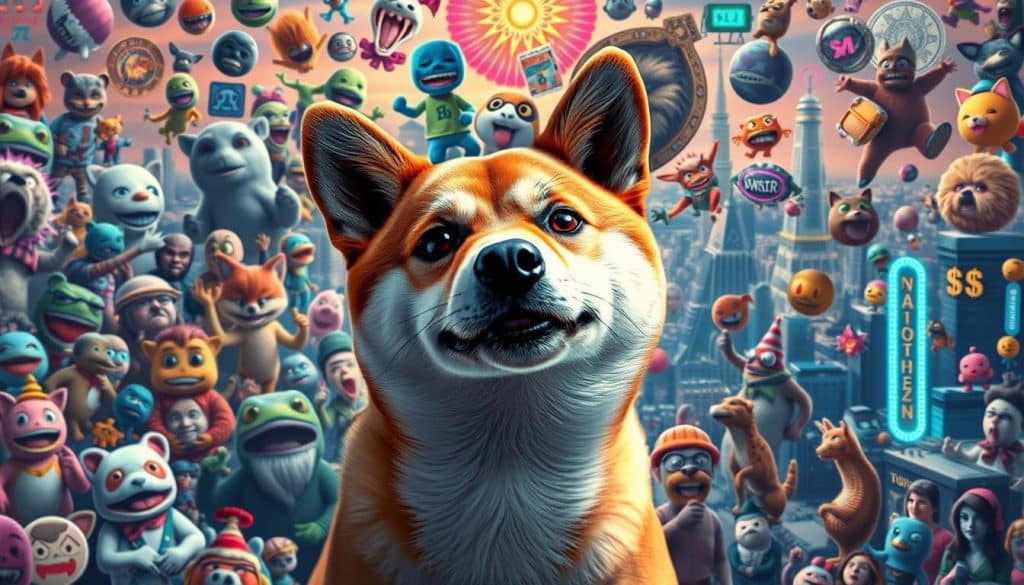
NFT memes combine internet humor, digital art, and blockchain technology to create collectible digital assets. Unlike ordinary memes that anyone can freely share online, meme NFTs are represented by non-fungible tokens that provide a verifiable record of ownership on a blockchain.
These digital collectibles allow creators to monetize original meme artwork while giving collectors an opportunity to own specific tokenized versions of recognizable internet culture. However, purchasing an NFT does not automatically grant copyright ownership, and its market value is never guaranteed.
The popularity of NFT memes became particularly noticeable during the 2021 NFT boom, when famous internet images such as Doge and Nyan Cat attracted high-profile auction sales. Today, they remain an interesting intersection of digital creativity, online communities, and blockchain-based ownership.
Understanding how NFT memes work, where to find them, and what risks they involve can help creators and collectors make more informed decisions.
Key Takeaways
- NFT memes are digital collectibles associated with internet memes and represented by blockchain-based tokens.
- Famous examples include Doge and Nyan Cat, which achieved notable auction results in 2021.
- Creators can tokenize original meme artwork and offer it through NFT marketplaces.
- Ethereum, Solana, and other blockchain networks support NFT creation and trading.
- Rarity, cultural relevance, creator reputation, and collector demand can influence NFT meme prices.
- NFT ownership does not automatically include copyright or commercial usage rights.
- Meme NFTs are speculative digital assets with potential liquidity, security, and intellectual property risks.
What Are NFT Memes?
NFT memes are digital artworks, images, animations, or other meme-related content represented by non-fungible tokens on a blockchain.
An NFT, or non-fungible token, is a unique blockchain-based token that can be used to identify and track a particular digital asset. Unlike cryptocurrencies such as Bitcoin, which are interchangeable with one another, NFTs have distinct identifiers and associated information.
For example, an original internet meme can be converted into an NFT by creating a token associated with its digital artwork. The blockchain records the token’s creation and subsequent transactions, allowing users to verify its ownership history.
However, the image itself may still be accessible through ordinary websites and social media platforms. The NFT does not necessarily make the underlying artwork exclusive or prevent others from copying it.
How Do Meme NFTs Work?
Meme NFTs use blockchain technology and smart contracts to establish verifiable digital ownership.
The process generally involves the following components:
- Digital artwork: An original meme image, GIF, animation, or illustration serves as the underlying creative asset.
- NFT token: A creator mints a non-fungible token associated with the artwork.
- Blockchain record: The network records the token’s unique identifier, transaction history, and ownership information.
- Marketplace listing: The creator can offer the NFT for sale through a compatible marketplace.
- Ownership transfer: When someone purchases the NFT, the blockchain records the transaction and updates the token’s owner.
This process creates a distinction between ordinary meme sharing and blockchain-based collecting.
Someone can download and repost an internet meme without owning its associated NFT. Conversely, an NFT holder can possess the token without automatically receiving exclusive rights to reproduce or commercially distribute the artwork.
NFT Memes vs. Traditional Internet Memes
Although both formats involve digital content, their ownership and distribution models are different.
| Feature | Traditional Memes | NFT Memes |
|---|---|---|
| Distribution | Shared through websites and social media | Distributed through online platforms and NFT marketplaces |
| Ownership | Usually no blockchain ownership record | Verifiable token ownership |
| Scarcity | Copies can be widely reproduced | Token supply can be limited |
| Trading | Usually not traded as digital collectibles | Can be bought and sold |
| Authentication | Depends on creator attribution and other evidence | Blockchain transaction records provide provenance |
| Monetization | Advertising, merchandise, licensing, and other methods | NFT sales and separately agreed licensing arrangements |
The main difference is the ability to establish a verifiable record for a particular digital token.
This distinction has created opportunities for meme creators to explore new monetization methods without changing the fundamental role of memes in online communication.
How NFT Memes Became Popular
NFT memes gained international attention during the 2021 digital collectibles boom.
Blockchain technology had already introduced new ways to distribute digital art, but the popularity of familiar internet memes helped introduce NFTs to a much wider audience.
Unlike traditional digital artwork, meme NFTs often have an existing cultural connection. Their popularity may come from years of online circulation, recognizable characters, shared experiences, and established internet communities.
Several high-profile sales demonstrated how collectors could place substantial value on historically recognizable digital content.
Famous NFT Meme Sales
Historical auction results; these are not current market valuations.
永別了「迷因柴犬」Doge Dog!全球爆紅狗狗Kabosu的網路傳奇 | 過去24小時 | 轉角國際 udn Global
1. Doge NFT
The original Doge meme featuring Kabosu, a Shiba Inu, sold for approximately $4.06 million in June 2021. The auction attracted international attention and demonstrated the cultural and collectible appeal of internet memes. Know Your Meme+1
Cat Space GIF – Cat Space Nyan Cat – Descubrir y compartir GIFs
2. Nyan Cat NFT
The creator of Nyan Cat, Chris Torres, sold a remastered version of the famous animated meme for 300 ETH in February 2021, worth approximately $560,000 at the time. news.artnet.com+1
เปิดภาพปัจจุบัน เจ้าหนูชูกำปั้น Success Kid มีมเด็กในตำนาน ตอนนี้อายุ 18 แล้ว
3. Success Kid
Success Kid is another recognizable internet meme that entered the NFT collectibles space. Its popularity illustrates how familiar online imagery can become a collectible when creators explore tokenization and digital ownership. Decrypt
These examples demonstrate the historical demand for culturally significant meme NFTs. However, exceptional auction results should not be treated as evidence that ordinary meme NFTs will achieve similar prices.
It is also important to distinguish meme NFT sales from the wider digital art market. For example, Beeple’s Everydays: The First 5000 Days sold for $69,346,250 at Christie’s in March 2021. This was a landmark NFT artwork sale, not a sale of an internet meme. Christie’s
How to Create an NFT Meme
Creating an NFT meme involves preparing digital artwork, choosing a compatible blockchain, connecting a cryptocurrency wallet, and minting the artwork through an NFT platform.
The process does not necessarily require programming experience. Several marketplaces provide tools that allow creators to upload digital files and generate NFTs through guided interfaces.
However, creators should understand the costs, intellectual property requirements, and technical details before publishing their work.
Step 1: Create Original Meme Artwork
Start with an original meme concept that communicates a recognizable joke, reaction, or cultural reference.
Creators can use graphic design and image-editing tools such as:
- Canva: Useful for creating simple meme graphics and visual layouts.
- Adobe Photoshop: Offers advanced image editing and illustration features.
- GIMP: A free image-editing alternative.
- Digital illustration software: Useful for developing original characters and animated artwork.
Originality is particularly important. Using copyrighted photographs, movie characters, celebrity images, or another artist’s illustrations without permission can create legal problems.
Step 2: Choose a Blockchain Network
The blockchain determines how the NFT is issued, transferred, and recorded.
Common networks and ecosystems used for NFTs include:
| Blockchain | General Characteristics |
|---|---|
| Ethereum | Established NFT ecosystem and broad marketplace support |
| Solana | Fast transactions and relatively low transaction costs |
| Polygon | Ethereum-compatible network designed to support lower-cost transactions |
| BNB Smart Chain | Supports smart contracts and digital collectibles |
Each network has different transaction fees, wallet requirements, and marketplace integrations.
Before selecting one, check whether the marketplace supports the network and whether its transaction costs fit your budget.
Step 3: Set Up a Compatible Cryptocurrency Wallet
A cryptocurrency wallet allows creators to connect to NFT marketplaces and authorize blockchain transactions.
Popular wallet options include MetaMask and Phantom, although compatibility depends on the blockchain being used.
Before connecting a wallet:
- Download the application from its official website or verified app store.
- Create a strong password.
- Securely back up the recovery phrase.
- Never share private keys or recovery phrases.
- Verify marketplace URLs before connecting.
A wallet provides access to blockchain assets, so protecting its credentials is essential.
Step 4: Mint the NFT Meme
Minting is the process of creating and publishing an NFT on a blockchain.
A typical minting process involves:
- Opening a compatible NFT marketplace.
- Connecting a supported cryptocurrency wallet.
- Uploading the original meme artwork.
- Adding a title, description, and relevant collection details.
- Selecting the blockchain and token supply.
- Reviewing the transaction and applicable fees.
- Confirming the minting transaction through the wallet.
For example, OpenSea provides creation tools through its Studio interface. Its official documentation explains how users can create collections and mint NFTs without writing smart contract code. OpenSea Help Center
Step 5: List the NFT for Sale
Once the NFT has been created, the creator can list it for potential buyers.
Common selling options include:
- Fixed-price listing: The NFT is offered at a specified price.
- Timed auction: Buyers submit bids during a designated period.
- Collection release: Multiple NFTs are introduced as part of a larger collection.
Creators should also review platform fees, network transaction costs, and any royalty arrangements supported by the marketplace.
Remember that minting an NFT does not guarantee that someone will purchase it. Marketing, originality, community interest, and pricing all influence its commercial prospects.
Where to Buy and Sell NFT Memes
NFT marketplaces provide online environments where users can discover, create, purchase, and trade digital collectibles.
Different platforms support different blockchain networks, collection formats, and transaction features. Choosing an appropriate marketplace requires checking its supported networks, fees, security practices, and listing requirements.
Comparing Popular NFT Marketplaces
MCP server
OpenSea
A widely recognized NFT marketplace with tools for discovering, creating, and trading digital collectibles. Its Studio interface supports NFT creation.
Visit OpenSea · Creation guide
The Revolution of NFT DAO. From the DeFi to NFTs to NFT DAOs, the… | by Grounded | Grounded.Work | Medium
Rarible
A marketplace and NFT creation ecosystem that supports digital collectibles and creator-focused tools.Visit Rarible
Apply for Artist Open Call | Magic Eden Launchpad – Open Editions | HUG
Magic Eden
A digital collectibles marketplace with support for multiple blockchain ecosystems.Visit Magic Eden
Foundation – NFT Dapps – Alchemy
Foundation
A platform historically associated with curated digital art and creator-led NFT releases. Check its current marketplace operations and availability before using it.Visit Foundation
Marketplace features and fee structures can change. For instance, OpenSea’s published fee schedule lists transaction-related charges, including a typical 1% selling fee, but users should verify the latest terms before completing a transaction. OpenSea Help Center
What Should Buyers Check Before Purchasing?
Buying an NFT meme requires more than looking at its artwork or listed price.
Consider these factors before purchasing:
- Creator authenticity: Verify whether the seller is the original artist or an authorized representative.
- Blockchain history: Examine the token’s contract address and transaction history.
- Collection details: Check the number of NFTs issued and whether the stated supply is accurate.
- Artwork rights: Read the licensing terms to understand what rights accompany the purchase.
- Marketplace security: Use established platforms and avoid suspicious links.
- Transaction fees: Account for network gas fees and marketplace charges.
- Resale liquidity: Consider whether there is an active market for the collectible.
These checks can help buyers avoid counterfeit collections, unauthorized artwork, and misleading investment claims.
What Makes an NFT Meme Valuable?
The value of an NFT meme depends on a combination of cultural relevance, rarity, authenticity, creator reputation, and collector demand.
Unlike conventional products with established pricing structures, meme NFTs do not have a universal valuation formula. Their prices can fluctuate significantly depending on market conditions and community interest.
Several factors influence their perceived value.
1. Cultural significance
Memes associated with important internet moments may attract collectors because they represent recognizable parts of online history.
2. Originality and rarity
An original creation or limited-edition release may attract more attention than a widely duplicated collection. However, limited supply alone does not guarantee demand.
3. Creator reputation
Recognized meme creators and digital artists may have an advantage because collectors can more easily verify the origin and authenticity of their work.
4. Community engagement
Active communities can increase awareness of a collection and encourage participation. However, social media popularity does not necessarily translate into sustainable market demand.
5. Ownership history
Verifiable provenance helps establish the transaction history of a particular NFT. Collectors may consider this information when evaluating authenticity and historical significance.
Ultimately, an NFT meme becomes valuable only when buyers are willing to pay for it. Its listed price should never be confused with its actual resale value.
Can NFT Memes Be a Good Investment?
NFT memes can be speculative digital collectibles, but they are not reliable investments or guaranteed sources of income.
Some historically significant meme NFTs have achieved substantial auction prices. However, those results represent exceptional transactions rather than typical market performance.
The broader NFT market also demonstrates why investors should avoid assuming that high transaction activity automatically means rising prices.
According to DappRadar’s Q3 2025 industry report, NFT sales exceeded 18.1 million during the quarter, generating approximately $1.6 billion in trading volume. The report also highlighted that trading activity increased more quickly than the number of participating wallets. These figures describe the broader NFT market, not meme NFTs specifically. Dappradar
For potential buyers, the following comparison provides a more realistic perspective:
| Potential Opportunity | Associated Risk |
|---|---|
| Collecting historically important internet memes | Prices may decline |
| Supporting independent meme creators | Resale demand may be limited |
| Selling original digital artwork | No guarantee of sales |
| Participating in NFT communities | Communities may lose activity |
| Trading limited-edition collectibles | Market manipulation and liquidity concerns |
A sensible approach is to treat meme NFTs primarily as digital collectibles rather than dependable financial assets.
Only spend money you can afford to lose, and avoid borrowing money to purchase speculative digital items.
How NFT Memes Are Used in Marketing and Communities
NFT memes have applications beyond collecting and trading. Brands, independent creators, and online communities can use tokenized artwork to experiment with digital engagement.
Their appeal comes from combining recognizable visual content with blockchain-based distribution and community participation.
NFT Memes in Digital Marketing
Businesses can explore meme NFTs as part of digital campaigns, particularly when their target audiences are familiar with internet culture and blockchain technology.
Potential applications include:
- Limited-edition collectibles: Releasing branded digital artwork to commemorate campaigns or special events.
- Community rewards: Offering collectibles to participating customers or community members.
- Creator partnerships: Collaborating with digital artists to develop original meme-inspired campaigns.
- Interactive promotions: Using digital collectibles as part of online competitions or engagement activities.
- Brand storytelling: Connecting visual humor with a company’s identity and online presence.
However, NFT campaigns should provide genuine value rather than relying exclusively on speculation or artificial scarcity.
Brands should also establish clear usage rights, disclose promotional conditions, and avoid suggesting that purchasing a collectible guarantees financial returns.
Building Communities Around Meme NFTs
NFT meme communities often develop around recognizable characters, shared humor, and specific collections.
Platforms such as Discord and social media services allow creators and collectors to communicate, share artwork, discuss releases, and coordinate community activities.
Some projects also introduce additional features, including:
- Exclusive digital content.
- Community voting and governance.
- Collaborative artwork.
- Limited-edition releases.
- Online events and creator interactions.
These activities can strengthen community participation. However, token ownership does not automatically provide membership benefits, voting rights, or exclusive access. Such privileges must be explicitly established by the project.
Trends Shaping the Future of NFT Memes
The future of NFT memes will likely depend on how creators, collectors, and blockchain platforms adapt to changing digital culture.
Rather than focusing exclusively on expensive collectibles, the market may increasingly explore accessibility, interactive content, and practical digital experiences.
Several developments are worth watching.
AI-assisted meme creation
Generative AI tools can help creators experiment with visual styles, characters, and meme formats. However, creators must consider copyright, originality, and applicable AI-generated content policies.
Multimedia NFT collectibles
NFT artwork can include animation, audio, video, and interactive elements. This allows creators to move beyond static images and experiment with more engaging digital content.
Cross-chain marketplaces
Interoperability initiatives may make it easier for collectors to access digital assets across different blockchain ecosystems. Actual compatibility still depends on the platforms and networks involved.
Community-driven collections
Decentralized communities may participate in creative decisions, collection development, and governance through token-based systems.
Digital brand experiences
Companies may experiment with NFT-based rewards, digital merchandise, and community participation as part of their broader marketing strategies.
What Does the Broader NFT Market Tell Us?
NFT market activity has experienced considerable changes since the 2021 boom.
DappRadar’s November 2025 report, updated in April 2026, described a shift toward more accessible and utility-focused NFT activity. It reported that October 2025 recorded 10.1 million NFT sales and approximately $546 million in trading volume. These figures indicate activity across the broader NFT ecosystem and should not be interpreted as meme NFT market statistics. Dappradar
For NFT memes, the more important question is whether individual collections can maintain cultural relevance and attract genuine collectors over time.
Long-term interest is more likely to depend on original content, recognizable creators, meaningful community participation, and reliable ownership records than on temporary online hype.
Risks and Challenges of NFT Memes
NFT memes offer new opportunities for digital creators, but they also introduce financial, technical, and legal challenges.
Understanding these issues is important before creating, purchasing, or trading digital collectibles.
Copyright and Intellectual Property
Copyright is one of the most important considerations in the NFT meme market.
An image becoming popular online does not mean that it is free for anyone to monetize. Memes may contain copyrighted photographs, illustrations, characters, music, or other protected material.
Additionally, purchasing an NFT does not automatically transfer the copyright to its buyer.
A joint report from the United States Patent and Trademark Office and the US Copyright Office explains that ownership of an NFT and ownership of copyright in the associated work are separate legal interests. The specific rights transferred depend on the applicable agreement or license. USPTO
Creators should:
- Use original artwork or obtain the necessary permissions.
- Verify the rights associated with photographs and other source materials.
- Review commercial licensing requirements.
- Clearly explain the rights granted to NFT buyers.
- Avoid representing another person’s artwork as their own.
Copyright rules vary by jurisdiction, so creators and collectors should seek appropriate legal advice when commercial rights are involved.
Scams and Marketplace Security
NFT marketplaces can expose users to phishing websites, counterfeit collections, malicious wallet requests, and fraudulent sellers.
Some scammers imitate popular projects or create misleading listings to make unauthorized NFTs appear legitimate.
To reduce these risks:
- Access marketplaces through verified websites.
- Check collection and contract addresses.
- Never share wallet recovery phrases.
- Avoid signing unfamiliar wallet transactions.
- Review seller histories before purchasing.
- Use secure wallets and appropriate authentication measures.
A legitimate marketplace cannot guarantee that every collection listed on its platform is authentic or financially sound.
Market Volatility and Limited Liquidity
NFT meme prices can change quickly as internet trends and collector interest shift.
A meme that receives significant attention today may become less popular in the future. Some NFTs may also become difficult to sell because there are too few interested buyers.
Creators should not assume that every mint will generate revenue, while collectors should avoid relying on historical auction prices when estimating future returns.
Technical and Environmental Considerations
NFTs depend on blockchain infrastructure, which introduces additional considerations.
Network congestion can increase transaction fees, while wallet compatibility and marketplace support may affect how users access their assets.
The underlying digital artwork may also be stored separately from the token itself. If external hosting or metadata services become unavailable, access to the associated content could be affected.
Environmental considerations also vary depending on the blockchain’s consensus mechanism and infrastructure.
Understanding these technical factors helps creators and collectors evaluate the long-term reliability of digital collectibles.
Frequently Asked Questions About NFT Memes
What is an NFT meme?
An NFT meme is a digital meme represented by a non-fungible token on a blockchain. It allows collectors to verify ownership of a specific token associated with an image, animation, or other digital artwork.
How are NFT memes different from regular memes?
Regular memes are typically shared freely through websites and social media. NFT memes have associated blockchain tokens that provide verifiable ownership and transaction histories. However, the underlying image may still be copied and shared online.
What are some famous NFT memes?
Doge and Nyan Cat are among the best-known examples. The original Doge meme NFT sold for approximately $4.06 million in 2021, while Nyan Cat sold for 300 ETH, worth approximately $560,000 at the time.
How can I create my own NFT meme?
Create original meme artwork, choose a compatible blockchain, set up a cryptocurrency wallet, and connect it to an NFT marketplace. Upload the artwork, provide its details, mint the token, and list it for sale if desired.
Where can I buy NFT memes?
NFT memes can be found on marketplaces such as OpenSea, Rarible, and Magic Eden. Availability depends on the blockchain, collection, and marketplace. Always verify the creator and collection before purchasing.
Which blockchain is best for NFT memes?
There is no universally best blockchain. Ethereum offers an established NFT ecosystem, Solana supports fast transactions, and Polygon provides an Ethereum-compatible alternative with different transaction costs. The appropriate network depends on marketplace support, fees, and user requirements.
Are NFT memes profitable?
Some NFT memes have achieved high auction prices, but profitability is not guaranteed. Their resale value depends on collector demand, cultural relevance, rarity, and market conditions. Buyers should consider them speculative digital collectibles.
Does buying an NFT meme give me copyright ownership?
No, not automatically. Purchasing an NFT generally transfers ownership of the token, not necessarily copyright or commercial rights to the associated artwork. Buyers should review the applicable licensing terms before using the content.
Can I sell a meme NFT that I found online?
Not necessarily. Finding or downloading an image online does not give you permission to commercialize it. You should create original artwork, obtain permission from the copyright holder, or confirm that the material is available under terms that allow the intended use.
Are NFT memes still relevant in 2026?
NFT memes remain part of the broader digital collectibles ecosystem, although their popularity and trading activity vary. Their relevance depends on creator originality, community engagement, cultural significance, and the demand for particular collections.
Conclusion: The Continuing Appeal of NFT Memes
NFT memes represent an interesting combination of internet culture, digital creativity, and blockchain-based ownership. By transforming recognizable images and online humor into tokenized collectibles, creators have discovered another way to distribute and monetize their work.
Famous sales such as Doge and Nyan Cat demonstrated the potential cultural and collectible value of meme NFTs. However, those historical achievements should not be mistaken for guaranteed financial opportunities.
For creators, the most important considerations are originality, intellectual property rights, and meaningful community engagement. For collectors, understanding token ownership, marketplace security, and market liquidity is essential.
As blockchain technology and digital content continue to evolve, NFT memes may find new applications in creative communities, digital marketing, and online entertainment. Their long-term appeal will ultimately depend on genuine cultural value rather than hype alone.
Disclaimer: This article is for informational and educational purposes only. NFT prices are volatile, and digital collectibles carry financial, legal, and technical risks. Nothing in this article constitutes financial, investment, or legal advice. Always conduct independent research before purchasing or creating NFT assets.