


Robinhood’s influence on Riot stock is direct: the app’s zero-commission trades and simple sign-up flow funneled a wave of retail investors into Riot Blockchain, amplifying its price swings on top of Bitcoin’s own volatility. That retail flow turned Riot into one of the most actively traded Bitcoin mining stocks on the market.
The chatter around Riot Blockchain on trading forums and inside Robinhood’s own app reflects investor appetite that goes past the fundamentals of a mining company. Riot Blockchain, a name synonymous with Bitcoin mining, and Robinhood, the platform that put commission-free trading in everyone’s pocket, have been tangled together in headlines for years. Their overlap in the stock market keeps sparking interest and speculation. What does that mean if you’re an investor, a crypto watcher, or just someone trying to understand why a mining stock moves like a meme coin some weeks? The rest of this guide walks through the numbers, the mechanics of buying RIOT on Robinhood, and the risks that come with both.
Key Takeaways
- Riot Blockchain, a leading player in Bitcoin mining, has a heavy influence on Bitcoin pricing due to the company’s operations and performance in the stock market.
- Riot Stock’s value is highly volatile, with its history showing a direct relationship with Bitcoin’s price. When Bitcoin’s value falls or rises, so does Riot Stock’s.
- Robinhood, a fintech company, played a significant role in the rise and visibility of Riot Blockchain, attracting an influx of retail investors thanks to its easy-to-use platform and zero-commission policy.
- Trading Riot Stock on Robinhood requires a solid understanding of Bitcoin value fluctuations, monitoring stock prices using Robinhood tools, setting stop-loss and take-profit levels, and staying updated with financial news.
- Wall Street behavior significantly impacts Riot’s stock performance since the two have a symbiotic relationship. Changes in Wall Street’s trading strategies often show up as fluctuations in Riot’s stock value.
- Riot Blockchain’s stock presents both real risks and real opportunities. The stock can drop hard on Bitcoin volatility, regulatory risk, and business model risk, but it can also deliver strong returns if Bitcoin’s value rises or crypto becomes more integrated into mainstream commerce.
- Riot Blockchain rebranded to Riot Platforms, Inc. in January 2023. The ticker (RIOT) and the Bitcoin mining core of the business stayed the same, only the corporate name and scope changed.
Understanding Riot Stock
Riot Blockchain sits at the center of this discussion. Understanding what the company does and how its stock has behaved over time is the foundation for everything else here.
What is Riot Blockchain?
Riot Blockchain, Inc. is a manufacturer, just not of the usual kind. It manufactures Bitcoin. The company, based in Castle Rock, Colorado, runs Bitcoin mining operations. Miners use powerful computer networks, measured by hash rate (the combined computing power pointed at the network), to secure and verify transactions, Bitcoin transfers being the clearest example. Successfully verifying those transactions rewards miners like Riot Blockchain with newly minted Bitcoin. That output adds to Bitcoin’s circulating supply and, over time, can factor into Bitcoin’s price. Riot’s goal isn’t just to expand its mining capacity. It’s chasing the best possible revenue from that mining capacity, which means decisions about energy costs, hardware, and scale all feed back into the stock. Riot also holds mined Bitcoin on its balance sheet rather than selling all of it immediately, a strategy that ties the company’s reported earnings even closer to Bitcoin’s spot price.
One naming note worth clearing up: in January 2023, the company announced a corporate rebrand from Riot Blockchain, Inc. to Riot Platforms, Inc., reflecting a business that had grown past mining alone into data center infrastructure and engineering. The Nasdaq ticker stayed RIOT, and the mining operation that drives its stock correlation with Bitcoin didn’t change. Most investors and forums still refer to the company by either name interchangeably, which is why both show up across trading apps, news coverage, and this article. Investors who want the primary source material rather than secondhand commentary can track the company’s quarterly and annual disclosures directly through Riot’s SEC filings page, which lists every 10-K, 10-Q, and 8-K the company has filed since going public.
That expansion is visible in how the company talks about its own facilities. Riot’s Corsicana site in Texas, one of its newer builds, has been positioned as a flagship project for the company’s growth beyond pure mining.
Riot Stock’s Performance History
Riot’s performance history reads like a rollercoaster. In 2017, the stock traded around $8 a share. Then the Bitcoin boom hit in late 2017, and the stock rode that wave to $46 by December. When the Bitcoin bubble burst in 2018, Riot came back down hard, dropping to roughly $1.20 by December 2018. Investors who bought near the top took a serious hit.
2020 flipped the script. Amid the pandemic, Bitcoin’s value started climbing again, and Riot’s stock climbed with it. By December 2020, shares had grown enormously from the year before, a roughly 1,200% increase.
| Date | Riot Stock Price | Context |
|---|---|---|
| Early 2017 | About $8 per share | Before the Bitcoin boom |
| December 2017 | About $46 per share | Bitcoin bull run peak |
| December 2018 | About $1.20 per share | After the Bitcoin bubble burst |
| January 2020 | About $1.26 per share | Start of Q1 2020 |
| March 2020 | About $1.47 per share | End of Q1 2020, a 16.67% quarterly gain |
| December 2020 | Up roughly 1,200% year-over-year | Bitcoin’s pandemic-era rally |
That timeline shows the direct relationship between Bitcoin’s price movements and Riot’s stock performance. Digital currency price swings drove the stock, cementing Riot Blockchain as a speculative investment. It raises an obvious question: what happens when Bitcoin’s value falls? The answer to that question should guide how any potential investor sizes a position. The 2018 crash and the 2020 rally are really the same lesson told twice: a stock this tightly wired to a single asset’s price can hand back a year’s worth of gains in a matter of months, and it can also do the reverse. Sizing a position with that swing in mind, rather than the headline percentage gain from the best month, is what separates a calculated bet from a gamble.
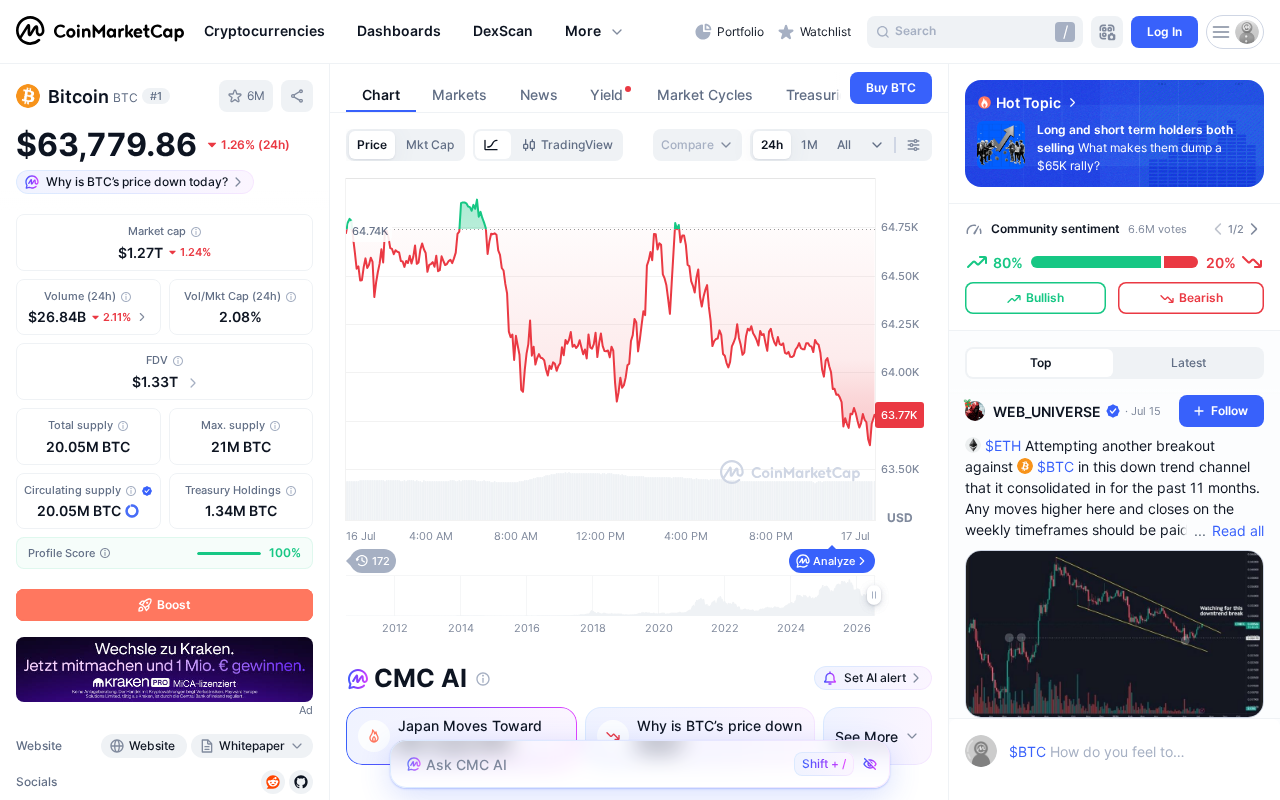
Understanding Riot Stock takes more than a glance at a price chart. It means understanding Riot Blockchain’s operations, its role in the broader crypto industry, and the volatile nature of its stock. Your next move as an investor should come from that understanding, not from headlines alone.
The Robinhood Influence
Robinhood grew fast into a major force in stock trading. A simple interface and commission-free trades draws a wide range of investors, but its influence goes beyond making investing easier to access.
Robinhood’s Role in Stock Trading
Robinhood changed the stock trading landscape. The online brokerage didn’t just make stock trading accessible to anyone with a smartphone and an internet connection, it also played a real part in bringing cryptocurrency exposure to mainstream investors. By keeping things simple and accessible, Robinhood listed a wide range of stocks, from blue-chip names to more speculative picks like Riot Blockchain. That accessibility mattered more for a stock like Riot than it did for a household name. Before commission-free apps, buying a volatile, low-priced mining stock meant paying a flat trade fee that could eat a meaningful chunk of a small position. Remove that fee, and the math for a $200 or $500 trade changes completely, which is part of why Riot’s retail base grew as fast as it did.
For example, Vanguard is a well-known investment management firm and one of Riot Platforms’ largest institutional shareholders. Institutional investors now hold a substantial share of Riot’s outstanding stock, a position that has grown sharply since the company traded in the single digits during the 2018 to 2020 stretch. That shift from an almost entirely retail-traded penny stock to one with real institutional ownership shows the reach Robinhood-style accessibility has helped create, opening up speculative stocks that used to sit mostly outside retail reach and, eventually, drawing in the bigger funds that follow retail liquidity.
How Robinhood Influenced Riot Stock
Robinhood’s role in raising Riot Blockchain’s visibility is hard to overstate. Its zero-commission policy and simple platform pulled in a wave of retail investors actively hunting for high-risk, high-reward stocks. Riot Blockchain, operating in the fast-moving crypto space, fit that profile well. A clear correlation showed up in Riot’s stock price as interest from Robinhood’s user base picked up, and that interest lined up with real upswings.
Take the first quarter of 2020. Riot’s stock price sat around $1.26 in January and climbed to $1.47 by the end of March, a 16.67% increase. As Robinhood users bought into Riot stock in growing numbers, they helped push the price higher. That buying, combined with general strength across crypto in the market, added up to a real surge in Riot’s stock performance and backs up the scale of Robinhood’s influence. The pattern repeats itself any time crypto sentiment turns bullish: a low share price, a simple buy button, and a stock people already recognize from the news is a combination that tends to pull in first-time traders faster than a blue-chip industrial ever could.
Analyzing Riot Stock on Robinhood
Analyzing Riot Stock on Robinhood comes down to a few key data points: retail investor activity, changes in Bitcoin’s value, and trading patterns on Robinhood’s platform.
How to Buy Riot Stock on Robinhood
Buying Riot Stock on Robinhood follows a straightforward process. First, open an account, individual or joint. Robinhood runs a quick KYC check (identity verification) required of every US brokerage under the SEC’s customer identification rule, which means a legal name, address, date of birth, Social Security number, and a government-issued ID before the account activates. Second, transfer money into the Robinhood account from a bank. That transfer can take anywhere from a few minutes to a few business days, depending on the bank.
Third, search for Riot Blockchain inside the Robinhood app. Riot’s profile page shows the current stock price, 52-week high and low, trading volume, and other data laid out in charts. Fourth, tap Buy and enter the number of shares to purchase. Robinhood also supports fractional share purchases, so a smaller amount of money still buys a portion of a single Riot share rather than requiring the full share price up front. Say an investor only wants to put $50 toward the position rather than the full price of one share: fractional trading makes that possible, which matters on a stock that can move five to ten percent within a single session. Choose an order type, market or limit, and set a limit price if that applies. A market order executes immediately at the next available price, trading price certainty for speed, while a limit order only fills once the stock hits the exact price set, or better, trading speed for price control. On a stock as volatile as Riot, that distinction matters more than it does on a slow-moving blue chip.
Fifth, review the order details on the confirmation screen, checking the share count and order type before confirming. Swipe up to submit. The order fills at the next available price for a market order, or waits for the market to hit the set price for a limit order. Keep a record of the fill price and time. On a fast-moving session, the price shown when the order was placed and the price it actually filled at can differ by a noticeable margin, and that gap is worth understanding rather than being surprised by later.
Tips for Trading Riot Stock on Robinhood
Trading Riot Stock on Robinhood takes some planning. Given Riot’s volatility, keep a close eye on Bitcoin’s price throughout the trading day, not just at the open, since sharp intraday swings in Bitcoin often show up in Riot’s stock within minutes. Since Riot is a Bitcoin mining company, a rise in Bitcoin’s value often shows up as a positive move in Riot’s stock too.
Second, use the stock prices using Robinhood tools built into the app to track price action. These resources help with reading current market trends against past performance. Watching volume alongside price matters too: a price jump on unusually high volume tends to carry more weight than the same move on a quiet trading day.
Third, set stop-loss and take-profit levels. Limit orders let a trader define a maximum acceptable loss or a target profit level ahead of time, rather than reacting in the moment. Don’t put in more than is comfortable to lose, given how unpredictable stock trading can get.
Fourth, stay on top of financial news and the narratives shaping Riot and the wider crypto market. That kind of coverage tends to drive retail investor behavior, which then feeds back into the stock price. Earnings calls, production updates on Bitcoin mined per month, and any word on energy costs are all worth watching specifically for a mining stock like Riot, since those factors hit the balance sheet directly.
Fifth, think about position size relative to the rest of a portfolio before the trade, not after. A stock that can swing double digits in a single session belongs in the speculative slice of a portfolio, not the core of it. Selling a stock at a gain inside a standard brokerage account is also a taxable event under US tax law, a detail that’s easy to forget in the middle of a fast-moving rally and worth checking with a tax professional before assuming any profit is fully spendable.
None of these steps guarantee results, but they can sharpen an understanding of how Riot Blockchain stock behaves on Robinhood. Careful trading habits paired with steady market observation make the whole process smoother.
Wall Street’s Impact on Riot Stock
This section covers how Wall Street behavior connects to Riot’s stock performance and what that could mean for where the stock heads next.
The Impact of Wall Street on Riot Stock
Wall Street plays a real role in Riot’s stock performance. Wall Street’s relationship with Riot Blockchain runs both ways. Riot Blockchain’s stock price moves often line up with major financial events on Wall Street. When Wall Street turns optimistic on Bitcoin’s future, Riot’s stock price tends to tick up too. Those price moves act as a kind of real-time read on market sentiment, which can shape investor behavior well beyond Riot itself.
Beyond that, plenty of Wall Street entities run speculative trading strategies, not unlike retail investors on Robinhood. Riot’s stock, classified as speculative, appeals to that kind of trading. So shifts in Wall Street trading strategy can show up directly as swings in Riot’s stock value. That two-way relationship is part of what makes Riot a useful barometer: a trader who watches how institutional flow reacts to a Bitcoin rally can sometimes read broader market sentiment toward crypto through Riot’s price action alone, well before that sentiment shows up in Bitcoin’s own chart.
Future Predictions for Riot Stock
Predicting where Riot’s stock goes next comes down mostly to Bitcoin’s performance and Wall Street’s attitude toward it. Based on current trends, there are two broad scenarios. In a bullish scenario, Bitcoin, the asset Riot mines, holds its value or grows further. Wall Street optimism continues, and that pushes Riot’s stock upward. In a bearish scenario, Bitcoin loses value, Wall Street pulls back from Riot, and the stock drops.
That’s a simplified picture, though. Plenty of other factors, from Robinhood user behavior to broader macroeconomic events, can move Riot’s stock. Ongoing monitoring and staying current on both Wall Street and crypto news matters here. Market forecasts are never guaranteed, so due diligence should come before any investment decision, not after. That holds whether Riot is trading as a pandemic-era momentum favorite or in a quieter stretch where Bitcoin chops sideways for months. A useful habit is checking both the price chart and the news cycle before adjusting a position, since a chart alone can’t explain why a move is happening, and a headline alone can’t show how the market has already priced it in.
Riot Stock Robinhood: Risks and Opportunities
Investing in Riot Blockchain through Robinhood comes with real risks and real opportunities. Weighing both matters before putting money in.
Potential Risks of Investing in Riot Stock
Cryptocurrency-linked stocks like Riot carry real volatility. Bitcoin’s own price history shows that pattern clearly, and lesser-known cryptocurrencies can swing even harder. Riot’s stock, tied directly to Bitcoin mining, isn’t immune to any of that. That leaves a few specific risks worth naming.
- Bitcoin volatility: Riot’s value mirrors the ups and downs of Bitcoin. If Bitcoin’s worth drops, Riot’s stock tends to drop with it.
- Regulatory risks: Governments around the world are scrutinizing cryptocurrencies, and that scrutiny can affect Riot’s stock.
- Business model risks: Riot’s dependence on Bitcoin mining creates operational risk tied to mining difficulty (a network-wide measure of how hard it is to mine a new block, which adjusts roughly every two weeks) or changes to the mining protocol, which can hit the stock’s performance.
Opportunities in Riot Stock Investment
Riot carries real risk, but it isn’t without upside. Understanding the potential benefits helps line up decisions with an actual investment strategy rather than a guess.
- Rise in Bitcoin Value: If Bitcoin’s price climbs, Riot’s stock tends to climb too, which can mean strong returns for investors.
- Future of Cryptocurrency: As crypto sees more acceptance and integration into mainstream commerce, Riot’s stock could turn into a stronger long-term investment.
- Robinhood’s Influence: Robinhood, the app that changed how people invest, gives retail investors an easy way to buy into Riot stock.
In crypto investing, risk and opportunity often sit close together. Retail appetite for speculative plays isn’t limited to mining stocks either. The same investors chasing Riot on Robinhood often show up on sports betting apps like DraftKings, chasing quick outcomes in a different market entirely. Keep an analytical eye on what’s actually moving Riot’s stock value, from Robinhood user behavior to major financial events, and match any position to a real investment strategy rather than a hunch.
Conclusion
Evaluating both risk and opportunity matters before putting money into any stock, and Riot is no exception. Riot Blockchain’s ties to Bitcoin mining and stock performance bring real pitfalls and real rewards. Robinhood’s influence pulled a wave of interest into speculative stocks like Riot, but Bitcoin’s volatility, regulatory changes, and business model risk are all still in play. On the other side, a rise in Bitcoin’s value and wider adoption of cryptocurrency could still mean strong returns.
None of that ends here. Understanding, monitoring, and strategizing around Riot stock is an ongoing process, and informed decisions are what separate successful investing from guessing. Riot stock’s relationship with Robinhood is a good reminder of just how tightly retail platforms and volatile assets can end up linked, and that link is worth watching closely heading into 2026, whether the company goes by Riot Blockchain, Riot Platforms, or just its ticker, RIOT.
Frequently Asked Questions
What is the relationship between Riot Blockchain and Bitcoin mining?
Riot Blockchain runs Bitcoin mining operations, which ties its stock performance closely to Bitcoin’s value. A drop in Bitcoin’s price can pull Riot’s stock down with it, since the company’s revenue and the value of the Bitcoin it holds on its balance sheet both move with the market.
How has Robinhood influenced stock trading?
Robinhood pulled a large number of retail investors into speculative stocks like Riot Blockchain. That surge in demand affected pricing and volatility for those stocks, and it also normalized the idea that a first-time investor could open an app and buy a crypto mining stock in the same few taps used to buy a blue-chip name.
What are the potential risks of investing in Riot Blockchain?
Risks include Bitcoin’s price volatility, regulatory scrutiny of cryptocurrency, and the sustainability of Riot’s mining-dependent business model. Weighing these risks matters before making any investment decision, and none of them are unique to Riot among Bitcoin mining stocks.
What opportunities does Riot Blockchain stock investment offer?
Riot stock offers upside tied to a potential rise in Bitcoin’s value, broader adoption of cryptocurrency, and continued retail access through platforms like Robinhood. Staying alert to the variables driving Riot’s value still matters, since the same factors that create upside can reverse just as fast.
Why is careful monitoring necessary for investing in Riot Blockchain?
Riot’s stock value moves with variables like Bitcoin’s price, regulatory changes, and overall market conditions. Monitoring those factors supports better-timed decisions and helps limit potential losses, particularly given how quickly sentiment can shift on a stock this closely tied to a single asset.
Can retail investors on Robinhood move Riot’s stock price on their own?
Retail investors on Robinhood can add real buying pressure during periods of high interest, as seen in early 2020, but Riot’s price still tracks Bitcoin’s value and broader market conditions over time. No single investor group controls the stock long-term.
Is Riot Blockchain still called Riot Blockchain?
Legally, no. The company rebranded to Riot Platforms, Inc. in January 2023 to reflect a business that had grown beyond mining into data center infrastructure. It still trades on Nasdaq under the ticker RIOT, and both names circulate in coverage and on trading apps.
What’s the difference between a market order and a limit order when buying Riot stock?
A market order buys or sells Riot stock immediately at the next available price, guaranteeing execution but not the exact price. A limit order only fills at a chosen price or better, guaranteeing the price but not that the order fills at all. Given how fast Riot can move intraday, that distinction can matter as much as the buy decision itself.
Does Robinhood charge a commission to trade Riot stock?
No. Robinhood’s core stock trading is commission-free, which is part of why the platform pulled in so many retail investors trading Riot in the first place. Other costs can still apply, such as regulatory transaction fees on sales, which are standard across US brokerages and unrelated to Robinhood specifically.
Is buying Riot stock the same as buying Bitcoin?
No. Riot stock gives exposure to a company that mines and holds Bitcoin, along with its data center business, debt, operating costs, and management decisions. Bitcoin’s price is one major input into Riot’s stock, not the only one, so the two can and do diverge over shorter stretches.