Choosing among Australia’s top crypto exchanges depends on what you want to do: buy Bitcoin for the first time, trade regularly, access a wide selection of cryptocurrencies or keep transaction costs low. The right platform should offer transparent pricing, convenient Australian dollar (AUD) deposits and withdrawals, appropriate security controls and a regulatory status you can verify.
Popular options to compare include CoinSpot, Swyftx, Independent Reserve, CoinJar, Kraken and Coinbase. Each has different strengths, and no single exchange is automatically the best choice for every investor.
This guide compares the main features to evaluate, explains how crypto trading fees work, outlines Australian regulatory considerations and shows how to choose an exchange that fits your needs. Platform features and fees can change, so confirm the latest details before depositing money.
What Are the Best Crypto Exchanges in Australia?
The best crypto exchange in Australia is the platform that offers the right balance of fees, supported assets, AUD payment options, security and usability for your circumstances.
The following shortlist provides a starting point for comparing established platforms. These are candidates to evaluate, not a definitive performance ranking or a guarantee that every feature is available to every Australian customer.
| Exchange | Worth considering for | What to compare |
|---|---|---|
| CoinSpot | Beginners and users interested in a broad range of cryptocurrencies | Instant-buy costs versus market trading fees, supported assets and withdrawal options |
| Swyftx | Beginners and mobile-first users | Trading fees, spreads, available order types and AUD funding methods |
| Independent Reserve | Users who want an exchange-oriented trading experience and additional account features | Fee tiers, supported markets, custody arrangements and account eligibility |
| CoinJar | Users looking for straightforward buying and selling | Purchase methods, transaction costs, supported assets and withdrawal fees |
| Kraken | Users interested in advanced trading tools and international market access | Australian availability, AUD pairs, trading fees and withdrawal conditions |
| Coinbase | Users who value an accessible interface and educational resources | Australian account features, simple-buy costs, advanced trading fees and asset availability |
| BTC Markets | Users interested in an Australian-focused exchange | AUD markets, order-book liquidity, fee schedules and supported coins |
Important: This shortlist is not a claim that all seven platforms have identical regulatory status, fees or services. Verify the Australian entity serving you, its current registration status, and the precise terms applicable to your account.
Which crypto exchange is best for beginners?
Beginners should prioritize an intuitive interface, clear pricing, reliable AUD funding methods, accessible customer support and strong account security.
A simple buying interface can make a first purchase easier, but convenience alone does not make a platform inexpensive. Compare the final quoted price with the market price, including any spread and transaction fee, before confirming a purchase.
CoinSpot, Swyftx and CoinJar are reasonable starting points for a beginner comparison. Kraken and Coinbase are also worth evaluating if you prefer their interface, trading tools or educational resources.
Which crypto exchange is best for active traders?
Active traders should focus on order-book liquidity, maker and taker fees, supported trading pairs, order types and execution quality.
A platform with a low advertised trading fee may still be expensive if its spreads are wide or its AUD market has limited liquidity. Advanced features such as margin trading or derivatives also introduce additional risks and may have different eligibility requirements.
Compare the costs and capabilities of Kraken, Independent Reserve, Coinbase Advanced and the relevant trading interfaces offered by other shortlisted exchanges. Confirm which products are available to Australian residents rather than assuming that an international platform’s full feature set is accessible locally.
Which crypto exchange has the lowest fees?
There is no universally cheapest crypto exchange for every transaction. The answer depends on the amount traded, the order type, the trading pair, the account’s fee tier and the method used to buy or sell cryptocurrency.
For example, CoinSpot’s market trading fees can differ substantially from its instant-buy pricing. Swyftx uses a fee structure that may vary with trading volume and spreads. Other exchanges may use maker-taker schedules or different pricing for simple purchases.
Compare the total transaction cost, not just the headline fee.
How to Compare Australia’s Top Crypto Exchanges
Before opening an account, evaluate each platform against the same criteria. This makes the comparison more meaningful than relying on an overall rating or promotional claim.
1. Trading fees and spreads
An exchange may charge a trading fee, incorporate a spread into its quoted price, or apply both.
- Maker fee: Typically applies when your limit order adds liquidity to the order book.
- Taker fee: Typically applies when your order immediately matches an existing order.
- Spread: The difference between the price at which an asset can be bought and the price at which it can be sold, or the difference between a quoted price and a relevant market benchmark.
- Deposit and withdrawal fees: Charges that may apply when moving AUD or cryptocurrency into or out of an account.
- Network fees: Blockchain transaction costs associated with transferring cryptocurrency.
The cheapest option is the one with the lowest total cost for your actual transaction, not necessarily the lowest advertised percentage.
Example: How much does a crypto trading fee cost?
Suppose you purchase A$1,000 of cryptocurrency using an order-book exchange.
| Trading fee | Fee on A$1,000 |
|---|---|
| 0.10% | A$1.00 |
| 0.25% | A$2.50 |
| 0.50% | A$5.00 |
| 1.00% | A$10.00 |
These figures are illustrative calculations, not current quotes from specific exchanges. They exclude spreads, deposit charges, withdrawal costs and any other applicable fees.
If you buy and later sell A$1,000 worth of cryptocurrency at the same value, a 0.10% fee on each side would cost approximately A$2 in total, assuming the same fee rate applies to both trades. Price movements and other charges can increase your overall cost.
2. AUD deposits and withdrawals
For Australian residents, the ability to move money in and out of an exchange conveniently is an important consideration.
Check whether the exchange supports:
- PayID or bank transfers.
- AUD deposits without additional charges.
- AUD withdrawals to an eligible bank account.
- Clearly disclosed processing times and transaction limits.
- Payment methods that suit your circumstances.
Card payments and other instant purchase methods may carry higher fees than bank transfers. Deposit limits, verification requirements and withdrawal processing times can also vary.
Always verify the payment instructions inside your account and use a bank account in your own name when required by the platform.
3. Supported cryptocurrencies and trading pairs
A larger list of supported cryptocurrencies does not automatically make an exchange better.
Check whether the platform supports the specific assets you intend to buy, sell or transfer. Also check whether those assets can be traded directly against AUD or whether you must convert through another currency.
Common assets that users may wish to compare include:
- Bitcoin (BTC).
- Ethereum (ETH).
- Solana (SOL).
- XRP (XRP).
- Litecoin (LTC).
Availability changes over time, and not every exchange supports every asset or network. Confirm the supported trading pair and withdrawal network before purchasing.
4. Security and custody
Security is essential when choosing a cryptocurrency exchange because digital asset transactions may be irreversible, and recovery options can be limited.
Look for features such as:
- Two-factor authentication (2FA).
- Withdrawal address allowlisting.
- Login and withdrawal notifications.
- Anti-phishing protections where available.
- Clear information about custody and asset storage.
- A documented process for account recovery and suspicious activity.
- Transparent incident disclosures and security policies.
An exchange’s security features can reduce certain risks, but they cannot eliminate them. Exchange-held cryptocurrency also carries custody and counterparty risks.
Consider keeping only the amount you need for trading on an exchange. If you choose self-custody, understand how to protect your recovery phrase and private keys before transferring significant funds.
5. Customer support and usability
A good platform should make it easy to understand transactions, review account activity and find help when a deposit or withdrawal is delayed.
Compare support channels, operating hours, help documentation, identity-verification procedures and complaint-handling processes.
Read independent reviews critically. Look for detailed, recent accounts of actual customer experiences rather than relying on anonymous testimonials or ratings without context.
Are Cryptocurrency Exchanges in Australia Regulated?
Australian cryptocurrency exchanges may be subject to registration, anti-money laundering obligations and other legal requirements depending on the services they provide. However, registration does not mean that an exchange is government-approved as an investment, that its assets are guaranteed or that customers are protected against every loss.
AUSTRAC oversees relevant anti-money laundering and counter-terrorism financing requirements and maintains a public register of virtual asset service providers.
Before using an exchange:
- Find the exact legal name of the Australian entity providing the service.
- Search the relevant AUSTRAC public register .
- Check whether the entity’s registration covers the relevant services.
- Review any applicable ASIC information about financial services, licensing and investor warnings.
- Read the platform’s terms to understand custody arrangements, withdrawal rights, fees and dispute processes.
Regulatory obligations can depend on the service being offered. An AUSTRAC registration is not the same as an Australian financial services licence, and neither should be treated as a blanket guarantee of safety.
For readers outside Australia, local rules may differ substantially. Confirm that the exchange is authorized or registered as required in your own jurisdiction before opening an account.
How to Buy Cryptocurrency in Australia
Buying cryptocurrency generally involves choosing an exchange, verifying your identity, depositing funds and placing an order. The exact process varies by provider and account type.
Step 1: Choose an exchange
Compare several platforms using the criteria above. Check supported assets, AUD payment methods, fees, withdrawal policies and the provider’s current regulatory status.
Step 2: Create and verify your account
Register through the exchange’s official website or application. Complete the identity-verification process and activate the available security features.
Never share your password, authentication codes or recovery credentials with someone claiming to provide exchange support.
Step 3: Deposit Australian dollars
Choose an available payment method and review any limits, charges and expected processing times. Confirm that the deposit instructions match the exchange’s official guidance.
Step 4: Select a cryptocurrency
Research the asset before buying it. Understand its purpose, risks, liquidity and potential for loss. Do not assume that a widely discussed or popular cryptocurrency is a suitable investment.
Step 5: Review the order
Check the amount you are spending, the quantity of cryptocurrency you will receive, the quoted price, the trading fee and any spread.
For larger or more frequent trades, compare market orders with limit orders. A market order prioritizes execution at available prices, while a limit order specifies a price boundary but may not execute.
Step 6: Secure your holdings
Enable account security protections and review your withdrawal options. If you intend to move assets to a personal wallet, confirm the destination address, blockchain network and compatibility before sending funds.
Consider starting with a small test transfer when appropriate. Blockchain transactions can be irreversible.
Should You Keep Cryptocurrency on an Exchange or in a Wallet?
The choice depends on how frequently you trade, how much control you want over your assets and how confidently you can manage your own security.
| Storage method | Main advantage | Main consideration |
|---|---|---|
| Exchange account | Convenient for buying, selling and trading | You depend on the exchange’s custody, security and withdrawal arrangements |
| Software wallet | Gives you control of the keys when it is self-custodial | Vulnerable to compromised devices, malicious software and lost recovery phrases |
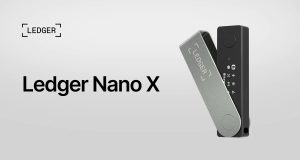
| Hardware wallet | Keeps private keys in a dedicated device designed for offline protection | Requires secure setup, recovery management and careful transaction verification |
An exchange account is not necessarily a personal cryptocurrency wallet. When an exchange controls the private keys, you rely on its systems and policies to access your holdings.
A self-custody wallet can provide greater direct control, but it also transfers responsibility for safeguarding the keys to you. Losing a recovery phrase or signing a malicious transaction can result in permanent loss.
For long-term holdings, compare the risks of exchange custody with the responsibilities of self-custody before deciding where to store your assets.
What Are the Risks of Using Crypto Exchanges?
Cryptocurrency trading carries substantial financial and operational risks. Investors should understand these risks before depositing money.
Market volatility
Cryptocurrency prices can rise or fall sharply over short periods. You may lose some or all of the money invested.
Exchange and custody risk
A platform may experience an outage, security incident, insolvency or restrictions on withdrawals. Access to assets may be delayed or lost.
Fraud and phishing
Scammers may impersonate exchanges, support staff or investment advisers. Fake websites, fraudulent applications and unsolicited investment offers can lead to stolen funds.
Liquidity and execution risk
Low trading volume or wide spreads can make it difficult to buy or sell at the expected price. Orders can execute at less favourable prices than anticipated.
Blockchain and transfer risk
Sending cryptocurrency to an incorrect address or incompatible network can result in irreversible loss. Some assets or networks may have specific deposit and withdrawal restrictions.
Regulatory and tax risk
Rules can change, and the legal treatment of particular products or transactions may depend on individual circumstances. Keep accurate transaction records and seek qualified advice when necessary.
Never invest money you cannot afford to lose, and do not rely on exchange advertising or past price performance as evidence of future returns.
Cryptocurrency Taxes in Australia
Cryptocurrency transactions may have tax consequences in Australia. The treatment depends on what you do with the asset and the circumstances of the transaction.
Buying and holding cryptocurrency is not necessarily treated the same as selling it, exchanging it for another cryptocurrency, spending it or receiving it as income.
The Australian Taxation Office provides guidance on cryptocurrency and record-keeping requirements. Review the ATO’s crypto asset record-keeping guidance and obtain professional advice if you are uncertain about your obligations.
Maintain records of:
- Dates and details of purchases, sales and transfers.
- The Australian dollar value of relevant transactions.
- Exchange statements and transaction histories.
- Fees and other associated costs.
- Wallet addresses and transfers between wallets you control.
Export your exchange history regularly and retain it securely. Do not assume that moving cryptocurrency between platforms removes the need to keep records or determine the tax treatment of a transaction.
This section is general information, not individual tax advice.
How to Choose the Right Crypto Exchange for Your Needs
Use this checklist to narrow down the available platforms.
Exchange selection checklist
0 of 6The exchange supports my country and the specific cryptocurrency I want to trade.I have checked the relevant regulatory register and legal entity.I understand the trading fee, spread and withdrawal costs.The exchange supports a convenient AUD deposit and withdrawal method, if needed.I have reviewed the security controls and custody arrangements.I understand how to withdraw my assets and keep transaction records.
Your final choice should reflect your needs rather than a generic ranking. A beginner making occasional purchases may value simplicity and transparent pricing, while an active trader may place more importance on liquidity, order types and trading fees.
For larger balances, custody arrangements and withdrawal reliability deserve as much attention as the cost of executing a trade.
Frequently Asked Questions
What is the best crypto exchange in Australia?
There is no single best exchange for everyone. CoinSpot, Swyftx, Independent Reserve, CoinJar, Kraken, Coinbase and BTC Markets are options worth comparing. The best choice depends on your trading experience, supported assets, total fees, security requirements and available AUD services.
Which Australian crypto exchange has the lowest fees?
The lowest-cost exchange depends on the transaction. Compare maker and taker fees, instant-buy spreads, deposit charges, withdrawal fees and any applicable network costs. A platform with a low trading fee may still be more expensive for a particular purchase if its quoted price is less competitive.
Can I buy Bitcoin with AUD in Australia?
Yes, some exchanges serving Australian customers support buying Bitcoin with Australian dollars. Depending on the provider, available methods may include PayID, bank transfer or card payment. Verify the current payment options, limits and fees before depositing funds.
Are crypto exchanges safe to use?
Crypto exchanges can provide security features such as two-factor authentication and withdrawal controls, but no platform is risk-free. Users face market, custody, cybercrime and operational risks. Check the exchange’s registration status, security practices, withdrawal policies and custody arrangements before using it.
Do I need a wallet if I use a crypto exchange?
Not necessarily. An exchange account can hold cryptocurrency on your behalf, but the exchange may control the private keys. A self-custody wallet gives you direct control of the keys and greater responsibility for protecting them. Choose based on your trading habits, security knowledge and tolerance for custody risk.
Can I transfer cryptocurrency from one exchange to another?
Generally, yes, when both platforms support the asset and compatible blockchain network. Check the receiving exchange’s deposit instructions carefully. Selecting the wrong network or address can result in permanent loss, and some transfers require a memo or tag.
Is cryptocurrency legal in Australia?
Cryptocurrency can be bought, sold and held in Australia, subject to applicable laws and regulatory requirements. Businesses providing regulated digital currency or virtual asset services may need relevant AUSTRAC registration, while other obligations can depend on the services offered. Check official sources for current requirements.
Do I have to pay tax on cryptocurrency in Australia?
Cryptocurrency transactions can trigger tax obligations depending on the transaction and your circumstances. Selling, exchanging or spending an asset may have different consequences from simply holding it. Consult the ATO’s guidance and seek qualified tax advice for your situation.
Is an AUSTRAC-registered exchange guaranteed to be safe?
No. AUSTRAC registration relates to applicable regulatory obligations; it is not a guarantee of investment performance, solvency, cybersecurity or recovery of customer funds. Evaluate the provider’s security, legal arrangements and withdrawal policies separately.
Should I choose an Australian exchange or an international exchange?
Compare the specific legal entity serving you, AUD funding options, trading fees, supported markets, security arrangements and applicable regulatory requirements. An international brand may offer useful trading tools, but its products and protections can differ between jurisdictions.
Final Verdict: Finding Australia’s Top Crypto Exchanges
The best cryptocurrency exchange is the one that meets your requirements while making its costs, risks and operating arrangements clear.
For a practical shortlist, compare CoinSpot, Swyftx, Independent Reserve, CoinJar, Kraken, Coinbase and BTC Markets. Review their current fees, supported assets, AUD payment methods, security features and applicable registration status before making a decision.
Do not choose solely on the basis of a large coin selection, a low advertised fee or a high online rating. Look at the total cost of trading, the reliability of deposits and withdrawals, and how you intend to store your assets.
Most importantly, remember that cryptocurrency is a high-risk asset class. Research each investment independently, keep accurate records and invest only after understanding the possibility of losing money.