

What to Know About the Best Crypto Exchanges in 2026
The best low-fee crypto exchanges in 2026 are Binance, OKX, and Bybit for entry-level spot fees of 0.10% or less, Kraken and Coinbase for US traders who want strong security and regulatory compliance, and Crypto.com for spending crypto through a debit card and rewards app.
1: Binance remains one of the lowest-fee exchanges globally, charging as little as 0.10% per trade with further discounts available when paying fees using BNB tokens.
2: Bybit and OKX have emerged as strong low-fee competitors, offering maker fees as low as 0.02% on futures trading alongside deep liquidity and wide coin selection.
3: Kraken and Coinbase are top picks for US-based traders looking for regulated, low-fee platforms with strong security track records and easy fiat on-ramps.
4: Decentralized exchanges like Uniswap and dYdX are growing in popularity for traders who want low fees and full control of their funds without identity verification.
💡 Pro Tip: Always factor in withdrawal fees alongside trading fees when comparing exchanges. Some platforms advertise very low trading fees but charge significantly higher fees when moving your crypto off the platform to a personal wallet.
Last updated: October 1, 2026. Fees checked against each exchange’s published fee schedule on that date.
The best crypto exchanges 2026 are Kraken, Coinbase, Crypto.com, Binance, KuCoin, and Gemini. Each one wins for a different reason. Kraken balances strong security with competitive fees once you clear the entry tier, Coinbase is the easiest place to start, Crypto.com rewards card and app users, and Binance or KuCoin give altcoin traders the cheapest trades. This is Cryptsy’s ranked review, judged on fees, safety, and how easy each platform is to actually use.
Fees decide more than people expect. A platform that charges 0.6% per trade quietly costs you far more over a year than one at 0.1%. Run the math on a $10,000 trade and the gap is obvious: 0.10% costs you $10, while 0.60% costs $60, six times as much for the identical trade. We weighted low fees heavily, then checked that the cheap pick is also safe to hold money on. Use our free crypto profit calculator to see exactly how much fees eat into your returns on any trade.
Best Crypto Exchanges 2026 at a Glance






A Note on the Cryptsy Name
You may remember Cryptsy as an actual exchange. The original Cryptsy ran from 2013 to 2016 and shut down after a security breach drained customer funds. That platform is gone. Today cryptsy.com is an independent review site, not an exchange and not connected to the old company. We do not hold your coins or run an order book. We test and rank the exchanges below so you can choose one with clear eyes, including the lessons the original Cryptsy taught the whole industry about custody risk.
Best Crypto Exchanges 2026
The best crypto exchanges in 2026 are those that combine high liquidity, strong security, low fees, regulatory trust, and access to a wide range of assets. As the market matures, top platforms are also competing through advanced trading tools, institutional adoption, and faster token listings.
1.  Binance
 Binance
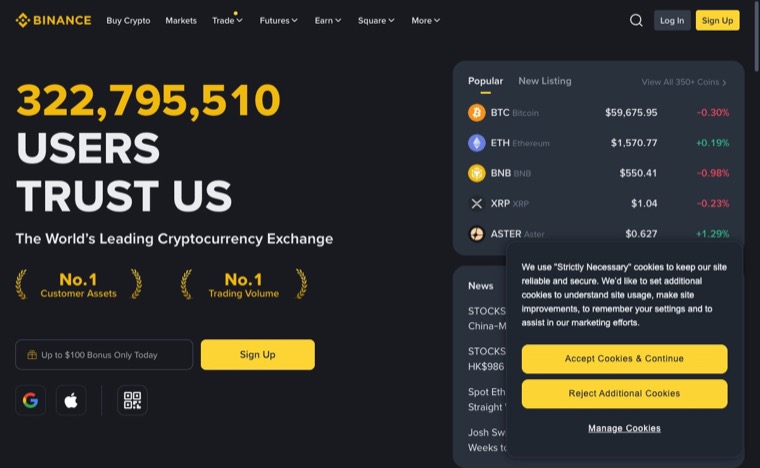
Binance handles the highest spot trading volume of any exchange, which means tight spreads and fast order fills even on large trades. Spot fees start at 0.10% maker and taker, dropping further if you hold BNB or trade in volume. It lists more than 350 coins plus futures, options, and earn products. The catch is regulatory pressure in several regions, and US residents are pushed to the separate Binance.US platform, which is unavailable in states like New York and Texas and carries a smaller asset list.
Full cost and verification details: Binance.US fees and Binance.US KYC requirements.
2. Coinbase
 Coinbase
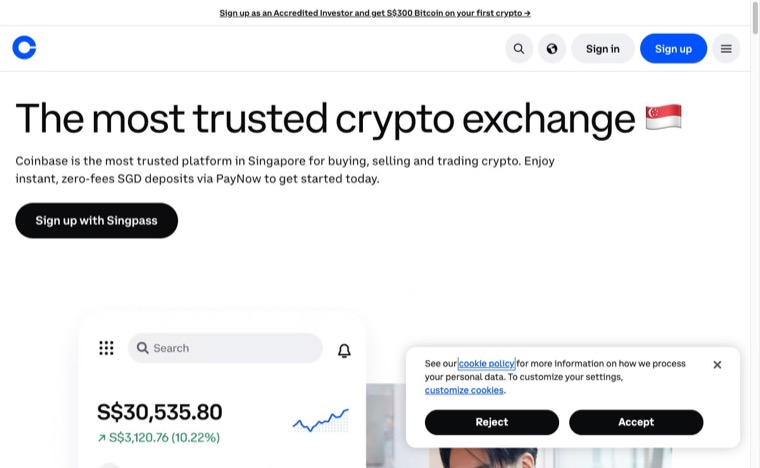
Coinbase is the exchange most US beginners start with, thanks to a clean interface and full regulatory standing as a publicly traded company. Simple-mode trades carry higher fees, so use Coinbase Advanced, which charges a tiered maker-taker fee based on your 30-day volume. Coinbase shows your current tier inside your account, per Coinbase Help. It also runs large institutional ETF custody flows. You pay for the trust and compliance with fees that sit above most competitors, though the gap narrows fast once your monthly volume clears a few thousand dollars.
Full cost and verification details: Coinbase fees breakdown and Coinbase vs Robinhood fees.
3. Kraken
 Kraken
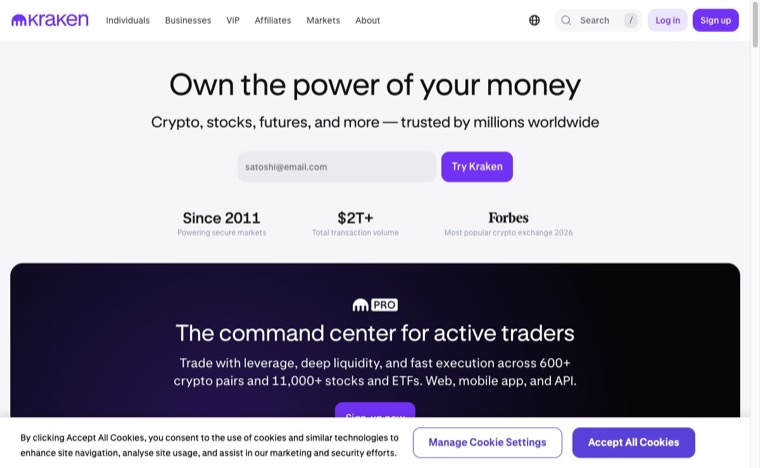
Kraken pairs a long security track record with competitive fees once you clear the entry tier. Per Kraken’s official fee schedule, new accounts start at 0.40% maker and 0.80% taker on Kraken Pro, dropping to roughly 0.30% and 0.60% after just $2,500 in 30-day volume, and continuing to fall from there. It has not had a major hack of customer funds, which matters for traders holding funds on-exchange. Spot, margin, and futures are all available, with strong support in Europe and the US. The standard interface is basic, so serious traders should use Kraken Pro.
Full cost and verification details: Kraken fees by tier and Kraken KYC tiers.
4. OKX
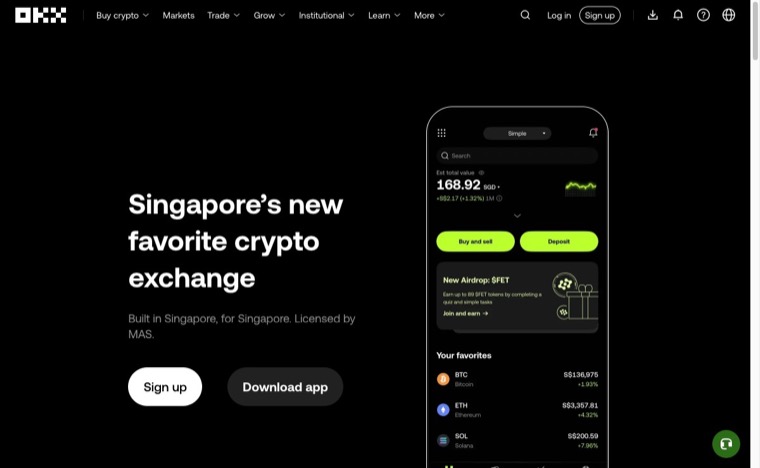
OKX is a strong all-in-one option, combining spot, derivatives, and a built-in Web3 wallet with DEX access. Spot fees begin at 0.08% maker and 0.10% taker, among the lower rates available. Its derivatives liquidity rivals Binance, and the trading tools target active and institutional users. It does not serve US customers, which limits its reach.
Full cost and verification details: OKX fees breakdown.
5. Bybit
 Bybit
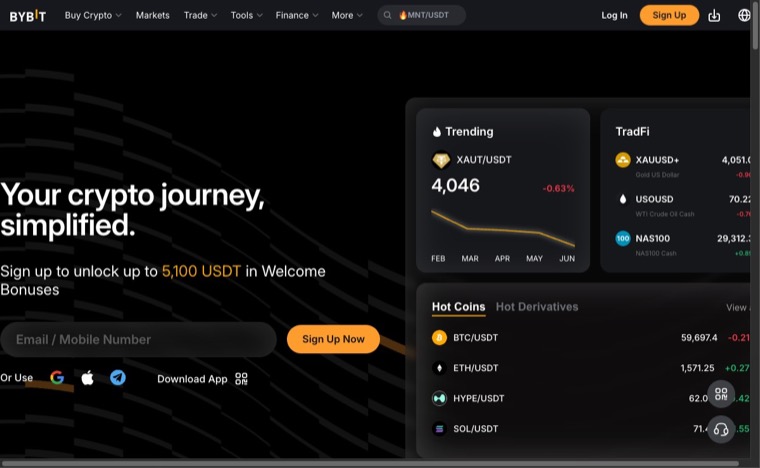
BybitBybit built its name on derivatives and leverage, offering perpetual contracts with deep liquidity and a fast matching engine. Spot fees sit at 0.10% maker and taker, with derivatives fees lower still. It is popular with active traders who want copy trading and a responsive mobile app. Bybit experienced a significant security incident, so enable two-factor authentication and avoid leaving large balances on the platform.
6. KuCoin
 KuCoin
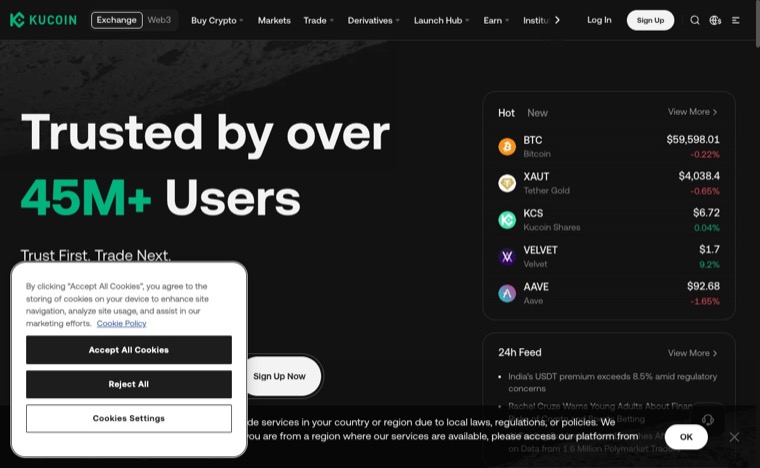
KuCoin is the go-to for altcoin hunters, listing hundreds of small-cap and early-stage tokens you will not find on Binance or Coinbase. Spot fees are a flat 0.10% maker and taker on major coins, with a 20% discount when you pay in KCS. KuCoin does not serve US customers: in January 2025 it pleaded guilty to operating an unlicensed money transmitting business and agreed to exit the US market for at least two years, per the US Department of Justice. It offers spot, futures, and lending in one account. Liquidity on the smallest pairs can be thin, so check order books before trading low-cap coins.
Full cost and verification details: KuCoin fees and KuCoin KYC levels.
7. Bitget
 Bitget
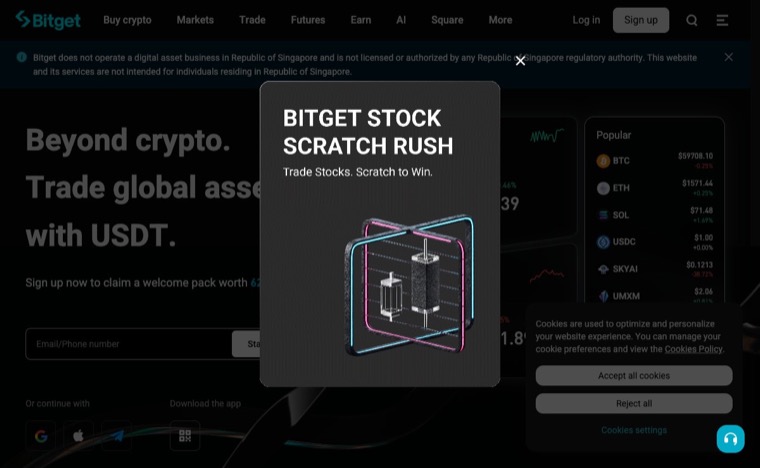
Bitget grew quickly on the back of copy trading, letting you mirror the positions of top-performing traders automatically. Spot fees start at 0.10% and derivatives liquidity is strong for a mid-size exchange. On September 24, 2026 Bitget lost about $387 million in a hack, and said its $464 million protection fund would cover users, per Halborn. Keep only trading balances there. It suits traders who want exposure to futures without building their own strategy from scratch. As with any copy trading, past performance of the traders you follow does not guarantee future results.
Full cost and verification details: Bitget fees and Bitget KYC levels.
8. Gate.io
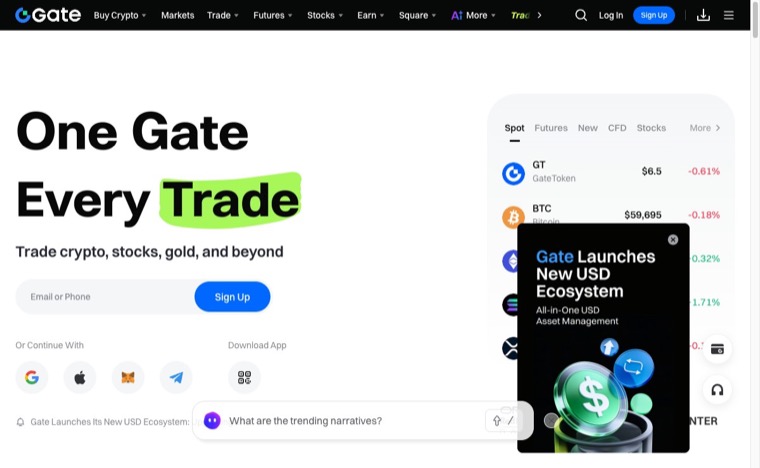
Gate.io carries one of the widest token selections anywhere, often listing new and niche projects before larger exchanges. Spot fees are 0.10% maker and taker at the base tier, or 0.09% when you pay in GT, per Gate fee schedule. It is built for traders chasing early-stage listings and obscure pairs. The huge listing count includes high-risk tokens, so research each project before buying.
Full cost and verification details: Gate.io fees and Gate.io KYC levels.
9. MEXC
 MEXC
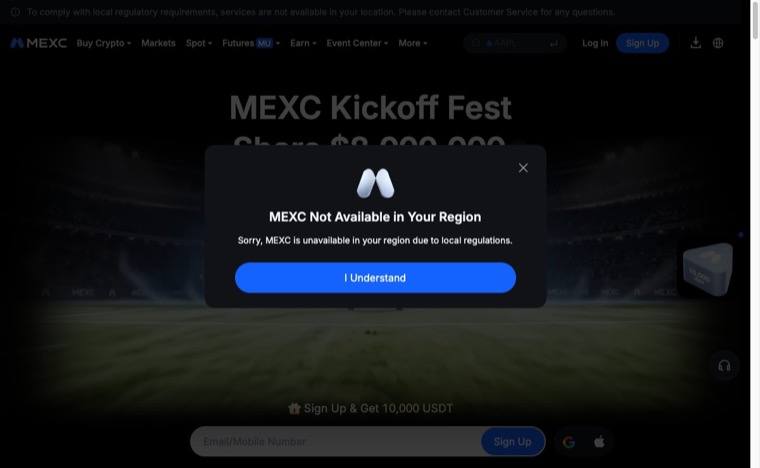
MEXCMEXC is known for fast meme coin and low-cap listings, frequently adding tokens within days of launch. It runs zero-fee promotions on many spot pairs, which is rare and genuinely lowers costs for active traders. The platform suits speculators who want first access to small tokens. Those quick listings also mean less vetting, so the risk of low-quality or scam tokens is higher here.
Full cost and verification details: MEXC fees and MEXC KYC tiers.
10. Crypto.com
 Crypto.com
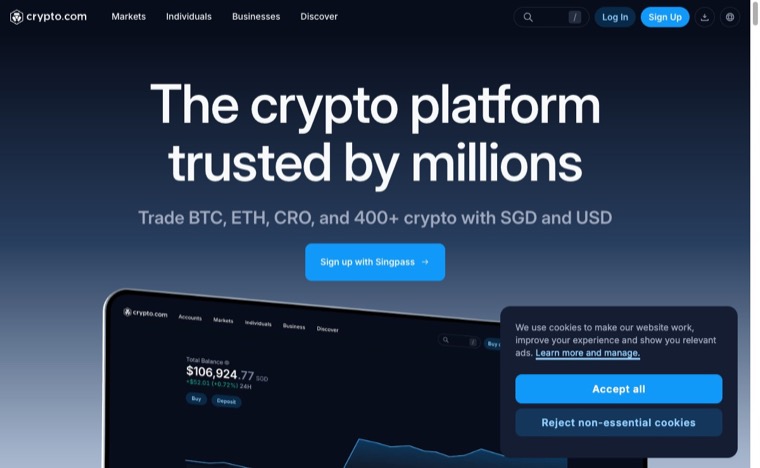
Crypto.com blends trading with everyday spending through its Visa card rewards and payment app, making it more than a pure exchange. On the Crypto.com Exchange, spot fees start at 0.25% maker and 0.50% taker and fall with volume. Holding 50,000+ CRO on the Exchange cuts the maker fee to 0%, per its fee schedule. App trades cost more. It fits retail users who want crypto, a card, and staking in one place. Read the card tier requirements carefully, since the best rewards need large CRO stakes.
Full cost and verification details: Crypto.com withdrawal fees.
Best Crypto Exchanges for Different Types of Users
The best crypto exchange depends on your trading goals, experience, and preferred features. Beginners may choose user-friendly platforms like Coinbase that offer simple interfaces, educational tools, and secure account features.
Active traders often look for low-fee exchanges such as Binance, OKX, or Bybit, which provide competitive rates and advanced trading options. Experienced users may prefer platforms with futures, margin trading, charting tools, and API access.
Traders who prioritize regulation over rock-bottom fees often land on Gemini. Its ActiveTrader fee schedule starts at 0.60% maker and 1.20% taker, well above Binance or OKX at the entry tier, but Gemini’s compliance-first approach and New York trust charter appeal to users who value oversight more than shaving a few basis points off every trade.
For investors interested in altcoins, exchanges with larger cryptocurrency selections can provide more opportunities. However, users should always research platforms carefully and consider security, fees, and reliability before trading.
Crypto Exchange Security: What You Need to Know
Security is one of the most important factors when choosing a crypto exchange in 2026. Trusted platforms use safety measures such as two-factor authentication, encryption, cold storage, withdrawal protection, and proof-of-reserves reports to help protect user assets.
Users should also take personal security steps, including creating strong passwords, enabling 2FA, avoiding suspicious links, and using hardware wallets for long-term storage. While centralized exchanges provide convenience, customer support, and higher liquidity, decentralized exchanges offer more control by allowing users to trade directly through their own wallets.
No exchange is immune. Even large, well-funded platforms have suffered breaches, which is why proof-of-reserves reports and a history of covering customer losses matter as much as the marketing page. Choosing a secure exchange with strong protection features and practicing safe crypto habits can help reduce risks and create a safer trading experience.
How to Compare Crypto Exchange Fees
Three numbers decide what you really pay. Learn to read all three before you fund any account.
Maker and taker fees. Makers add an order to the book and pay less. Takers fill an existing order and pay more. Entry-tier rates run from 0.08% (OKX maker) to 1.20% (Gemini taker), and they shrink as your monthly volume climbs.
Withdrawal and network costs. Moving coins off an exchange costs a withdrawal fee plus the blockchain network fee. Some platforms mark this up well above the real cost, so check the Bitcoin and Ethereum withdrawal fees first since those are the most common.
The spread. Apps that advertise zero commission often widen the gap between the buy and sell price instead. You still pay, just less visibly. Compare the live buy and sell price for the same coin across two apps and the hidden cost shows up fast.
Put the three together and the math gets concrete. A $5,000 trade at a 0.10% taker fee costs $5. The same trade at 0.60% costs $30. Add a withdrawal fee that is marked up $10 above the actual network cost, and a “free” trading app can end up costing more than a low-fee exchange with a small, honest withdrawal charge. Always total the trading fee, the withdrawal fee, and the spread before picking a winner.
Checking an exchange that is not in the top 10? These guides set out the same three costs, plus what each platform asks for at sign-up:
- Gemini withdrawal fees
- Gemini KYC
- eToro crypto fees
- eToro KYC
- Bitfinex fees
- Bitfinex KYC
- HTX fees
- HTX KYC
- Poloniex fees
- Poloniex KYC
- Bitrue fees
- Bitrue KYC
- Robinhood crypto fees
Are There Truly Free Crypto Exchanges?
Not quite, but some come close. Several exchanges run zero-fee promotions on specific pairs, usually major coins like Bitcoin against the US dollar. MEXC, for example, runs recurring zero-fee promotions on popular spot pairs. Kraken and others offer fee-free tiers, and high-volume traders can reach a 0% maker fee. The honest answer is that a free exchange still earns money somewhere, through spreads, withdrawal fees, or premium features. Read the fine print, and treat any zero-fee headline as a starting point rather than the full picture.
How We Picked
We ranked each exchange on four things, in this order.
- Safety: track record, regulation, and how the platform stores customer funds
- Fees: base maker and taker rates plus withdrawal costs
- Access: whether US residents can legally use it
- Usability: how quickly a new trader can sign up and place an order
Once you pick a platform, our guide on how to buy Bitcoin walks through your first trade, and our list of coins with high return potential covers what to do next. Markets move fast, so always confirm fees and availability on the exchange before you deposit.
How to Choose the Best Crypto Exchange in 2026
Choosing the best crypto exchange in 2026 depends on your trading goals, experience, and security needs. A reliable platform should offer low fees, strong protection, a wide range of cryptocurrencies, and an easy-to-use interface.
Key Factors to Consider
When selecting an exchange, compare trading fees, security features, regulations, supported assets, and payment options. Look for platforms with features like two-factor authentication, cold storage, spot trading, staking, and user-friendly mobile apps.
Start with your own trading habits. If you plan to buy and hold, a beginner-friendly platform with strong custody and simple fiat deposits matters more than shaving a fraction of a percent off every trade. If you plan to trade often, that fraction adds up fast, and a low-fee platform with deep liquidity will save you real money over a year. Check regional availability before you sign up, since not every exchange serves every state or country, and confirm what payment methods (bank transfer, card, or wire) each platform actually supports where you live.
Final Verdict: Which Crypto Exchange Should You Choose in 2026?
The best crypto exchange in 2026 depends on your personal trading needs. Beginners may prefer platforms with simple interfaces and strong customer support, while experienced traders may prioritize low fees, advanced tools, and deeper liquidity.
For low-cost trading, exchanges like Binance, OKX, and Bybit remain competitive. For security-focused investors, platforms such as Kraken and Coinbase offer strong reputations and compliance standards. Altcoin traders may prefer exchanges with broader token selections, such as KuCoin or Gate.io.
Before choosing any platform, compare fees, security features, supported assets, and availability in your region. The right crypto exchange should provide a balance of affordability, reliability, and features that match your investment strategy.
Frequently Asked Questions
What Are the Top 5 Crypto Exchanges?
Some of the most recognized crypto exchanges include Binance, Coinbase, Kraken, OKX, and Bybit. Users should compare security features, fees, available assets, and regional availability before choosing an exchange.
Which Crypto Exchange Is the Most Trustworthy?
The most trustworthy crypto exchange depends on user needs and location. Factors to consider include regulatory compliance, security history, account protection, transparency, and customer support. Exchanges such as Coinbase, Kraken, and Binance are often considered among the more established platforms, but users should always research before depositing funds.
Which crypto will grow the most in 2026?
No one can guarantee which crypto will grow the most in 2026, but many analysts focus on large-cap and utility-driven assets like Bitcoin and Ethereum, along with strong ecosystem tokens in DeFi, AI, and Layer 2 networks. Growth will likely depend on adoption, regulation, and real-world use cases rather than hype alone.
Where to invest in crypto in 2026?
In 2026, crypto investing is mainly done through trusted global exchanges that support fiat deposits, spot trading, and staking. Popular platforms include Binance, Coinbase, and OKX. Always choose platforms with strong security, low fees, and regulatory compliance.
What are the top 3 crypto exchanges?
The top 3 crypto exchanges globally are:
- Binance. Highest liquidity and widest selection of coins
- Coinbase. Most trusted and beginner-friendly platform
- Kraken. Strong security and advanced trading tools
What is the best crypto exchange in the Philippines?
In the Philippines, the best crypto exchange depends on user needs, but commonly used platforms include Binance for low fees and wide token access, and Coins.ph for local cash-in/cash-out convenience and easy fiat integration.
Is Cryptsy a crypto exchange?
No. Cryptsy.com is an independent review site, not an exchange. The original Cryptsy exchange operated from 2013 to 2016 and closed after a security breach. The current site reviews and ranks exchanges and does not hold user funds.
What happened to the Cryptsy exchange?
The original Cryptsy was an early crypto exchange that shut down in 2016 after a security breach drained customer funds. It is unrelated to the current review site at cryptsy.com.
What is the cheapest crypto exchange in 2026?
On base fees, Crypto.com at 0.075% and Binance at 0.10% are the cheapest large exchanges. For US traders, Kraken offers a strong balance of security and fees once you move past its entry tier into the lower-volume brackets.
What is the best crypto exchange for beginners?
Coinbase. It has the simplest signup and app, though you should trade on Coinbase Advanced to avoid the higher fees of the basic app.
Are there free crypto exchanges?
Some exchanges run zero-fee promotions on major pairs, and high-volume traders can reach a 0% maker fee. No exchange is entirely free, since they still earn through spreads and withdrawal fees.
Is Kraken or Coinbase better?
Kraken has a strong security record and gets cheaper faster as your volume grows. Coinbase is easier for first-time users but costs more at low volume. Kraken suits cost-focused traders willing to learn Kraken Pro, Coinbase suits beginners who want simplicity.