Launch and scale your casino requires the right combination of software, game content, payment integrations, operational controls and regulatory planning. The best casino engine is the one that matches your target markets, business model, technical requirements and growth strategy—not necessarily the one with the largest game catalogue.
A casino engine provides the technology operators use to connect games, manage casino operations, configure promotions, monitor performance and coordinate essential platform functions. For businesses entering the iGaming market, choosing the right solution can simplify integration and reduce operational complexity. For established operators, it can support expansion into new markets, broader content portfolios and more efficient management.
This guide explains how casino engines work, which features matter most, and how Relum, SoftGamings and APIgrator by Slotegrator compare. It also covers practical considerations for platform selection, launch planning, compliance and long-term scalability.
What Is a Casino Engine and How Does It Work?
A casino engine is the core software infrastructure that supports the operation of an online casino. Depending on the provider and product configuration, it can connect game providers, player accounts, promotional tools, reporting systems and back-office workflows through an integrated platform.
A casino engine is not necessarily the same as a complete turnkey casino. Some solutions focus primarily on game aggregation and operational tools, while others combine these capabilities with a player-facing website, account management, payments and additional business services.
Typical casino engine functions include:
- Game aggregation: Connects casino operators to games from multiple software providers.
- Player management: Supports player account administration and related operational workflows, depending on the platform.
- Promotions and engagement: Enables the configuration of bonuses, free spins, tournaments and other promotional campaigns.
- Reporting and analytics: Helps operators monitor activity, performance indicators and revenue-related metrics.
- Payment integrations: Connects the platform to supported payment service providers and transaction workflows.
- Back-office management: Centralizes configuration, content management, reporting and other operational tasks.
- Security and risk controls: May include tools for fraud monitoring, access management and compliance workflows.
How does a casino engine work?
A casino engine connects the different systems involved in delivering and managing an online casino experience.
For example, an operator may use one integration to access games from multiple providers. The engine routes relevant game requests, connects supported promotional features and provides operational data through its back office. Other systems may separately handle player registration, identity verification, payment processing and the website interface.
The exact architecture depends on the selected product. Operators should confirm which functions are native, which require third-party integrations and which remain their responsibility.
What Features Should the Best Casino Engine Include?
The best casino engine should combine reliable performance, relevant game content, operational visibility, integration flexibility and the controls needed to support the operator’s business model.
The following features deserve particular attention when comparing casino software providers.
1. Game aggregation and provider coverage
Game aggregation allows an operator to access content from multiple game studios through a centralized integration rather than building and maintaining a separate connection for every provider.
When evaluating a casino game aggregator, examine:
- The number and variety of available game providers.
- Availability of slots, live casino games, table games and other relevant categories.
- Licensing and distribution rights for your intended markets.
- Availability of localized content and supported languages.
- Game loading performance, reliability and update frequency.
- Commercial terms and any restrictions on specific providers or titles.
A large catalogue can broaden player choice, but catalogue size alone does not establish quality. The practical value of a portfolio depends on which games can legally be offered in your markets and whether they suit your intended audience.
2. A centralized back office
A casino back office provides the tools operators need to manage day-to-day platform activities.
Depending on the product, this may include game configuration, promotion management, reporting, player-related workflows, permissions and operational settings.
Before selecting a platform, ask whether the back office allows your team to complete common tasks independently or whether routine changes require technical assistance from the provider.
3. Bonuses and player engagement tools
Promotional tools help operators configure campaigns for different stages of the player journey.
Useful capabilities may include:
- Welcome and onboarding bonuses.
- Free spins and free-round campaigns.
- Loyalty and retention programs.
- Tournaments and jackpot promotions.
- Campaign segmentation and performance reporting.
- Controls for bonus eligibility, limits and abuse prevention.
Promotion features should be evaluated alongside the reporting and controls available to administer them. Operators must also ensure that campaigns comply with applicable advertising, bonus and responsible-gambling rules.
4. Reporting and analytics
Reporting helps operators understand how their platform is performing and identify areas that need attention.
Useful indicators may include game activity, player engagement, promotional performance, transaction outcomes, provider-level activity and revenue metrics.
When comparing reporting tools, verify the availability of exportable data, dashboard customization, reporting latency, historical data retention and access permissions. Ask how figures are calculated and reconciled with other business systems.
5. Payment integrations and localization
International expansion requires more than translating a website. Operators need to assess supported currencies, payment methods, local customer expectations and the regulatory requirements of each market.
Check whether the casino engine integrates with your preferred payment providers and whether it supports the operational controls needed for deposits, withdrawals, reconciliation and transaction monitoring.
Multi-language and multi-currency features can simplify localization, but they do not automatically make a casino legally or commercially suitable for every country.
6. Security, compliance and responsible gambling
Security and compliance should be considered during platform selection, not added as an afterthought.
Depending on the jurisdiction and operating model, relevant requirements may involve identity verification, age checks, anti-money-laundering controls, geolocation, data protection, transaction monitoring, game testing and responsible-gambling tools.
For example, the UK Gambling Commission publishes technical standards and security requirements for operators and software within its regulatory scope. Other jurisdictions have their own licensing and technical requirements. Review the UK Gambling Commission’s remote gambling and software technical standards as one jurisdiction-specific reference, not as a universal rulebook.
A provider’s compliance features do not automatically make an operator compliant. Responsibilities must be established contractually and verified against the laws of each target market.
How Do You Choose the Right Casino Engine?
Choosing a casino engine starts with defining what your business needs to launch, operate and grow. Compare providers against those requirements rather than selecting a platform based on marketing claims alone.
1. Define your business model and target markets
Start by deciding whether you need a game aggregation layer, a broader casino platform or a turnkey solution.
Identify your intended markets, game categories, customer experience requirements, payment methods and operating model. This helps establish which features are essential and which are optional.
2. Evaluate integration requirements
Request a technical overview of the platform architecture, API documentation, integration dependencies and available test environments.
Questions to ask include:
- Which systems are included in the standard package?
- Which integrations require separate contracts?
- How are new game providers added?
- What testing and certification steps are required?
- How are platform updates and API changes communicated?
- What support is available during implementation?
A single API can simplify game integration, but it does not eliminate every integration task involved in launching a casino.
3. Assess scalability and reliability
A scalable platform should be able to accommodate growth without creating unacceptable performance or operational problems.
Ask providers for documented uptime history, incident response procedures, service-level agreements, capacity information and load-testing evidence. Clarify how performance is monitored during peak traffic and how service disruptions are handled.
Do not rely exclusively on an advertised uptime percentage. Review the measurement period, exclusions, reporting method and contractual remedies.
4. Compare pricing and total cost of ownership
The total cost of an online casino platform extends beyond its initial integration fee.
Potential cost categories include:
- Setup and implementation fees.
- Monthly platform or licensing fees.
- Revenue-share or per-transaction charges.
- Game-provider commercial terms.
- Payment processing fees.
- Custom development and localization.
- Compliance, testing and legal expenses.
- Hosting, monitoring and ongoing technical support.
Ask each provider for an itemized commercial proposal and clarify minimum commitments, contract duration, exit provisions and fees for adding new markets or services.
A lower initial price does not necessarily mean a lower long-term cost.
5. Verify support and account management
Technical support matters when integrations fail, games become unavailable or reporting discrepancies arise.
Establish support hours, escalation paths, response and resolution targets, account management arrangements and responsibilities for incidents involving third-party providers.
Where possible, validate these commitments through the contract rather than relying solely on sales materials.
What Are the Best Casino Engine Solutions?
Relum, SoftGamings and APIgrator by Slotegrator are three options worth evaluating for different online casino platform requirements. They should not be treated as interchangeable products: their product scope, integration model and commercial arrangements may differ.
The following overview uses publicly available provider information. It is a feature-based comparison, not the result of independent performance testing or a verified customer satisfaction survey.
1. Relum: Casino Game Aggregation and Operational Tools

Visit Relum’s official website
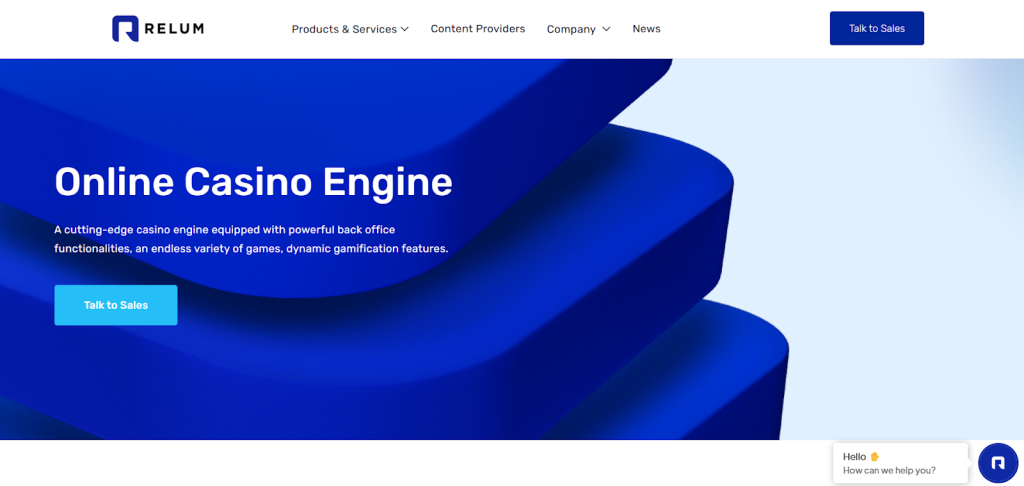
Relum provides casino game aggregation alongside operational and player engagement features. Its platform is designed to help operators access game content and manage relevant casino activities through a centralized integration.
Relum’s official website currently describes access to more than 50,000 game titles from over 320 providers, along with promotional and operational capabilities. These are provider-published figures and should be reconfirmed with Relum when evaluating a proposal.
Key features to evaluate
- Game aggregation: Access to a broad selection of casino games through a centralized API integration.
- Jackpot and tournament tools: Promotional mechanics for operator campaigns, subject to the available product configuration.
- Bonus and free-game functionality: Tools to configure and manage supported promotional experiences.
- Reporting and analytics: Operational and performance information for monitoring casino activity.
- Multi-market capabilities: Features intended to support different currencies, languages and market requirements, subject to integration availability.
- Centralized management: Back-office functions for handling supported content and operational workflows.
Why consider Relum?
Relum may be a good fit for operators whose priority is to simplify game aggregation and consolidate selected operational and promotional functions.
Its centralized integration model may reduce the need to maintain numerous individual game connections. However, operators should confirm whether the platform covers their full requirements or whether separate systems are needed for player accounts, payments, website development and compliance.
Questions to ask Relum
- Which providers and games are available in each target jurisdiction?
- Which back-office functions are included in the proposed package?
- What are the pricing model and commercial commitments?
- What performance, availability and support guarantees are contractual?
- Which integrations and compliance responsibilities remain with the operator?
2. SoftGamings: Turnkey and White-Label Casino Solutions

Visit SoftGamings’ official website
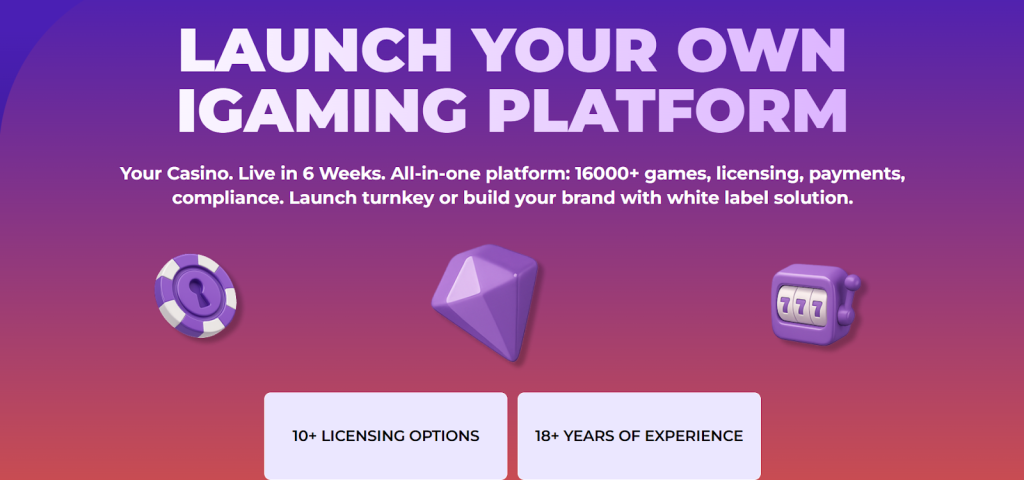
SoftGamings offers online casino software solutions, including turnkey and white-label options. This makes it relevant to operators evaluating a broader deployment package rather than a game aggregation product alone.
Its published FAQ describes multiple solution types, including white-label, turnkey, Bitcoin casino and self-service options, with features varying by configuration. It also reports access to more than 10,000 games from over 250 software providers. These figures and product details should be checked against the current proposal.
Key features to evaluate
- Turnkey and white-label options: Deployment approaches for operators with different levels of technical resources and customization requirements.
- Game content: Access to multiple software providers and game categories.
- Promotional features: Supported bonus, loyalty and engagement tools.
- Operational integrations: Available payment, security and management components.
- Configurable platform scope: The ability to compare different deployment models and included services.
Why consider SoftGamings?
SoftGamings may suit operators who want to evaluate a more comprehensive casino deployment package, especially if they prefer to source multiple platform components from one provider.
The main consideration is the scope of the selected package. White-label, turnkey and self-service solutions can differ substantially in control, customization, responsibilities and commercial terms.
Questions to ask SoftGamings
- Which components are included in the selected solution?
- Who controls the player-facing website and user experience?
- Which integrations and third-party contracts are required?
- What licensing and operational responsibilities remain with the operator?
- How easily can the platform be customized or migrated as the business grows?
3. APIgrator by Slotegrator: Casino Game API Integration

Visit APIgrator’s official product page
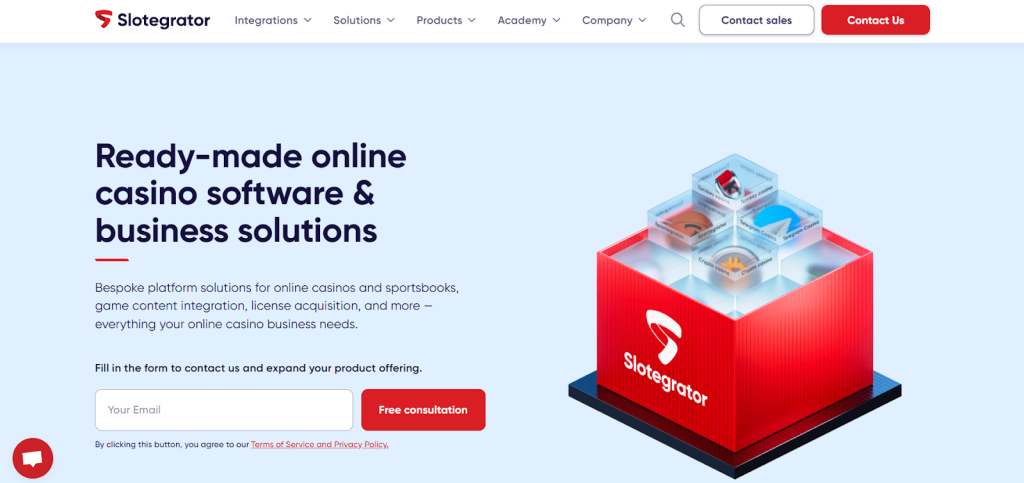
APIgrator is Slotegrator’s casino game integration solution. It focuses on connecting online casino operators to game content from multiple providers through a centralized API.
Slotegrator currently describes APIgrator as offering more than 20,000 games from over 150 providers, with access to slots, live casino games and other content categories. These are provider-published figures, not an independent audit of available titles in every jurisdiction.
Key features to evaluate
- Single API integration: A centralized route to supported game content.
- Multiple game categories: Access to different types of casino games, subject to availability.
- Promotional functionality: Supported bonuses, free spins, jackpots and other engagement features.
- Content management: Tools and workflows for managing an integrated game portfolio.
- Provider and market coverage: Availability of relevant game studios and titles for the intended jurisdictions.
Why consider APIgrator?
APIgrator may be a suitable option for operators whose main requirement is to expand their game portfolio without maintaining separate integrations for every provider.
It should not automatically be treated as a complete turnkey casino. Operators should establish whether they need additional software for the website, player accounts, payment processing, reporting or other operational functions.
Questions to ask Slotegrator
- Which games and providers are available in the intended markets?
- Which back-office and promotional functions are included?
- What are the commercial terms and integration dependencies?
- What testing and certification are required before launch?
- Which platform components must be sourced separately?
How Do Relum, SoftGamings and APIgrator Compare?
The most useful comparison is based on product scope and business requirements rather than a single ranking.
| Evaluation criterion | Relum | SoftGamings | APIgrator |
|---|---|---|---|
| Primary focus | Game aggregation and operational tools | Turnkey, white-label and other casino software solutions | Casino game API integration |
| Centralized game integration | Yes, through its aggregation offering | Depends on the selected solution | Yes |
| Promotional features | Available features depend on product configuration | Vary by solution | Supported promotional features |
| Complete turnkey deployment | Confirm package scope | Explicitly offers turnkey and white-label options | Do not assume; confirm separately |
| Best evaluation priority | Aggregation, centralized operations and promotional tools | Deployment scope, customization and operational responsibilities | Game coverage and integration requirements |
This comparison summarizes publicly described product positioning. It is not an independent quality ranking. Feature availability, commercial terms and market coverage must be verified directly with each provider.
Which casino engine should you choose?
- Consider Relum if centralized game aggregation and integrated operational tools are central to your requirements.
- Consider SoftGamings if you want to compare turnkey, white-label and other broader casino deployment options.
- Consider APIgrator if your primary objective is to connect multiple game providers through a centralized integration.
These are starting points for evaluation, not universal recommendations. The right choice depends on your jurisdiction, existing infrastructure, budget, technical capabilities and contractual requirements.
How Can You Launch and Scale an Online Casino?
Selecting a casino engine is only one part of launching an online casino. A practical implementation plan should cover legal readiness, technology, content, payments, testing and ongoing operations.
Step 1: Define the market and business requirements
Choose the jurisdictions you intend to serve and establish the applicable licensing, corporate, technical and operational requirements before committing to a platform.
Define your target audience, product scope, initial game categories, language requirements, payment methods and launch objectives.
Step 2: Select the platform architecture
Decide whether you need game aggregation alone, a modular casino platform or a turnkey deployment.
Document which functions must be supplied by the casino engine and which require separate systems. Establish ownership of integrations, data, reporting and ongoing maintenance.
Step 3: Complete integration and configuration
Work with the selected provider to configure supported game content, payment services, promotions, reporting and any required player-facing components.
Confirm access to development or test environments, technical documentation, support contacts and a defined acceptance-testing process.
Step 4: Validate compliance and operational readiness
Before going live, verify that the platform and business operations meet the applicable jurisdictional requirements.
Depending on the market, this may include game testing, identity verification, age controls, transaction monitoring, responsible-gambling features, privacy safeguards and incident response procedures.
Do not assume that a software vendor’s certifications or integrations replace the operator’s own legal and compliance obligations.
Step 5: Test the complete player journey
Test registration, account access, game loading, deposits, withdrawals, bonus rules, reporting and customer support workflows.
Include mobile devices, interrupted sessions, failed transactions, provider outages and other realistic scenarios. Confirm that operational teams know how to detect, escalate and resolve issues.
Step 6: Monitor performance after launch
Use reliable reporting to monitor platform availability, transaction failures, game performance, customer support issues and other relevant business indicators.
Set measurable operational targets and review them regularly. Investigate discrepancies between the casino back office, payment systems and financial records.
Step 7: Expand based on evidence
Scale the business by evaluating new markets, relevant game content, localized payment methods and additional promotional features against actual performance and compliance requirements.
Before expanding, confirm that the platform can support the required jurisdictions, currencies, integrations and operating volumes. Growth should follow demonstrated operational readiness rather than catalogue size alone.
How Should You Measure Casino Platform Scalability?
Scalability should be evaluated using measurable operational criteria, not just the provider’s advertised game count.
A useful platform scorecard includes:
- Availability: Documented uptime, incident history and contractual service levels.
- Performance: Response times and game-loading behavior under realistic traffic conditions.
- Integration capacity: The effort required to add providers, payment services and market-specific features.
- Operational efficiency: The time and resources needed to configure games, promotions and reporting.
- Data quality: Reconciliation accuracy, reporting latency and consistency across systems.
- Support: Response targets, escalation procedures and incident ownership.
- Expansion readiness: Evidence that the platform supports the intended markets and applicable technical requirements.
Operators can assign weights to these criteria based on their priorities. For example, a business expanding into a new regulated market may give compliance and market coverage greater weight than the number of available games.
A simple evaluation model is:
Weighted score=i=1∑nwisi
Here, wi represents the weight assigned to a criterion and si represents the provider’s score for that criterion. If weights total 100%, the final score is a weighted average on the selected scoring scale.
This framework helps structure a decision, but the scores should be based on documented evidence, consistent definitions and verified provider responses. A numerical result is not proof of product quality.
What Are the Future Trends in Casino Engine Technology?
Several technology developments may influence how casino platforms are built and operated. Their commercial value depends on implementation quality, regulatory constraints and actual operator needs.
AI-assisted analytics and automation
Machine learning and automation can support anomaly detection, operational monitoring and analysis of large volumes of platform data.
Operators should assess how a provider uses these capabilities, what data is processed and whether automated decisions can be explained, reviewed and governed appropriately. AI features should not be assumed to improve retention or profitability without supporting evidence.
More personalized player experiences
Segmentation and configurable promotions can help operators tailor experiences to different customer preferences.
Personalization must respect privacy requirements, applicable marketing restrictions and responsible-gambling obligations. It should not be used to encourage harmful gambling behavior.
API-first platform architecture
Modular, API-driven systems can make it easier to connect game providers and supporting services. However, the number of integrations is only one measure of flexibility; documentation quality, monitoring, version management and dependency handling also matter.
Mobile performance and accessibility
Mobile usability remains an important consideration for online casino platforms. Operators should test responsive interfaces, loading speed, account workflows, accessibility and performance across relevant devices and network conditions.
Stronger security and operational resilience
Security monitoring, access controls, incident response and resilient infrastructure will remain important as platforms integrate more systems and process sensitive customer and transaction data.
Operators should verify the controls actually implemented by a provider rather than treating a general claim of secure infrastructure as sufficient assurance.
Frequently Asked Questions About Casino Engines
What is the best casino engine for a new online casino?
The best casino engine for a new online casino depends on the business model, target jurisdiction, technical resources and required platform features. Relum, SoftGamings and APIgrator are options to evaluate, but their product scopes differ. Compare integration requirements, commercial terms, compliance responsibilities and operational support before selecting a provider.
What is the difference between a casino engine and a game aggregator?
A casino engine generally refers to the software infrastructure supporting an online casino’s operations, although the exact scope varies by vendor. A game aggregator focuses on connecting operators to games from multiple providers. Some platforms combine aggregation with back-office and promotional tools, while others require additional software for a complete casino operation.
How many games should an online casino offer?
There is no universal minimum number of games that makes an online casino competitive. The more important questions are whether the catalogue includes relevant titles, whether those games can legally be offered in the target market, how they perform and whether their commercial terms make sense for the business.
How much does casino engine software cost?
Casino engine pricing varies by provider, product scope, contract terms and integration requirements. Potential expenses include setup fees, recurring platform charges, revenue shares, game-provider fees, payment processing, development, compliance and support. Request itemized quotes from multiple providers to compare total cost of ownership.
How long does it take to launch an online casino?
There is no reliable universal launch timeline. Implementation depends on the platform model, integrations, customization, testing, licensing and regulatory approvals. A provider’s advertised integration time may cover only one component of the wider launch process. Request a project plan that identifies dependencies, acceptance criteria and the requirements for going live.
Does a casino engine include payments and player accounts?
Not necessarily. Some products provide broad platform functionality, while others focus on game aggregation and related tools. Confirm whether player accounts, payment integrations, identity verification, website development and other required services are included, separately integrated or managed by the operator.
Can one casino engine support multiple countries?
Some platforms support multiple currencies, languages and market-specific configurations, but technical support for localization does not establish legal authorization to operate in a particular country. Operators must verify licensing, game availability, payment coverage, data protection and other local requirements before entering each market.
What should operators check before signing a casino software contract?
Review the product scope, pricing, minimum commitments, game-provider coverage, service levels, support obligations, security controls, data ownership, integration responsibilities, termination terms and exit arrangements. Clarify which party is responsible for regulatory compliance and what happens if a provider or integration becomes unavailable.
Conclusion: Choose a Casino Engine That Supports Long-Term Growth
To launch and scale your casino successfully, select a platform that fits your business model, target markets and operational requirements. Game aggregation, promotional tools and reporting are important, but they should be evaluated alongside integration complexity, total cost, reliability, security and regulatory responsibilities.
Relum, SoftGamings and APIgrator offer different approaches to casino software and game integration. Compare their current product documentation and commercial proposals against a consistent set of requirements rather than choosing based on a single advertised feature or game count.
Before making a commitment, request a demonstration, verify market-specific game availability, review the contract and test the integrations that matter most to your operation.
The strongest casino engine is not simply the one that helps you launch. It is the one that supports reliable operations, informed decisions and sustainable growth as your business evolves.