
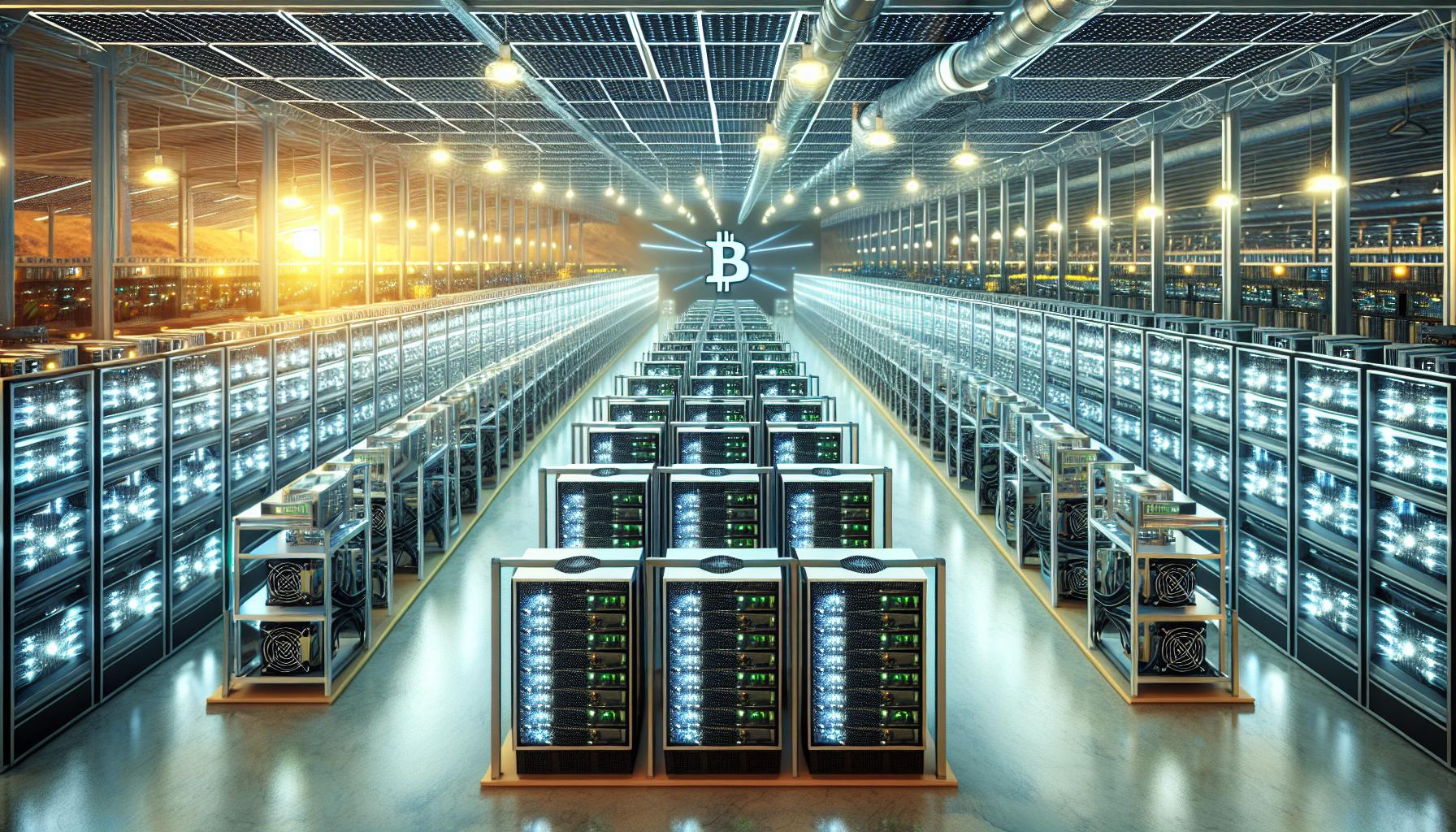
The Bitcoin mining boom reflects the growing scale of the cryptocurrency industry, rising investment in mining infrastructure, and continuous improvements in specialized computing hardware. As miners deploy more powerful Application-Specific Integrated Circuit (ASIC) machines, the Bitcoin network’s estimated hash rate has climbed toward the zettahash-per-second range, highlighting the scale of global mining competition.
Bitcoin mining is expanding because of several interconnected factors: increasing institutional investment, advances in ASIC technology, competition for low-cost electricity, and the growing importance of Bitcoin’s proof-of-work security system. However, higher network hash rates also increase competition among miners, making electricity prices, equipment efficiency, and operational costs more important to profitability.
As of November 2026, recent network estimates place Bitcoin’s 30-day average hash rate at approximately 1,040 exahashes per second (EH/s), or 1.04 zettahashes per second (ZH/s). This figure is based on November 7 data and should be treated as an estimate rather than a real-time measurement. Source: Bitcoin hash rate historical data.
The expansion goes beyond computational power. Mining companies are building larger facilities, upgrading equipment, exploring renewable energy sources, and developing new strategies to manage electricity costs. These developments are transforming Bitcoin mining into a capital-intensive global industry.
Understanding this growth requires looking at how hash rate works, where mining operations are expanding, what technologies power modern facilities, and how changing Bitcoin economics affect miners.
Key Takeaways: Understanding the Bitcoin Mining Boom
- Growing computational power: Bitcoin’s estimated network hash rate reached approximately 1,040 EH/s on a 30-day average basis in early November 2026.
- Advanced mining hardware: Modern ASIC machines deliver hundreds of terahashes per second while improving energy efficiency.
- Global industry expansion: The United States, Canada, Russia, and other regions participate in an increasingly distributed mining ecosystem.
- Stronger computational security: A higher hash rate increases the amount of computing power required to attack Bitcoin’s proof-of-work network.
- Energy challenges: Mining operations consume substantial electricity, making power sourcing and efficiency essential business considerations.
- Changing profitability: The April 2024 Bitcoin halving reduced the block subsidy to 3.125 BTC, increasing the importance of efficient operations and transaction fee revenue.
- Institutional participation: Mining companies are investing in specialized facilities, energy infrastructure, and large-scale computing equipment.
What Is Bitcoin Mining and How Does It Work?
Bitcoin mining is the process through which specialized computers compete to add new blocks of transactions to the Bitcoin blockchain. It uses a proof-of-work consensus mechanism that requires miners to perform computational work before they can successfully propose a block.
Mining serves two essential purposes: confirming transactions and introducing newly issued bitcoins into circulation according to Bitcoin’s predetermined monetary schedule.
How the Bitcoin Mining Process Works
Bitcoin mining follows a competitive process involving several technical steps:
- Transaction collection: Bitcoin transactions are broadcast to the network and collected into candidate blocks.
- Block construction: Miners select transactions and construct a block containing transaction information and a reference to the previous block.
- Hash calculations: Mining hardware repeatedly calculates SHA-256 hashes while changing the block header’s nonce and other adjustable data.
- Proof of work: A miner succeeds when it finds a valid hash that meets the network’s difficulty target.
- Block propagation: The successful miner broadcasts its block to the Bitcoin network.
- Block validation: Other nodes independently verify the block and its transactions before accepting it.
The successful miner receives the block subsidy and any transaction fees included in the block.
Bitcoin targets an average block interval of approximately 10 minutes. Its difficulty adjustment mechanism helps maintain this target as mining power changes.
What Is Bitcoin Hash Rate?
Hash rate measures how many cryptographic calculations mining equipment performs every second. It is one of the most important indicators of Bitcoin’s computational activity and mining competition.
Hash rate is expressed in different units depending on the amount of computing power involved:
| Unit | Calculations per second |
|---|---|
| Kilohash (KH/s) | 1,000 |
| Megahash (MH/s) | 1 million |
| Gigahash (GH/s) | 1 billion |
| Terahash (TH/s) | 1 trillion |
| Petahash (PH/s) | 1 quadrillion |
| Exahash (EH/s) | 1 quintillion |
| Zettahash (ZH/s) | 1 sextillion |
For example, a mining operation producing 1 EH/s performs approximately one quintillion hash calculations every second.
The Bitcoin network’s total hash rate represents the combined estimated computational power directed toward mining. Because this total cannot be directly measured, analysts estimate it using block production rates and mining difficulty.
Why Is Bitcoin’s Hash Rate Increasing?
Bitcoin’s hash rate increases when miners deploy additional computing capacity or replace older machines with more powerful equipment. Investment decisions are influenced by Bitcoin’s market price, expected mining revenue, electricity costs, and the availability of efficient hardware.
Several developments contribute to the expansion.
1. Increased Investment in Mining Infrastructure
Large mining companies are investing in facilities designed to operate thousands of ASIC machines simultaneously.
These facilities require substantial infrastructure, including:
- Industrial electricity connections
- Mining equipment and power distribution systems
- Cooling and ventilation installations
- Network connectivity and monitoring systems
- Backup power and operational security
- Maintenance and equipment replacement capabilities
Unlike early home-based mining operations, industrial facilities are designed to maximize computing output while controlling operating expenses.
Publicly traded mining companies and private investors are also competing for access to suitable locations, electricity contracts, and specialized equipment.
2. Improvements in ASIC Mining Technology
ASIC miners are specialized computers designed to perform a particular computational task. Bitcoin ASICs are engineered to calculate SHA-256 hashes efficiently, making them substantially more suitable for Bitcoin mining than ordinary desktop computers.
Modern ASIC technology has improved in several areas:
- Higher hash rates per machine
- Lower electricity consumption per terahash
- Better chip architecture
- Improved cooling systems
- More efficient power management
For example, Bitmain’s Antminer S21 XP has a published typical hash rate of 270 TH/s, a power consumption of 3,645 watts, and an efficiency rating of approximately 13.5 joules per terahash.
These specifications demonstrate why modern mining companies evaluate equipment using both computational performance and electricity efficiency.
Source: Bitmain Antminer S21 XP specifications.
3. Competition for Low-Cost Electricity
Electricity is one of the largest recurring expenses in Bitcoin mining. Companies therefore prioritize locations offering affordable, reliable power and suitable infrastructure.
Mining operators may establish facilities near:
- Hydroelectric power stations
- Wind and solar installations
- Natural gas infrastructure
- Electricity markets with competitive wholesale prices
- Energy facilities with excess or underutilized capacity
The relationship between mining and electricity markets has become increasingly important as mining operations expand.
4. Institutional Participation
Bitcoin mining has developed into an industry requiring substantial capital investment, technical expertise, and long-term infrastructure planning.
Institutional participation includes investments in mining companies, data centers, energy projects, equipment manufacturing, and hosting services.
This involvement can accelerate the deployment of mining capacity. However, it also exposes companies to financial risks associated with Bitcoin price fluctuations, equipment depreciation, debt, and changing electricity prices.
Bitcoin Mining Boom: Global Hash Rate Statistics in 2026
Bitcoin’s network hash rate provides an important indication of how much computational power miners are contributing to the blockchain.
As of November 7, 2026, the estimated 30-day average network hash rate was approximately 1,040 EH/s. This is equivalent to 1.04 ZH/s.
The following figures provide useful context for understanding the industry’s scale:
| Metric | Reported figure | Reference period |
|---|---|---|
| Estimated network hash rate | 1,040 EH/s | November 7, 2026, 30-day average |
| Previous reported peak | Approximately 1,310 EH/s | October 2025 daily estimate |
| Current block subsidy | 3.125 BTC | Since April 20, 2024 |
| Target block interval | Approximately 10 minutes | Bitcoin protocol |
| Difficulty adjustment interval | 2,016 blocks | Bitcoin protocol |
Sources: Hash rate historical data and Bitcoin halving information.
These measurements illustrate the scale of modern Bitcoin mining. However, hash rate estimates fluctuate, and daily figures can differ significantly from longer-term averages.
How Does Hash Rate Affect Bitcoin Network Security?
A higher Bitcoin hash rate generally increases the computational resources needed to reorganize the blockchain or execute a majority-hash-rate attack.
Bitcoin’s proof-of-work mechanism makes it expensive for an attacker to compete with the honest network’s accumulated computational work.
The security benefits include:
- Greater computational competition among miners
- Higher resource requirements for attempting a 51% attack
- Increased investment in mining infrastructure
- More computational work supporting the blockchain
However, hash rate alone does not provide a complete picture of network decentralization.
Mining pools coordinate computational resources from individual miners and companies. If a small number of pools control a substantial share of block production, concentration risks remain relevant even when total network hash rate is high.
Therefore, evaluating Bitcoin’s security requires considering hash rate, mining pool distribution, geographic concentration, and the economic incentives supporting honest mining.
How Does Bitcoin Mining Difficulty Work?
Mining difficulty determines how challenging it is for miners to find a valid block hash.
Bitcoin automatically adjusts difficulty every 2,016 blocks, approximately every two weeks. If blocks have been produced faster than the 10-minute target, difficulty generally increases. If blocks have been produced more slowly, difficulty decreases.
This mechanism helps Bitcoin maintain a predictable block production schedule despite changes in global mining power.
For miners, increasing difficulty means more computational work is generally required to earn the same expected share of block rewards.
Consequently, a growing hash rate can strengthen the network while making individual mining operations more competitive.
Which Countries Are Leading Bitcoin Mining Expansion?
Bitcoin mining is distributed across different countries, with operations influenced by electricity availability, regulatory conditions, infrastructure, climate, and access to financing.
The geographic distribution of mining has changed significantly since China’s 2021 mining crackdown.
United States
The United States has become a major destination for industrial Bitcoin mining.
States such as Texas attract mining operators through competitive electricity markets, established energy infrastructure, and opportunities to participate in demand-response programs.
The country also benefits from access to capital markets, mining equipment suppliers, and established data center infrastructure.
However, electricity availability, local grid conditions, environmental considerations, and regulatory requirements can vary considerably between states.
Canada
Canada attracts mining operations through its hydroelectric resources and established energy infrastructure.
Some provinces offer access to electricity generated from relatively low-carbon sources, although mining companies must still consider local electricity pricing, utility policies, and available grid capacity.
Russia
Russia has substantial energy resources and has attracted cryptocurrency mining activity.
However, mining operators must consider national regulations, regional restrictions, electricity pricing, and the possibility of changes in government policy.
Kazakhstan
Kazakhstan became an important mining destination following the relocation of mining operations after China’s 2021 restrictions.
Its electricity resources initially attracted miners, but increasing power demand and regulatory intervention have created additional operating challenges.
Other Emerging Mining Regions
Countries in South America, Africa, and the Middle East are also exploring opportunities related to Bitcoin mining.
Potential advantages include renewable electricity, unused energy capacity, and developing digital infrastructure.
However, the availability of inexpensive electricity does not automatically make a location commercially attractive. Reliable transmission, political stability, financing, and clear operating regulations are equally important.
Why Geography Matters: Bitcoin miners generally seek a combination of affordable electricity, reliable infrastructure, predictable regulations, and favorable operating conditions. The most competitive mining locations are not necessarily those with the lowest advertised electricity rates.
How Advanced Mining Hardware Is Driving Industry Growth
Mining equipment determines how much computational power an operation can produce and how much electricity it consumes.
As the Bitcoin mining industry becomes more competitive, equipment efficiency has become a major factor in operational success.
ASIC Miners vs. Traditional Mining Hardware
Bitcoin mining has moved away from general-purpose computing hardware toward specialized ASIC equipment.
| Hardware | Mining capability | Industry relevance |
|---|---|---|
| CPU | Very limited SHA-256 performance | Historical early mining |
| GPU | More flexible computational capabilities | Not competitive for modern Bitcoin mining |
| FPGA | Configurable specialized hardware | Limited modern Bitcoin mining use |
| ASIC | Highly optimized SHA-256 calculations | Standard industrial Bitcoin mining equipment |
ASIC miners are designed specifically for mining algorithms such as SHA-256. Their specialized architecture provides significantly higher computational efficiency than ordinary CPUs and GPUs.
Understanding Mining Hardware Efficiency
Mining hardware efficiency is commonly measured in joules per terahash (J/TH).
This metric describes how much energy a machine consumes to generate a given amount of hashing power.
For example:
| Mining machine | Hash rate | Power consumption | Efficiency |
|---|---|---|---|
| Antminer S21 XP | 270 TH/s | 3,645 W | 13.5 J/TH |
Source: Bitmain’s official product specifications.
A lower J/TH value indicates better energy efficiency, assuming comparable operating conditions.
This distinction is important because a machine with a higher hash rate is not necessarily more profitable. If its electricity requirements are disproportionately high, operating costs can outweigh its additional mining output.
Cooling and Facility Optimization
Industrial mining operations generate substantial heat because thousands of machines operate continuously.
Cooling systems help maintain stable operating temperatures and prevent hardware performance degradation.
Common approaches include:
- High-capacity air ventilation
- Immersion cooling
- Liquid cooling
- Automated temperature monitoring
- Optimized equipment spacing and airflow
These systems can improve operating stability, although installation costs, maintenance requirements, and additional energy consumption must also be considered.
Is Bitcoin Mining Profitable in 2026?
Bitcoin mining can still be profitable in 2026, but profitability depends on several variables rather than hash rate alone.
The most important factors are electricity prices, mining hardware efficiency, network difficulty, Bitcoin’s market price, transaction fees, and operating expenses.
The April 2024 halving reduced the block subsidy from 6.25 BTC to 3.125 BTC. This reduced the number of newly issued bitcoins awarded to miners for each successfully mined block.
Transaction fees are paid separately and provide an additional source of mining revenue.
What Determines Bitcoin Mining Profitability?
Mining profitability depends on the relationship between expected revenue and total operating costs.
| Factor | Effect on mining profitability |
|---|---|
| Bitcoin price | Higher prices can increase the value of mining rewards |
| Network hash rate | Greater competition reduces an individual miner’s expected reward share |
| Mining difficulty | Higher difficulty generally reduces expected output per unit of hash rate |
| Electricity price | Higher power costs reduce operating margins |
| ASIC efficiency | More efficient equipment can lower electricity costs per unit of computing power |
| Transaction fees | Additional fees increase revenue when included in mined blocks |
| Hardware depreciation | Equipment loses value as newer and more efficient machines become available |
Why the Bitcoin Halving Matters
Bitcoin’s halving mechanism reduces the block subsidy approximately every four years.
The fourth halving occurred on April 20, 2024, reducing the subsidy to 3.125 BTC per block. The next halving is expected around 2028, when the subsidy will fall to 1.5625 BTC.
This predictable reduction in new bitcoin issuance creates long-term economic pressure on mining companies.
After a halving, miners may need to improve efficiency, secure lower electricity prices, or benefit from higher Bitcoin prices and transaction fee revenue to maintain profitability.
Source: Bitcoin.org – Bitcoin halving.
Example: How Electricity Costs Affect Mining Operations
Consider an ASIC miner operating at 3,645 watts continuously.
Its estimated electricity consumption is:
- Daily: 87.48 kWh
- Monthly (30 days): 2,624.4 kWh
- Annual: 31,927.8 kWh
At an illustrative electricity price of $0.05 per kWh, its electricity expense would be approximately:
- Daily: $4.37
- Monthly: $131.22
- Annual: $1,596.39
At $0.10 per kWh, the electricity expense would double.
These calculations exclude equipment purchases, cooling, repairs, hosting, taxes, financing, and other operational costs.
They also do not represent a complete mining profitability calculation because expected Bitcoin rewards depend on network difficulty, pool fees, block subsidies, transaction fees, and the miner’s share of network hash rate.
The example demonstrates why electricity procurement is one of the most important competitive advantages in industrial Bitcoin mining.
How Much Energy Does Bitcoin Mining Consume?
Bitcoin mining consumes substantial electricity because specialized computers perform continuous hash calculations to compete for block rewards.
However, estimates of total network electricity consumption vary depending on the equipment assumptions, energy-efficiency models, and calculation methods used.
The Cambridge Digital Mining Industry Report published in April 2025 estimated Bitcoin’s annualized electricity consumption at 138 TWh as of June 30, 2024.
The same report estimated that sustainable energy sources accounted for 52.4% of the surveyed mining industry’s energy mix, comprising 42.6% renewables and 9.8% nuclear energy.
These findings were based on survey responses representing approximately 48% of global mining activity. They should not be interpreted as a direct measurement of every mining facility worldwide.
Source: Cambridge Judge Business School – Digital Mining Industry Report.
Environmental Challenges of Bitcoin Mining
The environmental impact of Bitcoin mining depends heavily on the electricity sources powering mining facilities.
Mining operations using coal-intensive electricity can generate higher greenhouse gas emissions than operations using low-carbon energy sources.
Important environmental considerations include:
- Electricity demand and grid capacity
- Greenhouse gas emissions
- Cooling and water requirements
- Electronic waste from obsolete mining equipment
- Construction and maintenance of industrial facilities
- Competition with other electricity consumers
Mining expansion can also create pressure on local electricity infrastructure, particularly in regions with limited generation or transmission capacity.
Can Renewable Energy Make Bitcoin Mining More Sustainable?
Renewable energy can help reduce the emissions associated with Bitcoin mining when it replaces more carbon-intensive electricity generation.
Common renewable energy sources include:
Hydroelectric power: Mining operations located near hydroelectric facilities can benefit from relatively consistent electricity generation, depending on seasonal water availability and local power agreements.
Wind energy: Wind-powered mining operations can use electricity during periods of high generation, although wind availability can fluctuate.
Solar energy: Solar installations provide electricity during daylight hours. Battery storage or grid connections may be necessary to support continuous mining.
Geothermal energy: Regions with geothermal resources may provide access to consistent electricity generation.
Some mining companies also explore flexible operations that reduce electricity consumption during periods of high grid demand.
Renewable energy does not automatically make mining environmentally neutral. The overall impact still depends on energy sourcing, grid conditions, equipment manufacturing, and facility operations.
What Role Does Regulation Play in Bitcoin Mining Expansion?
Government policies influence where mining companies establish facilities, how they obtain electricity, and what compliance requirements they must meet.
Bitcoin mining regulations differ significantly between jurisdictions.
United States
Mining regulation involves a combination of federal requirements, state policies, environmental rules, energy regulations, and local permitting.
Mining companies may need to comply with electricity market requirements, business regulations, taxation, and environmental standards.
European Union
Mining companies operating in the European Union must consider applicable energy, environmental, business, and financial regulations.
The EU’s Markets in Crypto-Assets Regulation (MiCA) addresses specified crypto-asset activities and service providers. It should not be treated as a universal mining license or a standalone regulatory framework for every Bitcoin mining facility.
China
China introduced comprehensive restrictions on cryptocurrency mining and related activities in 2021.
The restrictions triggered a major redistribution of mining operations, with companies seeking alternative locations.
Kazakhstan and Other Mining Regions
Countries such as Kazakhstan have introduced mining-related rules addressing electricity usage, registration, taxation, and operational requirements.
Regulations can change as governments respond to electricity demand, environmental concerns, and developments in the digital asset industry.
For mining companies, regulatory clarity is an important investment consideration. Access to affordable electricity is less valuable when operators face unpredictable restrictions or licensing requirements.
What Is the Future of Bitcoin Mining?
The future of Bitcoin mining will depend on the relationship between technological development, energy markets, network competition, and Bitcoin’s economic incentives.
As the industry becomes more sophisticated, companies are likely to place greater emphasis on operating efficiency, infrastructure optimization, and financial risk management.
More Efficient ASIC Technology
Mining equipment manufacturers will continue developing specialized chips designed to improve hash rate per watt.
Improvements in semiconductor manufacturing, circuit architecture, and thermal management could help miners produce more computational power with lower energy requirements.
However, the actual benefits will depend on hardware prices, availability, and operating conditions.
Greater Integration With Energy Markets
Bitcoin mining’s ability to adjust electricity consumption may create opportunities for partnerships with energy producers and grid operators.
Flexible mining facilities can potentially reduce operations during periods of high electricity demand and increase consumption when surplus electricity is available.
The commercial value of these arrangements depends on local energy market rules and the ability of facilities to respond quickly.
Institutional Investment and Infrastructure Development
Large mining companies may continue investing in industrial facilities, high-performance ASIC machines, and energy infrastructure.
Competition will increasingly favor companies capable of managing capital expenditure, maintaining equipment efficiency, and securing reliable electricity contracts.
However, expansion will not be guaranteed. Market downturns, financing constraints, and regulatory changes can delay or reverse investment plans.
Preparing for the Next Bitcoin Halving
The next Bitcoin halving is expected around 2028 and will reduce the block subsidy from 3.125 BTC to 1.5625 BTC.
This event will further change mining economics.
Companies that operate efficient equipment and maintain competitive electricity costs may be better positioned to manage lower subsidy revenue.
Transaction fees will also remain an important component of miner revenue, although their future contribution is difficult to predict.
Conclusion: What the Bitcoin Mining Boom Means for the Industry
The Bitcoin mining boom represents a major transformation in the cryptocurrency industry. Mining has evolved from a relatively accessible computing activity into a global infrastructure business involving specialized hardware, energy procurement, industrial facilities, and substantial financial investment.
The growth in network hash rate demonstrates the scale of computational resources being directed toward Bitcoin. At the same time, rising competition makes operational efficiency, electricity costs, and mining economics increasingly important.
The industry’s future will depend on more than the deployment of powerful ASIC machines. Energy availability, regulatory developments, mining pool distribution, and the economics of future Bitcoin halvings will all influence how the sector develops.
For investors, miners, and cryptocurrency observers, understanding these factors provides a clearer picture of Bitcoin’s evolving infrastructure and the opportunities and risks associated with its continued expansion.
Ultimately, the Bitcoin mining boom is not simply a race for higher hash rates. It is a competition to build more efficient, economically sustainable, and resilient infrastructure capable of supporting Bitcoin’s global network.
Frequently Asked Questions About the Bitcoin Mining Boom
What is the Bitcoin mining boom?
The Bitcoin mining boom refers to the expansion of global mining activity through increased computational power, investment in mining infrastructure, and improvements in specialized hardware. It reflects the growing scale and industrial development of Bitcoin’s proof-of-work ecosystem.
What is Bitcoin’s current hash rate in 2026?
Bitcoin’s estimated 30-day average hash rate was approximately 1,040 EH/s on November 7, 2026. Hash rate fluctuates continuously and is estimated using recent block production and network difficulty rather than directly measured.
Why is Bitcoin mining expanding?
Bitcoin mining is expanding because of investments in industrial mining facilities, more efficient ASIC hardware, access to competitive electricity, and growing participation from established mining companies. Technological developments also allow operators to increase computational capacity.
Which countries are leading Bitcoin mining?
The United States is a major Bitcoin mining hub, while Canada, Russia, Kazakhstan, and several emerging markets also participate in the global industry. Mining distribution changes over time based on electricity prices, infrastructure, and government regulations.
Is Bitcoin mining profitable in 2026?
Bitcoin mining can be profitable in 2026, but profitability depends on Bitcoin’s price, mining difficulty, electricity costs, equipment efficiency, and operating expenses. Industrial miners generally have an advantage when they can secure efficient hardware and competitive electricity contracts.
How much electricity does Bitcoin mining consume?
The Cambridge Digital Mining Industry Report estimated annualized Bitcoin network electricity consumption at 138 TWh as of June 2024. Actual consumption estimates vary depending on mining hardware assumptions and calculation methodologies.
What hardware is used for Bitcoin mining?
Bitcoin mining primarily uses Application-Specific Integrated Circuit (ASIC) machines designed to perform SHA-256 calculations. These specialized devices deliver significantly greater mining performance and efficiency than traditional CPUs and GPUs.
How does the Bitcoin halving affect miners?
The Bitcoin halving reduces the block subsidy paid to miners by 50%. The April 2024 halving reduced the subsidy from 6.25 BTC to 3.125 BTC per block. Miners must compensate for lower issuance through operational efficiency, favorable Bitcoin prices, or additional transaction fee revenue.
Does a higher Bitcoin hash rate make the network more secure?
Generally, yes. A higher hash rate increases the computational resources required to execute a majority-hash-rate attack. However, overall security also depends on mining pool concentration, geographic distribution, and the incentives supporting honest participation.
Is Bitcoin mining environmentally sustainable?
Bitcoin mining’s environmental impact depends on its electricity sources, equipment efficiency, and operational practices. Renewable energy and improved hardware can reduce certain environmental impacts, but electricity consumption, emissions, and electronic waste remain important considerations.
What is the difference between hash rate and mining difficulty?
Hash rate measures the computational power participating in Bitcoin mining, while mining difficulty measures how challenging it is to find a valid block. Difficulty adjusts every 2,016 blocks to help maintain Bitcoin’s average 10-minute block interval.
What will happen to Bitcoin mining after the 2028 halving?
The expected 2028 halving will reduce the block subsidy from 3.125 BTC to 1.5625 BTC. This will put additional pressure on mining margins and increase the importance of electricity efficiency, hardware performance, transaction fees, and disciplined infrastructure investment.