Last Updated: September 24, 2026
Quick answer: There is no single exchange that is automatically the best venue for every cryptocurrency. The right exchange depends on the token, trading pair, liquidity, available network, fees, jurisdiction, custody options and trading features you need.
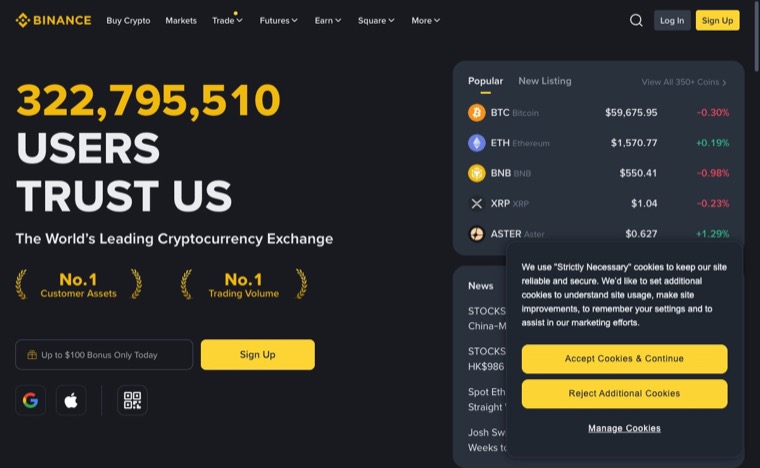
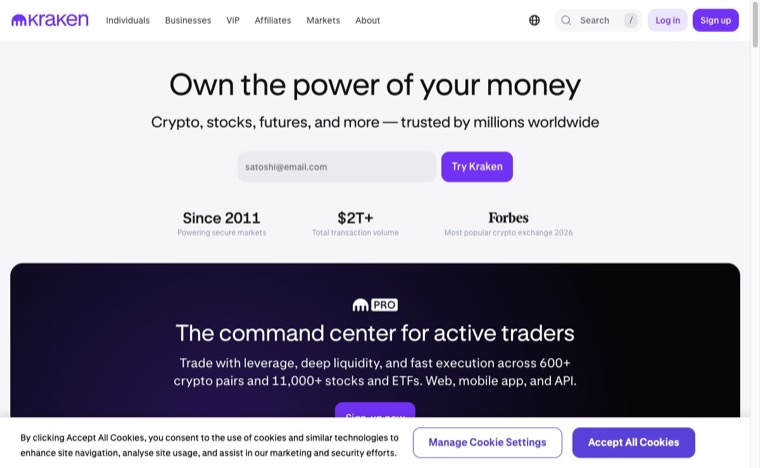
For major assets such as Bitcoin (BTC), Ethereum (ETH), Solana (SOL) and XRP, large global exchanges including Binance, Coinbase and Kraken provide substantial market coverage, although availability differs by country and individual product. For smaller or newer tokens, you may need to look at additional centralized exchanges or decentralized exchanges.
Always check the exchange’s current asset page and the exact deposit/withdrawal network before transferring funds.
Exchange listings change frequently. Binance, for example, regularly adds new trading pairs and also removes individual pairs after periodic reviews. A pair being removed does not necessarily mean the underlying token has been completely delisted.
What does “top exchanges by token” mean?
Top exchanges by token refers to comparing trading venues according to the cryptocurrencies they support and the markets available for those assets.
Instead of asking only, “What is the best crypto exchange?”, a token-specific approach asks:
- Where can I trade BTC?
- Which exchanges support ETH?
- Where is SOL actively traded?
- Which exchanges support XRP in my country?
- Which exchange has the trading pair I need?
- Does the exchange support the correct blockchain network for deposits and withdrawals?
- How much liquidity is available?
- What are the trading and withdrawal fees?
- Can I use the exchange in my jurisdiction?
- Does it support spot, margin, futures or other products I actually need?
This distinction matters because an exchange can support an asset without offering the exact trading pair, network or product you want.
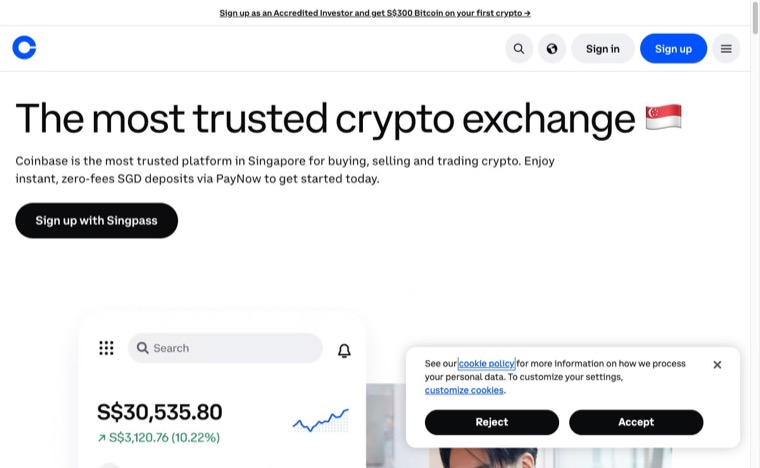
Coinbase, for example, provides asset information showing supported networks, trading pairs and withdrawal limits, while Kraken explicitly notes that some listed assets are unavailable in certain countries.
Which factors determine the top exchange for a particular token?
The most useful comparison is based on actual market access, not simply the number of coins listed.
| Factor | What to check | Why it matters |
|---|---|---|
| Token support | Is the asset currently tradable? | A listing must be current |
| Trading pair | BTC/USD, BTC/USDT, etc. | Determines how you enter or exit |
| Liquidity | Order-book depth and volume | Helps reduce execution friction |
| Spread | Bid/ask difference | Affects effective trading cost |
| Fees | Maker/taker and withdrawal fees | Changes total transaction cost |
| Network | Ethereum, Solana, BNB Chain, etc. | Prevents incompatible transfers |
| Jurisdiction | Country and product restrictions | Availability varies geographically |
| Security | Account and custody controls | Reduces operational risk |
| Trading tools | Limit orders, APIs, derivatives | Important for active traders |
| Custody | Exchange vs self-custody | Changes counterparty exposure |
CoinGecko’s current exchange methodology specifically considers liquidity, cybersecurity and other dimensions because reported trading volume alone does not necessarily provide a complete picture of an exchange.




Which exchanges support Bitcoin (BTC)?
Bitcoin is supported by most major cryptocurrency exchanges, including Binance, Coinbase and Kraken. The more important question is which BTC market is available to you and whether its liquidity, fees and funding options fit your needs.
Binance currently publishes BTC spot-pair additions and updates through its exchange announcements, while Coinbase and Kraken maintain current asset-support documentation.
For users researching Bitcoin specifically, these existing Cryptsy resources provide additional context:
- Bitcoin: What It Is, How to Buy, Mine and Use It
- Discover the Best Bitcoin Trading Platform
- Best Crypto Exchanges
What should you compare when choosing a BTC exchange?
For BTC, compare:
- BTC/USD or another preferred fiat pair.
- BTC/USDT or other stablecoin pairs.
- Spot liquidity.
- Trading fees.
- BTC withdrawal fees.
- Supported Bitcoin networks.
- Deposit and withdrawal limits.
- Security controls.
- Availability in your jurisdiction.
A high-volume BTC market may be useful for execution, but volume should not be treated as the only measure of exchange quality.
Which exchanges support Ethereum (ETH)?
Ethereum is widely available on major centralized exchanges and decentralized trading venues. Coinbase, Binance and Kraken all provide ETH markets, although the exact products and networks available depend on jurisdiction and account type.
Coinbase’s asset documentation lets users inspect supported networks and trading pairs, while Kraken maintains a current list of supported assets and networks.
Users researching Ethereum can also see:
Does an ETH listing mean every Ethereum network is supported?
No. An exchange can support ETH while supporting only certain networks for deposits and withdrawals.
This is particularly important for ETH and stablecoins because the same asset can exist across multiple networks.
Before transferring ETH, verify:
- the asset;
- the receiving network;
- the deposit address;
- any required memo/tag;
- minimum deposit;
- withdrawal fee.
Coinbase explicitly warns that sending assets through unsupported networks can result in permanent loss.
Which exchanges support Solana (SOL)?
SOL is available on major exchanges including Binance, Coinbase and Kraken, but the available products and pairs vary by jurisdiction.
Binance has published multiple 2026 announcements involving SOL/USD, SOL/USDT-equivalent markets and trading-bot functionality. Those announcements also show that product eligibility can depend on the user’s country.
Kraken’s current asset documentation includes Solana-based assets and networks, while Coinbase maintains its own current supported-asset list.
For more Solana-specific information, see:
What makes SOL exchange selection different?
Solana traders should pay particular attention to network support.
A platform might list SOL while offering different functionality for:
- spot SOL trading;
- SOL deposits and withdrawals;
- Solana ecosystem tokens;
- staking;
- derivatives;
- API trading.
The existence of a token listing therefore does not automatically mean the exchange provides every Solana-related service.
Which exchanges support XRP?
XRP is available on multiple major exchanges, but availability remains jurisdiction- and product-dependent.
Binance has published XRP spot-pair additions and updates, including XRP/USD1 trading-pair announcements in 2025 and 2026.
When comparing XRP exchanges, check:
- XRP/USD or local-fiat markets;
- XRP/USDT or stablecoin markets;
- spot liquidity;
- withdrawal support;
- required destination tags or memos;
- regional restrictions;
- fees;
- custody and security controls.
Do not assume that an XRP listing in one country means the same XRP product is available in another.
What are the main exchanges for major altcoins?
Major altcoins such as DOGE, ADA, LTC, LINK, AVAX, DOT, XLM and SUI are available across multiple exchanges, but support varies by asset and jurisdiction.
Kraken’s current supported-asset list, for example, includes a broad selection of assets and identifies their underlying networks.
Coinbase similarly publishes supported assets and provides asset-specific information for networks and trading pairs.
Dogecoin (DOGE)
DOGE is widely supported across major trading venues. Compare:
- DOGE/USD or local fiat markets;
- DOGE/USDT;
- withdrawal support;
- transaction fees;
- liquidity;
- availability in your country.
Cardano (ADA)
For ADA, consider both spot availability and whether the exchange supports the network functionality you need.
Litecoin (LTC)
LTC is supported across multiple established exchanges. Binance has published current LTC trading-pair announcements, illustrating how pair availability can change independently from overall token support.
Chainlink (LINK)
LINK is commonly available on major centralized exchanges and can also be accessed through decentralized markets. Compare the exact LINK pairs and network options rather than relying on a generic “listed” label.
Avalanche (AVAX)
AVAX traders should verify whether the exchange supports the relevant Avalanche network for deposits and withdrawals.
Polkadot (DOT)
DOT is widely available, but the exact markets and staking products vary between exchanges.
For additional research:
Which exchanges support emerging tokens such as Kaspa, Sui and Bittensor?
Emerging-token availability changes much faster than availability for BTC or ETH. For newer assets, always check the exchange’s current listing page rather than relying on an old article or static list.
Relevant categories include:
- Kaspa (KAS) — proof-of-work/blockDAG ecosystem.
- Sui (SUI) — Layer 1 smart-contract ecosystem.
- Bittensor (TAO) — decentralized machine-learning ecosystem.
- Internet Computer (ICP) — blockchain computing platform.
- VeChain (VET) — enterprise-oriented blockchain ecosystem.
- Hyperliquid (HYPE) — decentralized trading ecosystem.
- Toncoin (TON) — Telegram-associated blockchain ecosystem.
Kraken’s current asset list illustrates how quickly supported-asset catalogs evolve: its August 2026 update includes assets across Ethereum, Solana, Base, BNB Chain, Sui and other networks.
For emerging tokens, the exchange with the largest number of listings is not necessarily the most appropriate venue. Liquidity, network support, spread, withdrawal availability and jurisdiction matter more than raw listing count.
How do centralized and decentralized exchanges differ by token?
A centralized exchange (CEX) holds or controls assets within an exchange account and generally provides an order-book or similar trading system.
A decentralized exchange (DEX) allows users to trade through blockchain-based smart contracts, usually while maintaining control of their wallet.
The practical differences include:
| Feature | Centralized exchange | Decentralized exchange |
|---|---|---|
| Custody | Exchange account | Usually self-custody |
| Identity verification | Often required | Usually wallet-based |
| Order books | Common | AMMs/order-book DEXs vary |
| New token access | Depends on listing | Often broader |
| Liquidity | Centralized order books | Pools/order books |
| Network fees | Usually reflected in withdrawals | Blockchain gas/network fees |
| Counterparty exposure | Exchange custody | Smart-contract/protocol exposure |
| User responsibility | Shared with exchange | More responsibility on user |
See Cryptsy’s guide to centralized vs. decentralized exchanges for a deeper comparison.
For traders looking specifically for altcoins and meme coins, this guide is also relevant:
Best Exchanges for Altcoins and Meme Coins
Which exchange has the most cryptocurrencies?
There is no permanent answer because exchange listings change continuously, and “most coins” can mean different things.
A better comparison separates:
- Number of listed assets.
- Number of active trading pairs.
- Number of assets actually available in your country.
- Number of assets available for spot trading.
- Number available for deposits and withdrawals.
- Number available through derivatives.
- Network coverage.
An exchange may advertise a large number of assets while having relatively little liquidity in many smaller markets.
Coinbase, for example, provides separate information for supported assets, networks and trading pairs, while Kraken’s asset list explicitly notes that some assets are not available in particular countries.
That makes “exchange with the most coins” a less useful question than “which exchange supports the token and market I actually need?”
How should you compare exchange liquidity by token?
Liquidity describes how easily an asset can be bought or sold without causing a large change in the execution price.
For a token-specific comparison, examine:
- 24-hour spot volume;
- order-book depth;
- bid/ask spread;
- volume by trading pair;
- market concentration;
- historical liquidity during volatile periods.
CoinGecko’s exchange methodology specifically accounts for liquidity and warns against relying solely on reported volume because crypto exchange volumes can be artificially inflated.
Why trading volume alone can be misleading
Suppose two exchanges both report $100 million of daily volume for a token.
Exchange A might have:
- deep orders close to the market price;
- a narrow spread;
- multiple active fiat and stablecoin pairs.
Exchange B might have:
- the same reported volume;
- a wider spread;
- thin order books;
- most activity concentrated in one pair.
The headline volume is identical, but the trading experience can be very different.
How often do crypto exchange listings change?
Frequently. Exchanges add new assets and trading pairs, suspend markets and remove pairs based on liquidity, regulatory requirements, technical considerations and other factors.
Binance’s 2026 announcements provide examples of both new pair additions and pair removals. In one April 2026 notice, Binance removed several individual spot pairs while explicitly stating that removing a pair did not necessarily remove the underlying assets from Binance Spot.
This is why a page like this should be treated as a research framework rather than a permanent exchange directory.
How do fees affect the best exchange for a token?
Trading fees are only one part of the total cost.
Consider:
Total trading cost ≈ trading fee + spread + slippage + withdrawal/network costs
For example, an exchange advertising a very low trading fee may still be more expensive for a thinly traded token if the spread and slippage are substantially higher.
Compare:
- maker fee;
- taker fee;
- withdrawal fee;
- deposit fee;
- spread;
- expected slippage;
- fiat conversion cost;
- network fee.
See Cryptsy’s low-fee crypto exchange guide for additional background.
What should you check before depositing a token?
Before transferring cryptocurrency to an exchange, verify the asset, network and destination details.
Use this checklist:
1. Confirm the exact asset
Check the ticker and, for unfamiliar tokens, the contract address.
2. Confirm the network
For example, USDC may exist on several networks. The sender and recipient must support the same network configuration.
3. Check the exchange’s current deposit status
A token can be listed but temporarily have deposits or withdrawals suspended.
4. Check minimum deposits
Some exchanges impose minimum deposit or withdrawal amounts.
5. Check destination tags or memos
Certain assets may require additional identifying information.
6. Send a small test amount when appropriate
For an unfamiliar transfer, a test transaction can reduce operational risk.
Coinbase warns that deposits sent using unsupported networks may be permanently lost, while Kraken similarly warns users to verify supported deposit networks before sending funds.
What are the leading exchanges to research in 2026?
Rather than declaring a single winner, investors can start with established venues that have significant market coverage and then compare their support for the specific token.
CoinGecko’s current exchange page tracks 164 exchanges and reports Coinbase Exchange, Binance and Kraken among the largest tracked exchanges by its current methodology.
CoinDesk’s May 2026 Exchange Benchmark evaluates 75 exchanges using more than 100 metrics across areas including legal/regulatory risk, security, market quality and transparency.
That illustrates an important point: different ranking methodologies can produce different results because they measure different things.
Coinbase
Coinbase publishes current supported-asset information and detailed asset pages showing networks, trading pairs and withdrawal limits.
Binance
Binance publishes frequent listing and trading-pair announcements. Its 2026 announcements show support activity across BTC, ETH, SOL, XRP, DOGE, SUI and other assets, while also demonstrating that individual pairs can be changed or removed.
Kraken
Kraken maintains a current supported-cryptocurrency directory and identifies the networks associated with supported assets. Its documentation also notes that availability can vary by country.
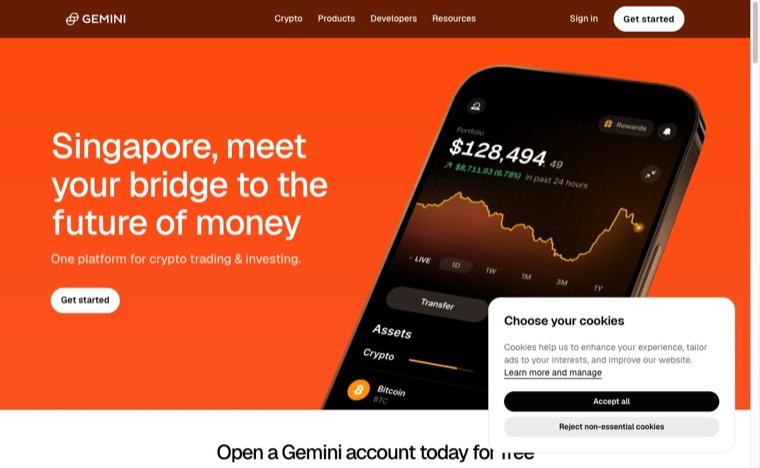
Gemini
Gemini provides another established exchange option, although asset and product availability should be checked for the user’s jurisdiction and the specific token.
Crypto.com
Crypto.com provides exchange and cryptocurrency services across supported markets. Check the current product and token availability before depositing.
What is the best way to compare exchanges by token?
A practical comparison can use a token-by-token matrix rather than one universal ranking.
| Token | What to compare first | Key risk to check |
|---|---|---|
| BTC | Fiat pairs, liquidity, fees | Custody and withdrawal costs |
| ETH | Pairs, network support, staking | Network compatibility |
| SOL | SOL liquidity, Solana network support | Network and product availability |
| XRP | XRP pairs, liquidity, withdrawal rules | Regional restrictions and destination requirements |
| DOGE | Fiat/stablecoin pairs | Withdrawal costs |
| ADA | Spot support and network | Regional product availability |
| LTC | Liquidity and fiat pairs | Pair availability |
| LINK | Spot pairs and network | ERC-20/network compatibility |
| AVAX | AVAX markets and network | Network selection |
| DOT | DOT markets and staking | Product/jurisdiction availability |
| XLM | XLM pairs and withdrawals | Destination requirements |
| SUI | Current listings and liquidity | Rapidly changing market support |
| TAO | Exchange coverage and liquidity | Smaller-market volatility |
| KAS | Current listings and withdrawals | Exchange/network support |
This approach is more useful than labeling one exchange universally “best.”
How should beginners choose an exchange for a specific cryptocurrency?
Beginners can simplify the process to five questions:
1. Does the exchange support my token?
Check the official asset list.
2. Does it support my country?
Availability varies by jurisdiction.
3. Does it support the network I need?
This is critical when depositing or withdrawing.
4. Is there sufficient liquidity?
Check the specific trading pair, not just the exchange’s total volume.
5. What will the complete transaction cost be?
Include fees, spread, slippage and withdrawal/network costs.
You can also review Cryptsy’s broader exchange-brand comparison and best crypto exchange resources.
What about privacy-focused and no-KYC exchanges?
Privacy-focused trading venues can have different account and compliance requirements from conventional centralized exchanges.
See:
No-KYC Crypto Exchanges: A Guide
However, users should not assume that “no KYC” means no compliance restrictions, no transaction monitoring or universal availability. Rules depend on the platform, jurisdiction and type of service.
For users comparing decentralized trading, the CEX vs DEX guide provides additional context.
What tools can help compare crypto exchanges by token?
Exchange research becomes easier when you combine several data sources.
Useful categories include:
- Market aggregators for exchange volume and market pairs.
- Exchange asset pages for official support.
- Blockchain explorers for deposits and withdrawals.
- Order-book data for liquidity.
- Exchange fee pages for trading costs.
- Regulatory documentation for jurisdiction-specific availability.
- Exchange status pages for maintenance and suspended markets.
Related Cryptsy resources include crypto market-cap analysis, crypto screeners, and crypto trading tools.
Why shouldn’t exchange rankings be treated as permanent?
Exchange rankings are time-sensitive measurements, not permanent facts.
Trading volume changes. New tokens launch. Existing tokens are delisted. Regulations change. Exchanges enter new jurisdictions. DEX activity changes. Market makers move liquidity.
CoinGecko’s methodology itself has evolved because the structure of crypto trading has changed, including the increasing importance of mobile and API trading and institutional participation.
Therefore, this page should be updated whenever there are meaningful changes to:
- supported assets;
- major trading pairs;
- exchange availability;
- regulatory status;
- liquidity;
- fees;
- deposit/withdrawal networks;
- security disclosures.
Frequently Asked Questions
What are the top exchanges by token?
There is no permanent universal list because exchange rankings and token listings change. For major assets such as BTC, ETH, SOL and XRP, users commonly compare large venues such as Binance, Coinbase and Kraken, then verify the exact trading pair, liquidity, network and regional availability. Current exchange data should be checked before trading.
Which exchange has the most coins?
The answer changes as exchanges add and remove assets. More importantly, the largest number of listings does not necessarily mean the best liquidity or the availability of the specific token you want. Check the exchange’s current asset directory and trading pairs.
What is the best exchange for Bitcoin?
There is no single answer for every trader. Compare BTC liquidity, trading pairs, fees, security controls, withdrawal support and availability in your jurisdiction.
What is the best exchange for Ethereum?
Compare ETH liquidity, fiat and stablecoin pairs, fees, supported networks, staking availability and withdrawal options. Coinbase, Binance and Kraken are among the major exchanges that provide ETH markets, but exact availability varies by region.
Which exchange is best for Solana?
For SOL, compare the depth of the SOL trading market, supported fiat or stablecoin pairs, Solana deposits and withdrawals, fees and additional Solana ecosystem products. Binance, Coinbase and Kraken all provide SOL-related market access, subject to regional differences.
Where can I trade XRP?
XRP is supported on multiple major exchanges. Check current XRP trading pairs and regional availability before opening an account or transferring funds. Binance, for example, has published XRP spot-pair announcements.
Which exchange has the most altcoins?
Several large exchanges maintain broad asset catalogs, but the exact number changes continuously. Compare the specific token, trading pair, liquidity and network rather than relying only on the number of listed coins.
Which exchange is best for new crypto listings?
New-token availability changes quickly. Compare an exchange’s current listing page, liquidity, trading pairs, deposit/withdrawal support and jurisdictional availability. Do not assume that a new listing will remain available indefinitely.
Are crypto exchange rankings reliable?
Rankings can be useful, but different providers measure different things. CoinGecko’s Trust Score considers factors including liquidity and cybersecurity, while CoinDesk’s Exchange Benchmark uses more than 100 metrics across 75 exchanges. Neither should be treated as a permanent universal ranking.
Can a token be listed but unavailable in my country?
Yes. Exchange asset availability can vary by jurisdiction. Kraken explicitly notes that some supported currencies are unavailable in particular countries, and Coinbase similarly explains that regional requirements can affect asset availability.
Can a token be listed but have its trading pair removed?
Yes. An exchange can remove an individual trading pair while continuing to support the underlying asset through another pair. Binance explicitly described this distinction in its 2026 spot-pair removal notices.
Conclusion
The most useful way to compare cryptocurrency exchanges is by the specific asset and market you need, rather than choosing an exchange solely because it has the largest overall volume or the most listed coins.
For BTC, ETH, SOL, XRP and other established assets, compare:
- current listing status;
- trading pairs;
- liquidity and order-book depth;
- maker and taker fees;
- spread and expected slippage;
- deposit and withdrawal networks;
- jurisdictional availability;
- security and custody controls;
- staking or derivatives features if relevant;
- exchange transparency and regulatory information.
For emerging assets such as KAS, SUI, TAO and other newer tokens, verify the information immediately before trading because listings and trading pairs can change rapidly.
The broader exchange market also demonstrates why static rankings have limitations. CoinGecko currently tracks hundreds of venues and evaluates exchanges using more than reported volume alone, while CoinDesk uses a separate multi-factor benchmark.
The practical rule is simple:
Choose the exchange based on the token, market, network, liquidity and jurisdiction you actually need—not simply on the exchange’s overall reputation or number of listed coins.