

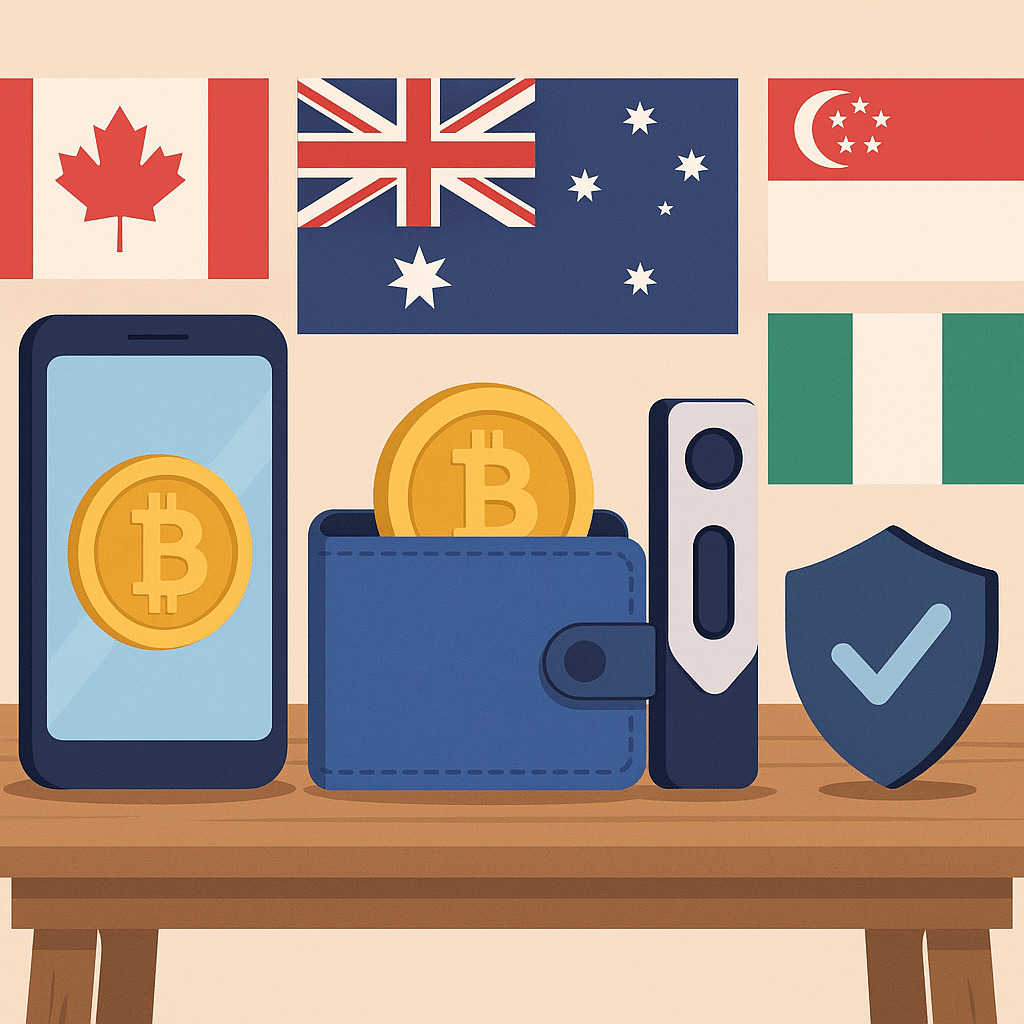
Cryptocurrency is becoming more mainstream around the world, and having a secure, reliable, and accessible crypto wallet is more important than ever. But choosing the best crypto wallet depends on where you live, as regulations, user preferences, and supported features vary from country to country. In this guide, we’ll take a close look at the best crypto wallets by country, from Canada to Dubai, and provide everything you need to know to make the right choice based on your location.
Whether you’re a beginner looking for something simple or a pro needing advanced security, this guide will help you decide which wallet is right for you.
What Is A Crypto Wallet?
A crypto wallet is a digital tool that lets you store, send, and receive cryptocurrencies like Bitcoin or Ethereum. Instead of holding physical coins, a crypto wallet stores the private keys you need to access your coins on the blockchain. These wallets come in many forms, mobile apps, desktop software, hardware devices, or even paper.
How Does A Crypto Wallet Work?
A crypto wallet works by helping you interact with the blockchain to store, send, and receive cryptocurrency. Here’s how it works:
Holds Keys, Not Coins
- A crypto wallet doesn’t actually store coins.
- It stores your private key (like your password) and public key (like your account number).
- Your crypto lives on the blockchain, and your keys unlock access to it.
Sending Crypto
- You enter the recipient’s wallet address.
- Your wallet uses your private key to sign the transaction.
- The transaction is sent to the blockchain and verified by the network.
Receiving Crypto
- You share your wallet address (which is like your public key).
- Someone sends crypto to that address.
- Your wallet shows the balance once the blockchain confirms the transaction.
Staying Secure
- Hot wallets (like mobile apps) are connected to the internet, easier to use but less secure.
- Cold wallets (like hardware devices) store your keys offline, more secure but less convenient.
Why Your Country Matters When Choosing a Crypto Wallet
Not all crypto wallets are available or optimized for every region. Some countries have specific crypto regulations that limit wallet functionality or require KYC (Know Your Customer) verification. Others may prioritize DeFi access, local customer support, or compatibility with regional exchanges.
The best crypto wallet for you may depend on these key factors:
- Regulatory environment in your country
- Supported exchanges and integrations
- Access to DeFi apps
- Local language support and customer service
- Backup and security features
By understanding how wallets operate globally, you can choose one that provides the best experience wherever you are.
Best Crypto Wallet Canada
Top Pick: Ledger Nano X (Hardware Wallet)
In Canada, where crypto adoption continues to rise, users demand strong security and support for multiple coins. The Ledger Nano X remains one of the best options thanks to its top-tier encryption, Bluetooth support, and compatibility with over 5,500 tokens.
Other great options in Canada:
- Coinbase Wallet (Beginner-friendly)
- Trust Wallet (Mobile and multi-chain)
- Trezor Model T (Secure hardware choice)
Why it stands out:
Canadians appreciate Ledger’s support for staking, plus easy integration with Canadian crypto exchanges and tax reporting tools.
Best Crypto Wallet UK
Top Pick: Revolut Wallet
UK crypto users lean toward platforms that combine crypto and fiat services. Revolut, a regulated e-wallet that includes crypto storage, fits this perfectly. It offers seamless fiat conversion, in-app trading, and built-in security.
Other notable UK options:
- MetaMask (for DeFi and Ethereum users)
- Exodus (User-friendly interface)
- eToro Money Wallet (Regulated and trusted)
Why it’s popular in the UK:
British users value FCA-regulated services, so wallets with clear licensing, user control, and transparency tend to win trust.
Best Crypto Wallet Australia
Top Pick: Swyftx Wallet
In Australia, local crypto exchange wallets like Swyftx are thriving. The Swyftx Wallet offers multi-coin support, low spreads, and robust security features.
Alternatives in Australia:
- Ledger Nano S Plus (Budget hardware wallet)
- Mycelium Wallet (Mobile-focused)
- Atomic Wallet (DeFi support)
What Australians look for:
Crypto users in Australia prefer wallets with easy AUD deposit methods, integration with tax tools like Koinly, and top-tier security.
Best Crypto Wallet Nigeria
Top Pick: Binance Wallet (Trust Wallet)
Nigeria remains one of Africa’s fastest-growing crypto markets. Trust Wallet, acquired by Binance, is extremely popular because of its low data usage, DeFi access, and P2P integrations.
Other options for Nigerians:
- Paxful Wallet (P2P focused)
- Luno Wallet (Simple and regulated)
- Coinomi (Multi-coin and private)
Why it works in Nigeria:
Nigerian users need low-fee, mobile-first wallets that work with local exchanges and provide financial freedom despite bank restrictions.
Best Crypto Wallet Singapore
Top Pick: Crypto.com DeFi Wallet
Singapore is a tech-savvy financial hub with strong crypto adoption. The Crypto.com DeFi Wallet supports staking, NFTs, and DeFi apps, all key features for Singaporean users.
Other strong choices in Singapore:
- MetaMask (DeFi and Ethereum-friendly)
- Coinbase Wallet (Secure and user-friendly)
- Ledger Nano X (Offline cold storage)
Why Singapore loves it:
Crypto.com’s wallet combines security, usability, and integration with a global exchange that complies with Singapore’s regulations.
Best Crypto Wallet Dubai
Top Pick: BitOasis Wallet
Dubai is quickly becoming a crypto-friendly city in the Middle East. BitOasis offers a regulated, Arabic-localized wallet and exchange platform tailored to UAE residents.
Other top options in Dubai:
- Trust Wallet (Decentralized and mobile)
- MetaMask (Ideal for DeFi and NFT trading)
- Trezor One (Budget cold storage)
Why it works in Dubai:
Dubai residents want wallets that comply with local laws, offer Arabic support, and integrate with licensed crypto exchanges.
Comparing Features of Crypto Wallets by Country
| Region / Country | Popular Wallet Types | Regulatory Impact | Key Features | User Focus |
|---|---|---|---|---|
| United States | Custodial & non-custodial | Strong KYC/AML rules | High security, insured custodial wallets, multi-asset support | Compliance & safety |
| Europe (EU) | Custodial & non-custodial | Strict AMLD5/6 laws | Hardware wallet adoption, multilingual apps, fiat on/off ramps | Regulation & accessibility |
| Japan | Custodial (regulated) | Tight financial oversight | High compliance, exchange-linked wallets, strong consumer protection | Security & legal clarity |
| South Korea | Custodial & exchange wallets | KYC mandatory, strict trading laws | Mobile-first design, bank integration, strong security | Convenience & regulation |
| Latin America (Brazil, Argentina) | Mobile non-custodial | Evolving, mixed rules | Focus on stablecoin support, offline features, simple UX | Accessibility & inflation hedge |
| Africa (Nigeria, South Africa) | Mobile-first non-custodial | Minimal but growing rules | Offline transaction support, low fees, fiat-to-crypto bridges | Financial inclusion |
| India | Non-custodial & exchange wallets | Uncertain, shifting regulations | Wide token support, mobile-first, growing DEX integration | Flexibility & adoption growth |
Regional Wallet Usage Stats (2025)
Here’s a global snapshot of wallet adoption across key regions:
| Country | Top Wallet | Hardware Wallet Usage | Mobile Wallet Usage | DeFi Wallet Popularity |
|---|---|---|---|---|
| Canada | Ledger Nano X | 40% | 30% | 20% |
| UK | Revolut Wallet | 25% | 50% | 15% |
| Australia | Swyftx Wallet | 30% | 45% | 25% |
| Nigeria | Trust Wallet | 10% | 70% | 50% |
| Singapore | Crypto.com DeFi | 35% | 55% | 60% |
| Dubai | BitOasis | 20% | 50% | 40% |
Source: CryptoWalletInsights 2025 Report
Why Do I Need A Custodial Wallet?
You might need a custodial wallet if you want an easier, more beginner-friendly way to manage your crypto, without handling all the security yourself. A custodial wallet is a type of crypto wallet where a third party (like an exchange) holds your private keys for you, kind of like a bank holding your money.
So, if you’re new to crypto and want convenience over control, a custodial wallet might be a good starting point.
What Type of Wallet Should I Choose?
The type of crypto wallet you should choose depends on your goals, experience level, and how much control and security you want. Here’s a simple breakdown to help you decide:
| Goal | Recommended Wallet |
|---|---|
| Quick access & ease | Hot wallet |
| Maximum security | Cold wallet |
| Simple, hands-off use | Custodial wallet |
| Full control & privacy | Non-custodial wallet |
What to Consider When Choosing a Wallet
When choosing a crypto wallet, here are the most important things to consider. Use this list to match the wallet to your needs, comfort level, and goals:
Security
- How safe is it?
Look for features like 2FA, PIN protection, and backup options. - Hot wallets are more exposed to hacks but easier to use.
- Cold wallets are offline and highly secure.
Custody of Private Keys
- Do you control your private keys, or does someone else (like an exchange)?
- Non-custodial wallets give you full control, and full responsibility.
- Custodial wallets are easier for beginners but offer less independence.
Types of Assets Supported
- Does the wallet support the coins and tokens you plan to use?
(e.g., BTC, ETH, SOL, MATIC, NFTs, stablecoins)
Ease of Use
- Is the wallet easy to set up and navigate?
- Great for beginners: apps like Trust Wallet or Coinbase Wallet
- For advanced users: wallets with DeFi, NFT, and staking features
Backup & Recovery Options
- Does the wallet give you a recovery phrase or seed phrase?
- Can you easily restore your wallet if your phone or hardware is lost?
Connectivity & Compatibility
- Can it connect to dApps, DeFi, and exchanges?
- Compatible with browsers (MetaMask), mobile (Trust Wallet), or hardware (Ledger)?
Fees
- Are there transaction fees or service charges?
- Some wallets let you adjust gas fees, others do not.
Reputation & Support
- Is the wallet well-known and trusted in the crypto community?
- Is there customer support or a help center in case you need it?
How Do I Keep My Crypto Wallet Safe?
Keeping your crypto wallet safe is one of the most important steps in protecting your digital assets. Start by using a strong, unique password that includes a mix of letters, numbers, and symbols, and never reuse passwords from other accounts. Your recovery or seed phrase is the key to your wallet, so store it offline by writing it on paper and keeping it in a secure place like a fireproof safe.
Never share it with anyone or store it digitally, where it could be hacked. For large amounts of cryptocurrency, consider using a cold (hardware) wallet such as a Ledger or Trezor, which keeps your funds offline and away from cyber threats.
Enable two-factor authentication (2FA) for extra protection on both your wallet and any connected crypto exchange. Use authenticator apps like Google Authenticator instead of SMS-based codes, which are easier to intercept.
Keep your wallet software, browser extensions, and devices updated regularly to patch any security vulnerabilities. Avoid accessing your wallet on public Wi-Fi networks, as they are often not secure.
How Regulations Impact Crypto Wallets by Country
Regulations strongly shape crypto wallet use worldwide. In regions like the US and Europe, wallets must follow KYC/AML rules, requiring identity verification. In parts of Asia, lighter regulations allow more privacy with non-custodial wallets, though risks are higher. Latin America and Africa are still developing frameworks, with some countries encouraging adoption for financial inclusion and others imposing restrictions. Overall, regulations impact which wallets are available, their features, and how securely they can be used.
Future of Crypto Wallets by Country Beyond 2025
The future of Crypto Wallets by Country will vary by region. In developed markets like the U.S. and Europe, wallets will integrate stricter compliance, biometrics, and insurance for mainstream use. Asia will drive innovation with multi-chain, mobile-first, and cross-border wallets. Emerging markets in Latin America and Africa will focus on financial inclusion through stablecoins, offline transactions, and fiat bridges. Globally, wallets will evolve into all-in-one Web3 platforms for DeFi, NFTs, and identity, becoming smarter, safer, and central to daily financial life.
Conclusion
Crypto wallets aren’t one-size-fits-all. The best crypto wallets depends on your needs, tech comfort, and, importantly, your location. Whether you want cold storage in Canada, mobile access in Nigeria, or DeFi features in Singapore, there’s a wallet out there for you.
Always consider your country’s regulations, supported coins, and security preferences when choosing a wallet. And remember: your wallet is your gateway to the crypto world, choose wisely.
FAQ: Best Crypto Wallets by Country
1. Are these wallets available globally?
Many are, but some are optimized for local regulations and features.
2. Should I use multiple wallets?
Yes. You can separate hot wallets for daily use and cold wallets for savings.
3. What’s the safest wallet in 2025?
Cold wallets like Ledger and Trezor offer the best security.
4. Which wallets support staking?
Crypto.com, Trust Wallet, Ledger, and MetaMask all support staking.
5. Do I need a wallet if I use Binance or Coinbase?
You can, but it’s safer to withdraw your funds into a personal wallet.
Disclaimer
This article for best crypto wallets is for informational purposes only and does not constitute financial advice. Cryptocurrency investments carry risks. Always do your own research and consult with a financial advisor before making investment decisions.