


The strongest crypto presales in 2026 are best identified by the quality of the underlying project rather than by promised returns, social-media hype or the size of a presale counter.
The sectors worth researching include AI and decentralized compute, Real World Assets (RWA), Decentralized Physical Infrastructure Networks (DePIN), blockchain scaling, DeFi infrastructure, interoperability, privacy technology and Web3 gaming.
However, a promising sector does not make an individual token a good investment. Before participating in a presale, evaluate the project’s product, team, token utility, tokenomics, vesting schedule, smart-contract security, treasury, funding, regulatory position, community and actual evidence of adoption.
There is also no reliable way to guarantee that a presale will produce a profit. Crypto presales are early-stage, highly speculative investments, and some projects will fail, never launch, lose liquidity or become worthless.
The SEC warns that crypto-asset investment scams can use legitimate-looking websites, social media, fake returns and pressure tactics to persuade investors to send funds.
Key Takeaways
- The best crypto presales in 2026 should be evaluated individually rather than selected solely by sector or hype.
- AI, RWA, DePIN, scaling, DeFi and interoperability are important areas to research, but sector momentum does not guarantee token performance.
- A working product or verifiable prototype is stronger evidence than a roadmap alone.
- Token utility should be specific and economically meaningful.
- Fully diluted valuation (FDV), circulating supply and future token unlocks can matter as much as the initial presale price.
- Smart-contract audits reduce certain technical risks but do not prove that a project is legitimate or economically sound.
- Anonymous teams, unverifiable partnerships, guaranteed returns and pressure to buy quickly are major warning signs.
- Regulatory treatment varies by country and can change over time.
- Presale investors should assume that they could lose their entire investment.
- Never send funds solely because an influencer, Telegram group, Discord moderator or social-media account recommends a token.
What Is a Crypto Presale?
A crypto presale is an early token sale conducted before a cryptocurrency is broadly available on public markets.
A project may use a presale to raise capital for:
- Software development
- Blockchain infrastructure
- Protocol development
- Marketing
- Liquidity
- Community incentives
- Hardware deployment
- Ecosystem growth
Presales can take different forms. Some projects sell tokens directly through a smart contract, while others use launchpads, centralized platforms or regulated investment structures.
The important point is that buying during a presale does not guarantee that the token will subsequently list on an exchange or increase in value.
Depending on how a token is structured and sold, securities laws may also apply. The SEC’s 2026 guidance explains that some crypto assets can become subject to federal securities laws when they are offered or sold as part of an investment contract.
What Makes a Crypto Presale Promising in 2026?
A stronger presale candidate usually has evidence in several independent areas rather than relying on one attractive feature.
Look for:
- A clearly defined problem
- A working product or credible prototype
- A team whose identity and experience can be verified
- A specific reason for the token to exist
- Transparent tokenomics
- Reasonable valuation and supply
- Clearly disclosed vesting and unlock schedules
- Independent security testing where relevant
- Verifiable partnerships rather than logo collections
- A credible path to users and revenue
- Clear legal and geographic eligibility
- Transparent treasury and fundraising information
A project does not need to satisfy every criterion perfectly. The purpose is to determine whether the evidence supports the project’s claims.
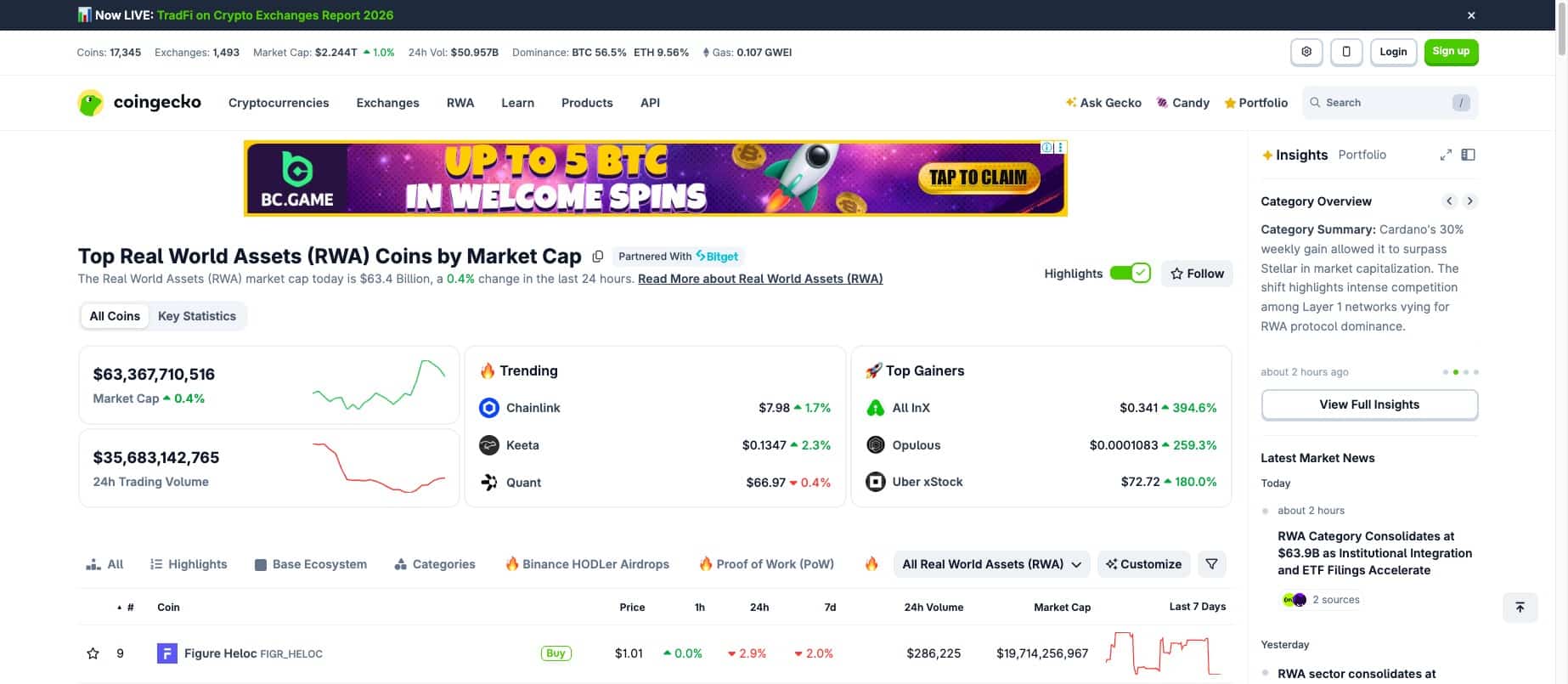
Which Crypto Presale Sectors Are Worth Watching in 2026?
Rather than treating every new token as equally attractive, investors can use sector analysis to narrow the research universe.
1. AI and Decentralized Compute
AI remains one of the major narratives intersecting with blockchain technology.
Crypto projects in this category may attempt to coordinate:
- GPU and CPU resources
- Decentralized inference
- AI-agent infrastructure
- Data marketplaces
- Data verification
- Model-related services
- Compute marketplaces
The important question is whether blockchain solves a genuine problem.
For example, a decentralized compute marketplace should be able to explain why its architecture provides an advantage over conventional cloud infrastructure.
When researching an AI crypto presale, look for:
- Actual compute usage
- Working software
- Verifiable network activity
- Clear customer demand
- Transparent economics
- Evidence that token incentives are necessary
A project should not receive a higher valuation simply because it uses the words “AI” and “blockchain.”
2. Real World Asset Tokenization
Real World Assets (RWA) refer broadly to assets or financial claims represented using blockchain-based tokens.
Potential applications include:
- Government securities
- Credit
- Real estate
- Funds
- Commodities
- Private-market assets
Tokenization is attracting significant attention because blockchain infrastructure can potentially make ownership records, settlement and transfers more programmable.
However, an important distinction is often overlooked:
A token representing an asset is not necessarily the same thing as legally owning that underlying asset.
Investors need to understand:
- Who owns the underlying asset
- Who holds custody
- What legal rights token holders receive
- How redemption works
- What happens if the issuer fails
- Which jurisdiction governs the arrangement
The SEC’s 2026 statement on tokenized securities emphasizes that tokenized securities can have structures and holder rights that differ materially from those associated with the underlying securities.
That makes legal documentation particularly important for RWA projects.
3. Decentralized Physical Infrastructure Networks (DePIN)
DePIN projects use crypto incentives to coordinate physical infrastructure.
Examples of potential infrastructure include:
- Wireless networks
- Computing resources
- Sensors
- Mapping systems
- Energy infrastructure
- Storage
- Telecommunications
The investment thesis is based partly on the possibility that token incentives can help bootstrap infrastructure faster or more efficiently.
But hardware deployment introduces risks that software-only projects may not face.
Research:
- Hardware costs
- Hardware availability
- Geographic distribution
- Installation requirements
- Participant economics
- Network utilization
- Token emissions
- Maintenance costs
A network with thousands of devices is not necessarily valuable if those devices generate little economic activity.
4. Layer 2 and Layer 3 Infrastructure
Blockchain scaling remains another important area of development.
Projects may focus on:
- Rollups
- Zero-knowledge proofs
- Application-specific chains
- Layer 3 networks
- Sequencing
- Data availability
- Interoperability
- Transaction execution
The technical claims deserve particularly careful scrutiny.
A presale describing itself as a “next-generation Layer 2” should explain:
- Which underlying chain it uses
- Its consensus or proving architecture
- How transactions are settled
- Where data is stored
- How users bridge assets
- Who controls upgrades
- How the network will be secured
Technical terminology should never substitute for evidence.
5. DeFi Infrastructure
Decentralized finance continues to generate projects focused on:
- Lending
- Trading
- Liquidity
- Yield strategies
- Derivatives
- Stablecoins
- Portfolio management
- Cross-chain applications
For DeFi presales, revenue and usage are particularly important.
Ask:
Who pays the protocol?
A project may have a sophisticated interface and impressive technology but still have no sustainable business model.
Look for evidence such as:
- Protocol fees
- Active users
- Trading volume
- Total value locked
- Retention
- Revenue
- Treasury management
These metrics should be verified rather than copied from promotional material.
6. Cross-Chain Interoperability
As blockchain ecosystems become more fragmented, interoperability remains an important infrastructure category.
Projects may provide:
- Cross-chain messaging
- Asset transfers
- Data transmission
- Chain abstraction
- Cross-chain liquidity
Security should be the first consideration.
Bridges and interoperability protocols can create large attack surfaces because a vulnerability may affect assets or messages moving between multiple networks.
Before considering a presale, investigate:
- Architecture
- Validator or verifier assumptions
- Upgrade controls
- Historical incidents
- Audit reports
- Bug-bounty programs
- Admin-key controls
A presale should not be considered attractive merely because it supports multiple chains.
7. Web3 Gaming
Blockchain gaming has moved beyond the assumption that every game needs a speculative token.
A stronger gaming project should first answer:
Would people actually want to play the game if the token did not exist?
Research:
- Gameplay footage
- Playable builds
- Development progress
- Player retention
- Token sinks
- Item economy
- Inflation controls
- Distribution of in-game assets
A token that exists only to finance speculation can create an unstable game economy.
8. Privacy and Cryptographic Infrastructure
Privacy technology is another area where blockchain can provide genuine technical utility.
Projects may focus on:
- Zero-knowledge proofs
- Private transactions
- Confidential computation
- Identity systems
- Selective disclosure
- Privacy-preserving applications
The challenge is balancing privacy with regulatory and compliance requirements.
For privacy-focused projects, understand exactly what is private, from whom it is private, and whether users can selectively prove information when required.
9. Sustainable and Energy-Related Blockchain Projects
Crypto projects may also use blockchain for:
- Renewable-energy markets
- Carbon-credit tracking
- Environmental data
- Energy certificates
- Distributed energy systems
The important distinction is between using blockchain to improve an existing market and simply attaching a token to an environmental narrative.
Look for measurable evidence:
- Verified environmental data
- Actual customers
- Revenue
- Hardware deployment
- Third-party verification
- Clearly defined token utility
10. Meme and Culture Tokens
Meme tokens can attract extraordinary attention, but attention is not the same as fundamental value.
If researching a meme-token presale, assume that the project is highly speculative unless there is substantial evidence otherwise.
Do not treat:
- Social-media followers
- Celebrity endorsements
- Telegram member counts
- Presale countdown timers
- Viral memes
- Influencer promotion
as proof of long-term value.
The SEC’s investor guidance specifically warns that crypto fraudsters can use social media, fabricated returns and so-called presales to attract investors and later dump tokens.

How Do You Evaluate a Crypto Presale?
A useful presale due-diligence process should start with the project rather than its marketing.
Step 1: Understand the product
Read the documentation and determine what the project actually does.
Try to explain the project in one sentence without using marketing terminology.
For example:
“The protocol allows users to rent unused GPU capacity for AI workloads.”
That is more useful than:
“A revolutionary AI-powered Web3 ecosystem transforming decentralized intelligence.”
If you cannot explain the product clearly, stop and research further.
Step 2: Ask whether the token is necessary
This is one of the most important questions.
Does the product actually need a token?
A token may have legitimate functions such as:
- Paying network fees
- Accessing a protocol
- Staking
- Governance
- Providing security
- Coordinating decentralized resources
But if a normal database, subscription or conventional payment system would accomplish the same task, the token thesis deserves additional scrutiny.
Step 3: Analyze tokenomics
Tokenomics describes how a project’s token supply and distribution work.
At minimum, identify:
- Maximum supply
- Initial circulating supply
- Presale allocation
- Team allocation
- Investor allocation
- Treasury allocation
- Ecosystem allocation
- Marketing allocation
- Liquidity allocation
- Token unlock schedule
Do not look only at the presale price.
Why Fully Diluted Valuation Matters
Suppose a token sells for $0.05 during a presale and has a maximum supply of 10 billion tokens.
The implied fully diluted valuation would be:
$0.05 × 10,000,000,000 = $500 million
That can completely change how attractive the presale looks.
A low token price does not necessarily mean a low valuation.
Always calculate:
Token price × maximum token supply = fully diluted valuation
Then compare that valuation with:
- Competitors
- Current revenue
- Users
- Technology maturity
- Network activity
- Treasury
- Comparable protocols
Step 4: Study vesting and unlocks
Vesting determines when tokens allocated to teams, investors or other groups become transferable.
For example, imagine:
- 20% unlocks at launch
- 10% unlocks monthly
- The remainder unlocks over 12 months
That creates a very different supply profile from a project where team and investor tokens remain locked for several years.
The key metric is not simply “long vesting.”
You need to calculate how much additional supply can reach the market and when.
Large unlocks can create selling pressure even when the underlying project continues developing successfully.
Step 5: Verify the team
A doxxed team is not automatically trustworthy.
Verify:
- Names
- Employment history
- Previous companies
- GitHub activity
- LinkedIn profiles
- Previous projects
- Corporate registrations where relevant
- Public appearances
- Technical contributions
Also distinguish between:
“Team identities are public”
and:
“The team has demonstrated the skills required to build this project.”
They are not the same claim.
Step 6: Check the code
If the project claims to have working technology, look for evidence.
Potential signals include:
- Public GitHub repositories
- Testnet
- Mainnet
- Developer activity
- Documentation
- Deployment addresses
- On-chain transactions
- Public demos
A polished website is not evidence of working technology.
Step 7: Verify security audits
If a project publishes an audit, verify the document independently.
Check:
- Auditor identity
- Audit date
- Contract addresses
- Version audited
- Findings
- Severity levels
- Whether critical findings were fixed
- Whether the deployed contract matches the audited contract
An audit is not a guarantee that a project is safe.
It generally represents an assessment of particular code under particular conditions.
Step 8: Investigate partnerships
Partnership claims deserve verification.
Do not treat a company logo on a website as proof of a commercial relationship.
Look for confirmation from:
- The partner’s website
- Official announcements
- Press releases
- Technical integrations
- On-chain evidence
- Documentation
“Working with” can mean very different things from “paying customer” or “strategic investor.”
Step 9: Research the legal structure
This is increasingly important for token presales.
Depending on the structure and jurisdiction, a token offering may raise securities-law, consumer-protection, AML/KYC, tax or licensing issues.
The SEC’s 2026 materials state that crypto assets and transactions can fall under federal securities laws in certain circumstances.
The SEC also proposed Regulation Crypto Assets in August 2026. The proposal would create specific exemptions for certain covered investment contracts, including proposed limits of $5 million over four years under one exemption and $75 million over 12 months under another, subject to the proposal’s conditions. Importantly, this is a proposal, not a final rule.
For a global audience, U.S. law is only one example. Investors should also consider the laws applicable in their own jurisdiction.
What Are the Biggest Crypto Presale Red Flags?
Some warning signs deserve immediate attention.
Guaranteed returns
No legitimate investment can guarantee a high return simply because you enter a presale early.
Artificial urgency
Be cautious when a project repeatedly says:
- “Last chance”
- “Only minutes left”
- “Price increases tonight”
- “Guaranteed 100x”
- “Whales are buying”
- “Don’t miss the next Bitcoin”
The SEC specifically warns investors about pressure tactics and promises of high returns in crypto-related investment schemes.
Anonymous or unverifiable team
An anonymous team does not automatically prove fraud, but it makes accountability and verification more difficult.
Unverifiable partnerships
If a project claims a major corporation is a partner, verify that claim through the corporation itself.
No working product
A roadmap promising a future product provides less evidence than a functioning prototype or deployed system.
Excessive insider allocation
A project can have excellent technology and still have poor token economics if insiders control too much supply.
Short unlock periods
Large amounts of team, advisor or investor tokens becoming liquid immediately after launch can create substantial supply pressure.
Fake audits
Never assume that the word “audited” means the contract is safe. Locate the actual audit report and compare its contract addresses and findings with the deployed code.
Requests to send funds privately
Be especially cautious if a project representative asks you to send cryptocurrency directly to an individual wallet rather than through the documented official sale mechanism.
Withdrawal or tax demands
Investor.gov warns that fraudsters may fabricate profits and later demand additional money for supposed taxes, fees or withdrawals.
If someone says you must send more crypto to unlock your existing “profits,” stop and investigate independently.
How Can You Check Whether a Crypto Presale Is Legit?
Use a multi-source verification process.
Project website
Confirm that the domain is the official domain and not an imitation.
Documentation
Read the whitepaper, tokenomics documentation, terms and legal disclosures.
Blockchain explorer
Verify:
The implied fully diluted valuation would be:
That can completely change how attractive the presale looks.
Always calculate:
- Competitors
- Current revenue
- Users
- Technology maturity
- Network activity
- Treasury
- Comparable protocols
For example, imagine:
- 20% unlocks at launch
- 10% unlocks monthly
- The remainder unlocks over 12 months
Step 5: Verify the team
A doxxed team is not automatically trustworthy.
Verify:
- Names
- Employment history
- Previous companies
- GitHub activity
- LinkedIn profiles
- Previous projects
- Corporate registrations where relevant
- Public appearances
- Technical contributions
What Are the Biggest Crypto Presale Red Flags?
Artificial urgency
Be cautious when a project repeatedly says:
- “Last chance”
- “Only minutes left”
- “Price increases tonight”
- “Guaranteed 100x”
- “Whales are buying”
- “Don’t miss the next Bitcoin”
Unverifiable partnerships
If a project claims a major corporation is a partner, verify that claim through the corporation itself.
Short unlock periods
- Contract address
- Token supply
- Holder distribution
- Transactions
- Ownership
- Liquidity where applicable
GitHub
Check whether claimed development activity exists.
Audit
Locate the complete audit rather than trusting an “audited” badge.
Social channels
Use official social accounts to find announcements, but do not treat follower numbers or comments as evidence of legitimacy.
Independent sources
Search for information outside the project’s own marketing channels.
The SEC specifically recommends that investors independently investigate crypto investment opportunities rather than relying solely on promotional claims or social-media information.
Are Crypto Presales Legal in Every Country?
No. Crypto presales are not universally available to investors in every country.
Eligibility can depend on:
- Local securities law
- Consumer-protection rules
- AML/KYC requirements
- Sanctions
- Tax law
- The project’s corporate structure
- The type of token
- How the offering is marketed
Some projects exclude residents of particular jurisdictions.
A project may therefore be legitimate and still refuse participation from investors in certain countries.
Before contributing funds, read the project’s official terms and determine whether you are legally eligible to participate.
Do not use a VPN or false identity information to circumvent geographic restrictions.
How Do Crypto Presales Work?
A typical presale can follow this sequence:
Project formation → token design → fundraising → presale → token generation → distribution/claim → exchange or decentralized-market availability
Not every project follows this model.
Some tokens may:
- Launch immediately after a sale
- Use staged presale rounds
- Have a delayed token-generation event
- Lock tokens after purchase
- Require a separate claim transaction
- Never reach a major exchange
Before buying, determine exactly when you receive the tokens and when you can transfer or sell them.
What Is a Token Generation Event?
A Token Generation Event (TGE) is the point at which a project’s token is created or officially distributed.
The TGE may occur:
- During the presale
- After the presale
- At a mainnet launch
- At a separately announced date
The TGE date matters because it can determine when purchased tokens become transferable and when previously locked allocations begin unlocking.
What Should You Calculate Before Buying a Presale Token?
At minimum, calculate five numbers:
1. Presale valuation
Presale token price × relevant supply
2. Fully diluted valuation
Token price × maximum token supply
3. Initial circulating market capitalization
Launch price × tokens circulating at launch
4. Future unlocks
Calculate how many tokens enter circulation during:
- First month
- First quarter
- First year
5. Your maximum potential loss
Assume the investment could fall to zero.
This prevents the common mistake of focusing only on a hypothetical upside target.
Why Presale Price Alone Is Misleading
Consider two hypothetical projects.
Project A
- Presale price: $0.01
- Maximum supply: 100 billion
- FDV: $1 billion
Project B
- Presale price: $0.20
- Maximum supply: 1 billion
- FDV: $200 million
Project A appears cheaper on a per-token basis, but it actually has a much higher implied valuation.
This is why experienced token analysis focuses on valuation and supply, not just the number displayed beside a token.
Can You Make Money From Crypto Presales?
Yes, it is possible, but there is no reliable way to predict which presales will generate profits.
A token can rise substantially after launch, remain flat, or lose most or all of its value.
Potential outcomes include:
- Successful product adoption
- Exchange listings
- Increased demand
- Failure to launch
- Low liquidity
- Token dilution
- Large insider selling
- Smart-contract exploits
- Regulatory problems
- Treasury depletion
- Market-wide crypto declines
The correct framing is therefore risk-adjusted opportunity, not guaranteed profit.
Are Crypto Presales Riskier Than Established Cryptocurrencies?
Generally, early-stage token offerings introduce additional risks because investors have less information about the project’s:
- Product-market fit
- Technology
- Team execution
- Liquidity
- Token economics
- Regulatory status
- Long-term demand
An established cryptocurrency can also be extremely volatile, but a presale adds another layer of uncertainty because the project itself may not yet be fully operational.
How Should You Manage Risk With Crypto Presales?
A sensible risk-management framework can include:
- Treating presales as speculative capital.
- Assuming an individual investment could lose 100% of its value.
- Avoiding concentration in one project.
- Avoiding leverage.
- Keeping essential savings separate from speculative investments.
- Setting a maximum allocation before investing.
- Verifying claims independently.
- Avoiding emotional decisions caused by countdown timers or FOMO.
- Keeping records of transactions for tax purposes.
Diversification can reduce concentration risk, but it cannot eliminate the possibility of losses.
What Information Should a High-Quality Presale Publish?
A serious project should make it reasonably easy to find:
- Team information
- Legal entity information where applicable
- Whitepaper or technical documentation
- Token contract
- Token supply
- Token allocation
- Vesting schedule
- Fundraising information
- Product roadmap
- Current development status
- Security information
- Terms of sale
- Privacy policy
- Geographic restrictions
- Risk disclosures
The absence of one document does not automatically prove fraud, but unexplained gaps should increase the amount of due diligence you perform.
A Practical Crypto Presale Scoring Framework
Instead of asking whether a project “feels bullish,” score it against measurable categories.
| Category | Questions to ask |
|---|---|
| Product | Does a real product exist? |
| Problem | Is there a genuine problem being solved? |
| Token utility | Why does the product need a token? |
| Team | Can the team’s identity and experience be verified? |
| Technology | Is the code, testnet or prototype observable? |
| Tokenomics | Is supply and allocation transparent? |
| Valuation | Is the implied FDV reasonable? |
| Vesting | When do insider and investor tokens unlock? |
| Security | Has the relevant code been independently reviewed? |
| Adoption | Are users, customers or network activity verifiable? |
| Partnerships | Can major claims be independently confirmed? |
| Regulation | Are legal risks and geographic restrictions disclosed? |
| Treasury | How will raised funds be managed? |
| Liquidity | How will a functioning market be created? |
This framework is more defensible than publishing a static list of “10 guaranteed winners.”
What Is the Best Crypto Presale Strategy for 2026?
There is no single strategy that guarantees success.
A disciplined research process is more useful:
Find the narrative → identify projects → verify the product → analyze tokenomics → calculate valuation → investigate the team → verify security → check regulation → assess liquidity → decide whether the risk is acceptable.
The key is to move from story to evidence.
A project can have a compelling narrative and still be a poor investment.
Final Verdict: What Are the Best Crypto Presales in 2026?
The best crypto presales in 2026 cannot be identified reliably by presale price, social-media popularity or promised returns alone.
The strongest candidates to research are projects addressing credible problems in areas such as AI and decentralized compute, RWA tokenization, DePIN, blockchain scaling, DeFi infrastructure, interoperability, privacy and Web3 gaming.
But sector selection is only the first filter.
Before committing capital, investigate the project’s product, team, token utility, FDV, circulating supply, vesting schedule, security, adoption, partnerships, legal structure and geographic eligibility.
Most importantly, treat every presale as a high-risk investment.
The SEC continues to warn investors about crypto-related investment fraud, including fake investment platforms, social-media promotion, fabricated returns and presale pump-and-dump schemes.
A better presale is therefore not simply the one promising the biggest return.
It is the one for which the underlying claims can be independently verified and the potential reward appears proportionate to the risks.
Frequently Asked Questions
What are crypto presales?
Crypto presales are early-stage token sales conducted before a cryptocurrency becomes broadly available on public markets. They allow projects to raise capital, but investors face significant risks because the product, token and market may not yet be established.
What are the best crypto presales in 2026?
There is no objectively guaranteed list of the best presales. The most interesting sectors to research include AI and decentralized compute, RWA tokenization, DePIN, blockchain scaling, DeFi infrastructure, interoperability, privacy and Web3 gaming. Individual projects should be evaluated using evidence rather than narrative alone.
How do I find upcoming crypto presales?
Research project launch announcements, established launchpads, official blockchain communities and reputable crypto research sources. Then verify every project through its official documentation, contract address, development activity, team information and legal terms.
Do not assume that a project appearing on a presale ranking website has been independently vetted.
How do I participate in a crypto presale?
The process varies by project. A typical sale may require a compatible crypto wallet, an accepted payment asset such as ETH or a stablecoin, identity verification where required, and compliance with geographic restrictions.
Always use the project’s verified official website and confirm the contract address before sending funds.
Are crypto presales risky?
Yes. Presales are highly speculative and can involve technology, market, liquidity, regulatory, security, execution and fraud risks. Investors can lose some or all of their capital.
Can I make money from a crypto presale?
Potentially, but profits are not guaranteed. A token can appreciate after launch, but it can also decline sharply or become worthless. Past token performance and promotional return calculations do not guarantee future results.
What should I check before buying a presale token?
At minimum, investigate the product, team, token utility, tokenomics, fully diluted valuation, circulating supply, vesting schedule, smart-contract security, treasury, partnerships, regulatory status and liquidity plan.
What is presale tokenomics?
Presale tokenomics describes how a project’s tokens are created, distributed and released. Important variables include maximum supply, circulating supply, presale allocation, team allocation, investor allocation, treasury allocation, vesting and future unlocks.
Why is FDV important for crypto presales?
Fully diluted valuation estimates the project’s valuation if the entire maximum token supply were circulating.
The basic calculation is:
FDV = token price × maximum token supply
A token can have a very low unit price while still implying a very high valuation.
What is a token vesting schedule?
A vesting schedule determines when tokens allocated to teams, investors, advisors or other groups become transferable.
Longer vesting can reduce immediate supply pressure, but the actual effect depends on the amount of tokens being unlocked and the project’s demand.
Are crypto presales legal in every country?
No. Eligibility depends on the project’s structure and the laws applicable to the investor and issuer. Some projects restrict residents of particular countries or require KYC.
Always read the official terms before participating.
Can U.S. residents invest in crypto presales?
It depends on the project and how the token offering is structured. U.S. securities laws can apply to certain crypto assets and transactions. The SEC issued interpretive guidance in March 2026 and proposed a new crypto-asset offering framework in August 2026, but the latter remains a proposal.
U.S. investors should therefore check the project’s legal documentation and applicable U.S. requirements rather than assuming that a token sale is available simply because its website can be accessed from the United States.
Is an audited crypto presale safe?
No. An audit can identify certain smart-contract vulnerabilities, but it does not establish that the team is trustworthy, the token has sustainable economics, the project will succeed or the offering is legally compliant.
What are the biggest crypto presale red flags?
Common warning signs include guaranteed returns, anonymous or unverifiable teams, fake partnerships, unexplained token allocations, extreme urgency, unverifiable audits, requests to send money to personal wallets and claims that investors must pay additional funds to unlock supposed profits.
Should I trust crypto presale influencers?
No single influencer should be treated as independent verification. Influencers may have financial relationships with projects or may repeat information supplied by project teams.
Use primary documentation and independent evidence to verify important claims.
What sectors could benefit from crypto adoption in 2026?
Areas worth researching include AI infrastructure, decentralized compute, tokenized real-world assets, DePIN, scaling, interoperability, DeFi infrastructure, privacy technology and blockchain-based gaming. These are areas of research interest, not predictions of investment performance.
What is the safest way to research a new crypto presale?
Start with the project’s official documentation, then independently verify its team, code, token contract, tokenomics, security reports, partnerships, legal terms and on-chain activity. Never rely solely on a presale website, influencer endorsement or social-media community.




















