

The best crypto trading platforms in 2026 pair strong security with fees and tools that match your experience level. Coinbase, Kraken, and Gemini lead for beginners with clean interfaces and solid compliance records. Binance and Kraken Pro suit advanced traders who need deep liquidity, margin trading, and full API access.
Last updated: July 2026
QUICK ANSWER
- Pick platforms with simple interfaces, strong security, and beginner-friendly tools.
- Compare fees, supported cryptocurrencies, and available trading features.
- Check advanced options like charts, automation, and staking if needed.
- Choose a platform that fits your experience level and trading goals.
Pro Tip: Start with small trades and enable security features like two-factor authentication before adding funds.
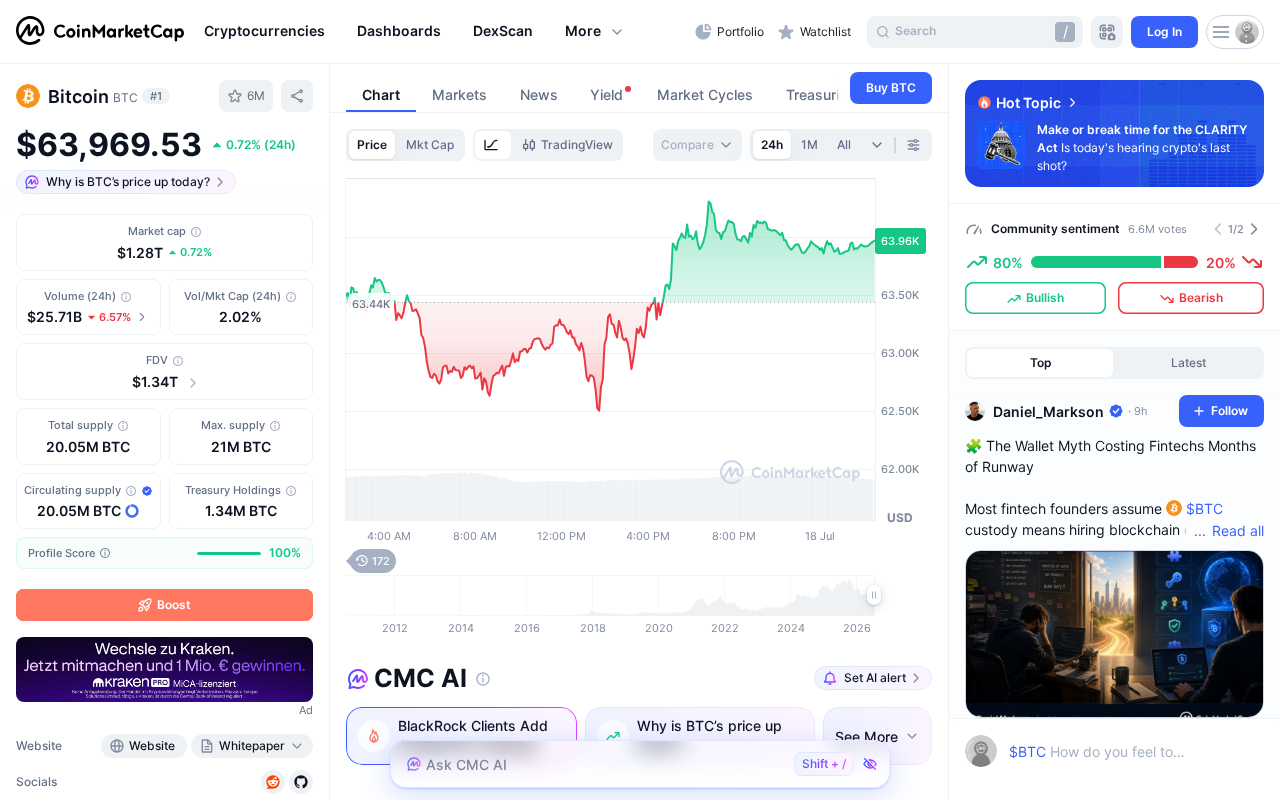
Crypto trading in 2026 looks different than it did even two years ago. Bitcoin has swung from a 2025 peak above $105,000 down to the low $60,000s by mid-2026, a reminder that price context changes fast and platform choice matters more than ever. Choosing the right cryptocurrency market platform is one of the few decisions a trader fully controls, even when prices are not.
The cryptocurrency trading platform landscape keeps shifting. New entrants, new fee models, and new regulation show up every quarter. Traders now have real options across experience levels and regions, and the right platform can be the difference between a smooth trading history and a frustrating one.
This guide breaks down the best crypto trading platforms by use case. Expect specific, checkable details, not vague hype. We cover security, fees, and the features that actually change how a trade feels.
Key Takeaways
- A breakdown of top cryptocurrency trading platforms for different needs
- Specific recommendations for beginners and expert traders
- Regional platform notes for the UK, India, UAE, Philippines, and South Africa
- A plain look at security features and trading tools worth paying for
- Practical guidance for the current crypto market
Understanding the Evolving Landscape of Crypto Trading Platforms in 2026
The crypto trading platform landscape has kept changing since 2025. New regulation and shifting trading volumes are driving most of it. Digital assets are bought, sold, and managed differently than they were even eighteen months ago.
Recent trends show real shifts in what crypto platforms offer. Bitcoin’s run past $105,000 in 2025 pulled in new users and pushed exchanges to add more advanced tools. The pullback since then has not undone that, platforms still carry expanded charting, staking, and asset options built during the rally.
Market Shifts Reshaping Platform Selection
Key developments are driving platform evolution:
Traders want regulated crypto exchange platforms that cover the full trading workflow in one place. Hybrid centralized-decentralized exchanges are the response, and more platforms are building that bridge every quarter.
Regulatory Impacts on Trading Platform Availability
Global regulation shapes what a crypto platform can offer and where. Different countries run different rulebooks, and those rules directly control what users can access.
| Region | Regulatory Approach | Platform Impact |
|---|---|---|
| United Kingdom | FCA Comprehensive Oversight | Strict Compliance Requirements |
| European Union | MiCA Regulations | Standardized Operational Guidelines |
| United States | SEC Enhanced Monitoring | Increased Transparency Measures |
These rules put security and user protection front and center. Compliance is not a nice-to-have anymore, it is table stakes. Pick platforms that treat it that way in today’s crypto landscape.
Best Crypto Trading Platforms: Comprehensive Evaluation Criteria
Choosing the right crypto trading platform takes a real plan, not a gut call. A solid framework for crypto platform comparison goes past surface features. It means checking the factors that actually decide whether a trade goes smoothly.
Key criteria for assessing crypto trading platforms include:
- Security and Regulatory Compliance
- Trading Fees Comparison
- Platform Liquidity
- Available Cryptocurrencies
- User Interface Quality
Crypto platform reviews consistently show that platform liquidity shapes trading performance. High liquidity means trades fill faster and slippage drops. Traders should stick to platforms with strong volume across multiple cryptocurrency pairs.
The most useful evaluation strategy involves checking:
- Regulatory standing and licensing
- Transaction fee structures
- Security protocols
- Range of supported cryptocurrencies
- Customer support responsiveness
Not all crypto trading platforms are built the same way. Your ideal platform depends on your trading goals and how much risk you can stomach.
Run your own crypto platform reviews before committing funds. Compare trading fees line by line and check platform liquidity during both quiet and volatile hours. Knowing each platform’s real features, not its marketing copy, is what separates a good trading experience from a bad one.
Best Crypto Trading Platform for Beginners: User-Friendly Options to Start Your Journey
Entering the cryptocurrency market can feel overwhelming for new traders. The right beginner crypto platform turns a confusing process into a manageable one. The trick is picking a platform built for first-timers, not one built for day traders.
Getting comfortable with crypto trading fundamentals starts with the platform, not the coin. New traders should prioritize specific features built for beginners. These features make the first month of investing far less stressful.
Essential Features for New Crypto Traders
- Intuitive user interface with simple navigation
- Low minimum deposit requirements
- Mobile crypto trading capabilities
- Crypto wallet integration
- Demo or paper trading accounts
- Clear buy/sell processes
Educational Tools That Empower Learning
The best crypto trading platform for beginners does more than execute trades. Top platforms offer real learning resources that explain market dynamics in plain language. These tools build the strategic skills that separate a lucky trade from a repeatable strategy.
| Platform | Educational Resources | Minimum Deposit |
|---|---|---|
| Coinbase | Coinbase Learn program | $5 |
| Kraken | Extensive video tutorials | $10 |
| Gemini | Blockchain technology courses | $0 |
New traders should look for structured learning, not just a glossary page. Interactive tutorials and risk-free practice accounts matter. The right platform turns dense blockchain concepts into something you can actually use on your first trade.
Advanced Crypto Trading Platforms for Expert Traders and Professional Investors
Professional crypto traders need serious trading interfaces, ones that go beyond basic cryptocurrency exchange functions. The most advanced crypto trading tools give institutional-grade capabilities to individual traders.
These platforms exist for one audience: experienced investors chasing high-performance trading environments.
Expert traders care about a specific set of advanced trading features. These are what separate top-tier platforms from amateur exchanges.
Key considerations include:
- Rapid trade execution speeds
- Complex order types
- Full charting capabilities
- Solid API access
- Deep market liquidity
Platforms like Binance and Kraken Pro deliver professional-grade trading interfaces. These crypto exchange platforms offer deep tooling for sophisticated strategies, including margin trading and futures contracts.
| Platform | Advanced Features | Trading Pairs |
|---|---|---|
| Binance | 350+ cryptocurrencies, futures trading | 100+ trading pairs |
| Kraken Pro | Margin trading, advanced API | 50+ trading pairs |
| Coinbase Advanced | Institutional compliance, low fees | 75+ trading pairs |
Professional investors should evaluate platforms against their own requirements, not a generic checklist. Look at trading volume, fee structure, and the specific crypto trading tools a strategy actually needs. Bitcoin’s price swings through 2025 and 2026 show why platform reliability during volatility matters as much as the fee schedule.
Best Crypto Trading Platform UK: FCA-Regulated Options Explained
The United Kingdom runs strict rules for crypto traders, built around keeping investors safe. Finding the best crypto trading platform UK means understanding FCA regulation before comparing fees.
UK crypto investors operate in a genuinely complex regulatory environment. Security and compliance come first here. The Financial Conduct Authority (FCA) requires crypto firms to register under UK anti-money laundering rules before they can serve customers, and sets high standards for secure crypto exchanges operating in Britain.
Compliance Standards for UK Crypto Traders
Traders should check these criteria for an FCA regulated crypto platform:
- Full FCA registration and compliance
- Strong Know Your Customer (KYC) procedures
- Anti-Money Laundering (AML) verification processes
- Transparent fee structures
- Solid security protocols
Platform Comparison: UK Market Features
| Platform | FCA Status | GBP Support | Trading Fees |
|---|---|---|---|
| Coinbase | Registered | Full Support | 1.49% |
| Kraken | Registered | Partial Support | 0.90% |
| Bitstamp | Compliant | Limited | 0.50% |
Picking a secure crypto exchange in the UK starts with regulatory compliance, not the lowest headline fee. Confirm FCA registration first, then compare fees and security measures across the shortlist.
Regional Platform Guide: Crypto Trading Platform India, UAE, Philippines, and South Africa
Cryptocurrency trading platforms keep changing across global markets, and each region carries its own rules and quirks. Traders need to understand the local regulatory landscape before they understand the platform.
India’s crypto trading platform landscape has changed a lot recently. WazirX, once India’s top-traded crypto platform, suffered a $230 million hack in July 2024 and stayed offline for more than a year while it worked through insolvency proceedings. It relaunched trading on October 24, 2025, under a Singapore court-approved restructuring, with BitGo now handling institutional custody. CoinDCX and ZebPay picked up volume during the shutdown and remain strong local alternatives with solid INR support.
- India: Complex regulatory environment with real tax implications
- UAE: Progressive crypto regulatory framework
- Philippines: Crypto-friendly, BSP-licensed market
- South Africa: Maturing regulatory landscape under the FSCA
The crypto trading platform in UAE stands out thanks to Dubai’s supportive rules. Dubai’s Virtual Asset Regulatory Authority (VARA) sets the tone, and platforms like BitOasis and Rain offer services built for UAE traders. Check each platform’s current VARA licensing status directly before funding an account, since licensing conditions in the region have shifted more than once in the past two years.
In the Philippines, the crypto trading platform market keeps growing. PDAX and Coins.ph are local platforms holding BSP (Bangko Sentral ng Pilipinas) licensing as registered Virtual Asset Service Providers. Both give Filipino traders PHP rails and a familiar, mobile-first way to buy and sell crypto.
South Africa presents a market for crypto enthusiasts worth watching. The best crypto trading platform in South Africa includes VALR and Luno, both holding FSCA Crypto Asset Service Provider licenses. These platforms offer ZAR support and plug into local banking systems, and both must now report customer holdings to SARS under the Crypto-Asset Reporting Framework that took effect March 1, 2026.
Regional crypto trading platforms come with regional rules, regional payment methods, and regional risk. Check current licensing status before you fund an account, not after.
| Country | Top Platform | Key Feature |
|---|---|---|
| India | CoinDCX / WazirX | INR Support |
| UAE | BitOasis / Rain | VARA-Regulated Region |
| Philippines | PDAX | BSP Compliance |
| South Africa | VALR | ZAR Trading |
Evaluate each platform’s specific licensing and history before you commit funds. Confirm compliance with local regulations. Match your choice to your own trading strategy, not just to what’s popular.
Statistics, Performance Metrics, and Market Predictions for Leading Platforms
The crypto trading landscape keeps moving, and digital asset trading volumes have moved with it, in both directions. Traders need real numbers to judge platform performance, not leftover figures from the last bull run.
Spot trading volume across the industry has cooled since the 2025 highs. Binance remains the largest spot exchange, but its cumulative Q1 2026 spot volume ran approximately $639.9 billion, an average daily volume near $7.19 billion, giving it roughly 34.3% of the top-10 exchange market. That is well down from the trillion-dollar-plus monthly prints Binance posted during the 2025 rally.
Platform Growth and Market Dynamics
Key performance metrics highlight the shifting nature of crypto market trends heading into the second half of 2026:
- Spot volumes down industry-wide from 2025’s trillion-dollar monthly prints
- Binance still leads on market share despite the pullback
- Institutional participation continuing to grow even as retail spot volume cools
| Platform | Recent Trading Volume | Market Share |
|---|---|---|
| Binance | $639.9 billion (Q1 2026 spot) | 34.3% |
| Coinbase | $680 billion (monthly, 2025 figure) | 28% |
| Kraken | $390 billion (monthly, 2025 figure) | 22% |
Expert Market Predictions
Industry analysts are still split on where prices head through the rest of 2026. Robert Kiyosaki, the “Rich Dad Poor Dad” author and longtime Bitcoin bull, has set a public target of $250,000 for Bitcoin in 2026, alongside targets for gold, silver, and Ethereum. He continues to tell followers to buy more and hold, while warning that a broader market crash could hit before the target is reached.
The future of crypto trading platforms rests on strong security, regulatory compliance, and tools that hold up when prices move fast in either direction.
Traders can explore advanced crypto trading platforms that match where the market actually is right now, not where it was at the last peak.
The crypto ecosystem keeps maturing through the volatility. Platforms increasingly compete on security and regulatory compliance first, features second. Advanced trading tools and AI-assisted analysis are becoming standard rather than a premium add-on.
Essential Tools and Security Features Every Crypto Trader Needs
Crypto trading demands strong tools and real security, full stop. Digital assets keep attracting sophisticated cybercriminals hunting for weak platforms. Crypto trading security is not optional anymore, it is the baseline.
Traders should prioritize solid crypto wallet integration and a secure crypto exchange. Professional crypto trading tools now stack multiple layers of protection, well beyond what a typical brokerage account offers.
- Two-Factor Authentication (2FA)
- Cold Storage Solutions
- Withdrawal Whitelisting
- Real-Time Security Monitoring
Advanced crypto trading tools add real value on top of security:
- Advanced Charting Software
- Portfolio Tracking Systems
- Price Alert Mechanisms
- Market Analysis Resources
Security is a fundamental requirement, not a feature bullet on a landing page. A layered protection strategy is what actually reduces risk for anyone holding digital assets.
Security is not optional in crypto trading. It is a requirement.
Weigh every platform against its actual security infrastructure, not its marketing page. Pick exchanges with strong protective measures and real crypto trading tools behind them. That is what protects your holdings when something goes wrong elsewhere in the market.
Conclusion
Choosing the best crypto trading platform matters for every investor entering crypto, whether that’s during a rally or a pullback. Bitcoin ran past $105,000 in 2025 before settling back into the low $60,000s by mid-2026, and the right crypto exchange platform matters in both environments, for new and experienced traders alike.
The cryptocurrency trading landscape is genuinely diverse, and that means real tradeoffs. Beginners should look for user-friendly platforms with real educational resources. Advanced traders need serious tools and deep market liquidity, not marketing gloss.
Regional regulation, security features, and fee structures all shape the platform decision. These factors directly affect how your trading actually goes, not just how it looks on paper.
Start with a platform that matches your experience level for successful crypto trading. Confirm regulatory compliance and turn on every security feature available. Keep a real risk management plan in place at all times, especially when prices are moving fast.
The crypto market still offers real opportunity for investors willing to do the homework. Success here comes down to informed decisions and staying current, not chasing headlines.
Frequently Asked Questions
What makes a crypto trading platform reliable?
Look for regulatory compliance and strong security measures first. Check for transparent fee structures and a track record of user reviews over time. Platforms like Coinbase and Binance have built established reputations in cryptocurrency trading, though reputation alone should never replace your own due diligence.
What is the best crypto trading platform for absolute beginners?
For US users, Coinbase is a strong choice for beginners, with a simple interface and real educational resources. The buy and sell process stays simple throughout. In the UK, Kraken balances simplicity with more advanced features, and Gemini leans into a security-first design with an easy-to-navigate layout.
How do I know if a crypto platform is safe?
Check for two-factor authentication and cold storage practices, ideally with 90 to 95% of funds held offline. Regular independent security audits matter. Insurance coverage, withdrawal whitelisting, and FCA (or equivalent) regulatory registration are strong signals. Look for platforms offering FDIC-insured USD balances and additional crypto asset protection where available.
What fees should I expect when trading crypto?
Typical fee structures run 0.1% to 0.5% in maker and taker fees. Deposit and withdrawal costs vary by platform, and some cut fees for high-volume traders. Always read the full fee schedule before funding an account. Watch for hidden charges like inactivity fees, and factor in currency conversion costs if you’re trading outside your home currency.
How much money do I need to start trading crypto?
Most platforms let you start with as little as $10, though some allow initial deposits up to $100 for full feature access. Minimum deposit requirements vary by platform, so check before you sign up. Use a platform with a low minimum, like Coinbase, and increase your investment gradually as you get comfortable.
Can I trade crypto if I live in a specific country?
Platform availability depends heavily on region. The UK, UAE, and India each run distinct regulatory environments, and the Philippines and South Africa have their own specific rules too. Always verify local regulations before you start trading, and pick a platform licensed in your jurisdiction. CoinDCX and WazirX serve India, while BitOasis and Rain serve the UAE, subject to their current licensing status.
Do I need to report crypto trading to tax authorities?
Yes, most countries require crypto trading to be reported for tax purposes. In the US, the IRS expects reporting of all crypto transactions. Many platforms now build in tax reporting tools to simplify that process at year-end.
What’s the difference between a crypto exchange and a crypto wallet?
A crypto exchange is where you buy, sell, and trade cryptocurrencies. A crypto wallet is where you store and manage the assets you already hold. Exchanges often bundle in an integrated wallet, but many traders prefer a separate hardware or software wallet for anything they’re not actively trading, since it keeps assets off the exchange’s own servers.
Should I use multiple crypto trading platforms?
Using multiple platforms can spread risk and unlock different cryptocurrencies or fee structures. It also adds complexity. Beginners should get comfortable on one platform before expanding, since running several exchanges takes more time and attention than most new traders expect.
What happens if a crypto exchange gets hacked?
Platform insurance and cold storage help limit the damage. Reputable exchanges like Coinbase insure a portion of digital assets and keep most funds offline. WazirX’s 2024 hack is a real-world example of the downside case: $230 million stolen, over a year offline, and a court-supervised restructuring before trading resumed in October 2025. Not every loss gets fully recovered, which is exactly why platform security history matters before you deposit.
How do I withdraw money from a crypto trading platform?
Withdrawal steps vary by platform but generally follow the same pattern. Pick a withdrawal method, like bank transfer or PayPal, and enter the amount. Verify your identity if prompted, then wait for processing. Withdrawal times and fees differ between platforms, so check the specifics for your chosen exchange before you need the funds urgently.